The Conferences of the Śrī Jagannāth Center
 A Living Tradition of Jyotiṣa Scholarship
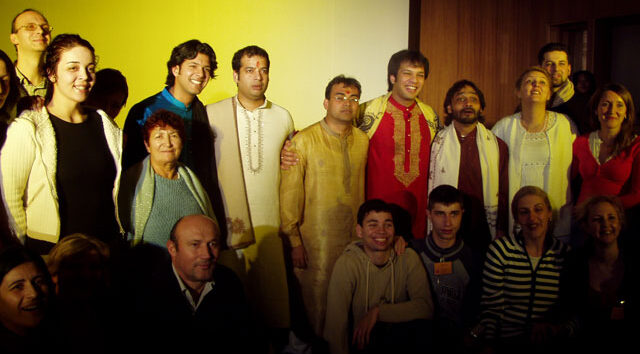
The Śrī Jagannāth Center (SJC) has become one of the most influential institutions in the global revival of classical Jyotiṣa. Among its many initiatives, the SJC Conferences stand out as a unique platform where traditional scholarship, contemporary research, and spiritual practice converge. These gatherings—held in India and abroad—serve not merely as academic events but as living embodiments of paramparā, where knowledge is transmitted through dialogue, demonstration, and direct experience.
Origins and Purpose of SJC Conferences
The conferences began as an extension of SJC’s core mission:
to preserve, teach, and disseminate the śāstra‑based methods of Vedic astrology in a rigorous and spiritually aligned manner.
Unlike commercial astrology expos or prediction fairs, SJC conferences were designed with three aims:
- Revival of classical techniques
Presentations focus on Parāśari, Jaimini, Nārāyaṇa Daśā, Drekkāṇa systems, remedial frameworks, and tantric underpinnings. - Transmission of lineage knowledge
Senior teachers share insights from the Śrī Achyuta Dās paramparā, including oral teachings not found in published texts. - Community building
Students from different countries gather to learn, debate, and refine their understanding in a disciplined environment.
Through these aims, the conferences became a bridge between ancient wisdom and modern seekers.
Structure and Themes of the Conferences
SJC conferences typically span three to five days, with a blend of:
1. Technical Workshops
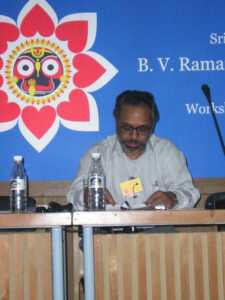 These sessions explore advanced topics such as:
- Nārāyaṇa Daśā applications
- Drekkāṇa and Devatā interpretation
- Jaimini Chara Daśā
- Medical and spiritual astrology
- Muhūrta and remedial measures
The emphasis is always on śāstra‑pramāṇa—every technique must be rooted in classical authority.
2. Research Presentations
Students and teachers present case studies demonstrating:
- karmic patterns,
- predictive accuracy,
- remedial outcomes,
- and philosophical insights.
This creates a culture of evidence‑based Jyotiṣa, rare in the modern astrological world.
3. Spiritual Components
Many conferences include:
- mantra recitation,
- meditative sessions,
- discussions on dharma and karma,
- and teachings on the spiritual purpose of astrology.
This reinforces the SJC view that Jyotiṣa is not merely a predictive tool but a path of inner refinement.
4. Guru–Śiṣya Interaction
Direct interaction with teachers—especially Sanjay Rath—forms the heart of the event.
Students receive:
- personal guidance,
- clarifications on subtle concepts,
- and exposure to the intuitive dimension of chart reading.
This is where the living tradition becomes visible.
Global Reach and Cultural Impact
Over the years, SJC conferences have been held in:
- India (Delhi, Bhubaneswar, Puri, Hyderabad),
- Europe (London, Vienna, Berlin),
- the United States,
- Southeast Asia,
- and Australia.
This global presence has produced several important outcomes:
1. Internationalization of Classical Jyotiṣa
Students from diverse cultural backgrounds now study Parāśari and Jaimini systems with textual fidelity.
2. Standardization of Teaching
The conferences helped establish a consistent pedagogical framework, later formalized in courses like:
- Parāśara Jyotiṣa Course (PJC)
- Mantra Śāstra programs
- Śiva‑Tantra modules
3. Preservation of Rare Knowledge
Many techniques—such as the Śrī Jagannāth Drekkāṇa—were revived and disseminated through conference lectures.
4. Formation of a Global Community
The conferences created a network of practitioners who collaborate, research, and uphold ethical standards in astrology.
Philosophical Significance
SJC conferences are not merely academic gatherings; they embody a worldview where:
- Time (kāla) is sacred,
- Destiny (daiva) is intelligible,
- Remedies (upāya) are transformative,
- and Self‑knowledge (ātma‑jñāna) is the ultimate goal.
In this sense, the conferences function as modern yajñas of knowledge, where participants collectively invoke clarity, discipline, and spiritual insight.
Conclusion
The conferences of the Śrī Jagannāth Center represent a rare synthesis of scholarship, tradition, and spiritual purpose. They have shaped the global landscape of Jyotiṣa by creating a space where ancient teachings are studied with rigor, practiced with humility, and shared with devotion. Through these gatherings, SJC continues to uphold its mission:
to keep the flame of classical Jyotiṣa alive in a world that increasingly seeks depth, meaning, and authentic wisdom.