The Sacred Art of Divine Adornment in Puri’s Living Temple Tradition
 The ritual adornments (veśa) of Lord Jagannātha at the Śrīmandira of Puri constitute one of the most visually striking and spiritually profound traditions in Hindu temple culture. Far more than decorative attire, Jagannātha Vesha is a sophisticated theological language—an embodied form of storytelling through which the deity reveals different aspects of divinity, cosmology, and human experience. Each veśa is a symbolic event, a ritual performance, and a moment of darśana that binds the devotee to the divine through beauty, emotion, and mythic memory.
The Concept of Vesha in Jagannātha Tradition
In the Jagannātha temple, veśa refers to the ritual dressing and ornamentation of the deities—Jagannātha, Balabhadra, Subhadrā, and Sudarśana. Unlike many temples where the deity’s attire remains relatively fixed, Puri’s tradition is dynamic and cyclical. The deities assume over 30 major veśas throughout the year, each aligned with:
- tithi (lunar day),
- ṛtu (season),
- festivals,
- mythological episodes,
- and cosmic principles.
This makes Jagannātha’s veśas a ritual calendar, where time itself is visualized through the changing forms of the deity.
Historical and Cultural Foundations
The tradition of veśa is deeply rooted in:
1. The Pañca‑Sakhā Era
Poets like Achyutānanda and Balarāma Dāsa described Jagannātha as a deity who “plays” through forms. Their writings emphasize the līlā‑centric nature of Jagannātha worship, where divine play manifests through changing appearances.
2. Tribal and Folk Influences
Jagannātha’s origins in the Sabara tribal tradition contribute to the use of natural materials—flowers, leaves, fruits, and wood—in many veśas.
3. Classical Temple Aesthetics
Over centuries, the Gajapati kings, temple servitors (sevakas), and artisans refined the veśas into a sophisticated ritual art form.
Thus, Jagannātha Vesha is a fusion of tribal, classical, royal, and devotional aesthetics.
Major Vesha Traditions
While dozens of veśas are performed annually, several hold special cultural and theological significance.
1. Bada Singhāra Vesha
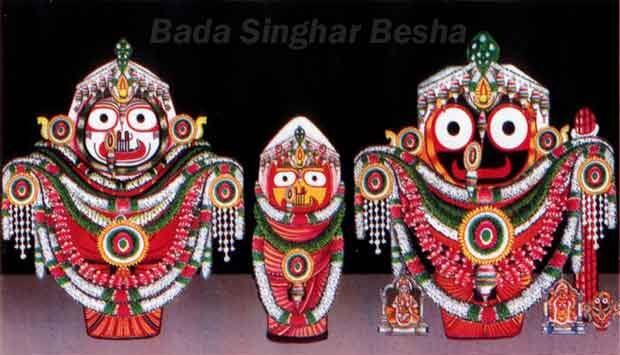
Performed every night, this is the most delicate and fragrant veśa, using:
- jasmine garlands,
- silk cloth,
- floral ornaments.
It represents Jagannātha as the cosmic lover, echoing the bhakti of the Gopīs.
2. Suna Vesha (Golden Attire)
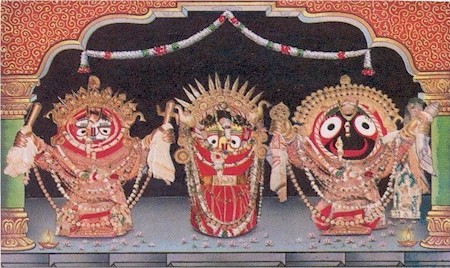
Held after the Ratha Yātrā, the deities are adorned with:
- gold crowns,
- gold limbs,
- gold ornaments weighing hundreds of kilograms.
This veśa symbolizes royal sovereignty—Jagannātha as the universal emperor (Chakravartin).
3. Hati Vesha (Gaja Vesha)
Performed on Snāna Pūrṇimā, the deities appear as elephants.
This veśa honors Gajendra Mokṣa, symbolizing compassion and divine rescue.
4. Rājarāja Vesha
Jagannātha appears as a king, reflecting the Gajapati–Jagannātha relationship, where the king is the first servant (Adyasevaka) of the Lord.
5. Kaliya Dalana Vesha
Depicts Krishna subduing the serpent Kaliya.
This veśa emphasizes protection, courage, and cosmic order.
6. Banabhoji Vesha
The deities appear as cowherd children enjoying a forest picnic.
It highlights the simplicity and sweetness of Krishna’s childhood.
Each veśa is a theological statement, a visual commentary on the many facets of divinity.
Ritual Specialists and the Craft of Vesha
The creation of each veśa involves:
- Bhandar Mekap (custodians of ornaments),
- Puspalaka sevakas (who dress the deities),
- Khuntia and Suara servitors,
- Temple artisans skilled in woodwork, textiles, and floral design.
Their work is guided by strict ritual codes, ensuring continuity with centuries of tradition.
Symbolism and Devotional Experience
Jagannātha Vesha is not merely visual; it is experiential.
1. Aesthetic Rasa
Each veśa evokes a specific rasa—śṛṅgāra, vīra, karuṇā, or adbhuta—drawing devotees into emotional communion.
2. Theological Depth
The veśas express:
- the avatāra doctrine,
- the unity of Krishna and Jagannātha,
- the cyclical nature of time,
- and the interplay of human and divine.
3. Accessibility of the Divine
Jagannātha’s changing forms remind devotees that the divine is not static but responsive, playful, and intimately involved in the world.
Cultural Significance
Jagannātha Vesha has shaped:
- Odisha’s textile traditions (Pattachitra, appliqué work),
- performing arts (Gotipua, Odissi),
- literature (Bhakti poetry),
- community identity (Ratha Yātrā celebrations worldwide).
The veśas serve as a visual scripture, teaching theology through beauty.
Conclusion
Jagannātha Vesha is a living art form where devotion, aesthetics, mythology, and ritual converge. Through these adornments, the deity becomes a storyteller, revealing cosmic truths in accessible, emotionally resonant forms. The veśas remind devotees that divinity is not distant but ever‑present, ever‑changing, and ever‑compassionate, meeting the devotee through the language of form, color, and sacred beauty.