Written and collected by Katya Valek
Guru and guide Pandit Sanjay Rath
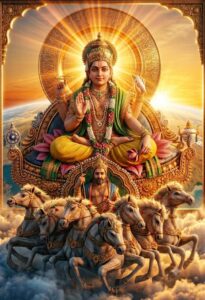
SŪRYA, the source of light that fights against darkness and shadows, symbolises spiritual awakening and our conception of pure righteousness through spirituality.
In the Ṛg Veda, Sūrya is defined as the ultimate source of light, truth, and spiritual awakening. It is described as the vital force that sustains everything, the soul (ātmā) of all that moves and all that is stationary (jagatas tasthuṣaś ca).
आप्रा द्यावापृथिवी अन्तरिक्षं सूर्य आत्मा जगतस्तस्थुषश्च ॥
āprā dyāvāpṛthivī antarikṣaṃ sūrya ātmā jagatas tasthuṣaś ca ||
Mahaṛṣi Parāśara states that Sūrya is the significator of the Ātman – the living soul (jīvātmā), individual consciousness, true self, representing your true identity, self-realisation, and willpower.
सत्त्वं कुजस्य विज्ञेयं बुधो वाक्प्रदायकः ॥ १२ ॥
sattvaṃ kujasya vijñeyaṃ budho vākpradāyakaḥ || 12 ||
Furthermore, Śrī Parāśara assigns Sūrya as the natural significator (Kāraka) of the 1st house (Tanu bhāva) and also partial significator of the 9th house (Dharma bhāva) in the context of father (pitṛ karaka) and willpower to follow righteousness. The primary karaka of the 9th house is Guru, who represents higher wisdom, the Guru, the house of spirituality, dharma, philosophical concepts and religion.
सूर्यो गुरुश्च मङ्गल्यश्चन्द्रो ज्ञो गुरुः सितः ॥
मन्दः सूर्यो गुरुश्चैते जीवो मन्दोऽर्कजस्तथा ॥ ३४ ॥
sūryo guruś ca maṅgalyaś candro jño guruḥ sitaḥ ||
mandaḥ sūryo guruś caite jīvo mando ’rkajas tathā || 34 ||
Each Graha causes a form of grahaṇa—an eclipse or obscuration—which signifies the bondage of karma that every individual brings into this life.
Within this context, Sūrya may indicate blessings, strength, vitality, willpower, and resources in a horoscope. When afflicted, however, it may also signify obstacles, diminished vitality, restricted access to resources, and a limitation of one’s inner light.
Sūrya is one of the principal sāttvika Grahas associated with light, together with Guru, the great benefic, and the sāttvika Candra. Sūrya is a Gura-graha, a divine graha that bestows life, vitality, authority, and resources. The position of Sūrya in the horoscope reveals where a person feels that life is meaningful and worth living.
Śrī Rāma, the pure divine essence of Sūrya
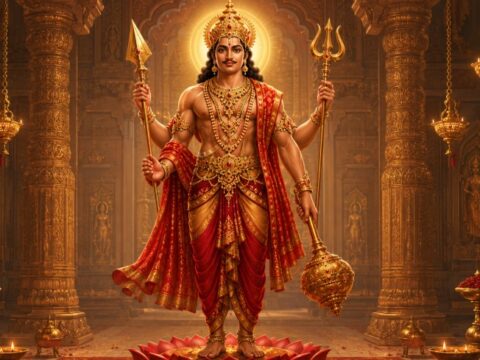
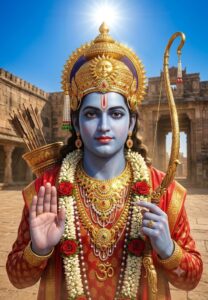 Mahaṛṣi Parāśara states that when the pure divine essence of Sūrya takes a complete earthly form, it manifests as Śri Rāma (Rāmo’vatāraḥ).
नृसिंहो भूमिसुतस्य बुद्धः सोमसुतस्य च ॥
nṛsiṃho bhūmisutasya buddhaḥ somasutasya ca ||
When we study the epic Rāmāyaṇa and the main character Śrī Rāma, we see that every action he takes in the Rāmāyaṇa perfectly mirrors the exact attributes that Parāśara assigns to Sūrya in Chapter 3 of BPHS.
सूर्यचन्द्रौ तु राजानौ … ॥ ४ ॥
अग्निः सूर्यस्य देवतापत् … ॥ ११ ॥
sūryacandrau tu rājānau … || 4 ||
agniḥ sūryasya devatāpat … || 11 ||
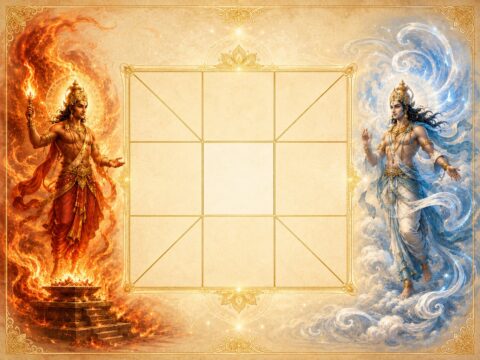
Sūrya and Candra are described as the two kings (rājānau) of the planetary cabinet. Agni is the presiding deity (devatā) of Sūrya. In the Bṛhat Parāśara Horā Śāstra, Sūrya is said to possess royal authority.
Sūrya is purely sāttvika, luminous, truthful, and unwavering in the observance of righteousness.
Śrī Rāma is described by the expression Rāmo Vigrahavān dharmaḥ—“Rāma is Dharma embodied.” He is the personification of Dharma itself. He neither speaks falsely nor resorts to hidden manipulation. He sacrifices his personal happiness, royal comfort, and even his kingdom in order to uphold his word and preserve the cosmic and moral order.
Furthermore, Sūrya, also known as Arka, together with Maṅgala, also known as Kuja, belongs to the kṣatriya class—the class of warriors and rulers. This classification reflects qualities of leadership, authority, courage, power, and protection.
शशिसौम्यौ वैश्यवर्णी शनिः शूद्रो द्विजोत्तम ॥ १० ॥
śaśi-saumyau vaiśya-varṇī śaniḥ śūdro dvijottama || 10 ||
A kṣatriya’s duty is to govern justly, maintain law and order, and, above all, uphold Dharma. A kṣatriya must also protect the weak with courage and determination from destructive, lawless, and chaotic forces.
Sūrya presides over power, authority, sovereignty, and public governance. For this reason, Sūrya is not classified as a natural benefic graha. Although Sūrya is naturally malefic, his malefic nature is fundamentally different from that of Śani, Rāhu, and Maṅgala.
The maleficence of Sūrya is not inherently pāpa or tāmasika in the sense of being sinful, corrupting, or destructive. Sūrya is sāttvika and krūra. His severity manifests through extreme discipline, uncompromising truth, intense purification, and the blinding, burning radiance of the Sun. The word krūra may signify strictness, harshness, severity, inflexibility, and a burning or piercing quality.
The fiery nature of Sūrya can give an individual an unyielding sense of honour, courage, dignity, and the supreme willpower required to fight for a noble cause. These qualities correspond to the spirit of a true kṣatriya.
Śrī Rāma was born into the Sūryavaṃśa, the Solar Dynasty. One of the central purposes of his earthly life was to defeat the dark and chaotic forces represented by the demon-king Rāvaṇa and to establish a kingdom founded upon justice, righteousness, and Dharma.
The physical Sun rises each morning, dispelling darkness and awakening the world. Within a symbolic reading of the Rāmāyaṇa, Rāvaṇa may be understood as representing ego, arrogance, delusion, spiritual distortion, and the shadowed tendencies of consciousness.
Śrī Rāma, by contrast, acts as a pure solar force. His bow and arrows may be interpreted as symbols of concentrated will and the focused rays of spiritual awareness. Through them, he pierces and overcomes the ten heads of Rāvaṇa, which symbolically represent the many expressions of ego and uncontrolled desire, thereby restoring Dharma and spiritual awakening to the world.
In the Bṛhat Parāśara Horā Śāstra, Sūrya is described as the significator of the soul, the ātman. The incarnation of Śrī Rāma may therefore be understood as representing the soul in its highest and most perfected state.
When Parāśara identifies Śrī Rāma as an Avatāra associated with Sūrya, this may be interpreted to mean that Rāma reveals what the human soul becomes when it is completely purified, fully self-realised, and perfectly aligned with cosmic law.
Human beings ordinarily struggle with inner shadows, doubts, attachments, and conflicting desires. Śrī Rāma’s complete earthly manifestation, however, resembles the unobscured midday Sun: radiant, unwavering, and powerful enough to burn away the shadows of spiritual ignorance.
In the actions of Śrī Rāma, we can perceive the sāttvika-krūra qualities of Sūrya. They manifest as perfect self-discipline, formidable divine power, uncompromising truthfulness, and an unyielding commitment to Dharma and universal order.
राजा सर्वस्य लोकस्य देवानामिव वासवः ॥
rājā sarvasya lokasya devānām iva vāsavaḥ ||
In these verses of the Rāmāyaṇa is described the personification of Dharma (vigrahavān dharmaḥ), unyielding truth (satya-parākramaḥ) and royal authority over the whole world (rājā sarvasya lokasya)
विपुलांसो महाबाहुः कम्बुग्रीवो महाहनुः ॥
गम्भीरः सत्त्वसम्पन्नः समः सम्भक्तवत्सलः ।
तेजसा सूर्यसदृशः क्षमया पृथिवीसमः ॥
vipulāṃso mahābāhuḥ kambugrīvo mahāhanuḥ ||
gambhīraḥ sattvasampannaḥ samaḥ sambhaktavatsalaḥ |
tejasā sūryasadṛśaḥ kṣamayā pṛthivīsamaḥ ||
(tejasā sūryasadṛśaḥ), a royal warrior,
destroyer of enemies (śatrunibarhaṇaḥ),
and a just ruler (samaḥ).
विद्धि मामृषिभिस्तुल्यं केवलं धर्ममास्थितम् ॥
यद्यहं पितुरर्थाय प्राणांश्चापि परित्यजेम् ।
विद्धि मामप्रतिज्ञं च धर्मस्यार्थे सुदुष्करम् ॥
viddhi mām ṛṣibhis tulyaṃ kevalaṃ dharmam āsthitam ||
yady ahaṃ pitur arthāya prāṇāṃś cāpi parityajem |
viddhi mām apratijñaṃ ca dharmasyārthe suduṣkaram ||
(nāham arthaparaḥ). He is rooted purely in Dharma
(kevalaṃ dharmam āsthitam). He is willing to sacrifice
his life for truth (prāṇāṃś cāpi parityajem).
चिन्ताशोकप्रशमनमायुर्वर्धनमुत्तमम् ॥
रश्मिमन्तं समुद्यन्तं देवासुरनमस्कृतम् ।
पूजयस्व विवस्वन्तं भास्करं भुवनेश्वरम् ॥
सर्वदेवात्मको ह्येष तेजस्वी रश्मिभावनः ।
एष देवासुरगणान् लोकांश्च पाति गभस्तिभिः ॥
cintāśokapraśamanam āyurvardhanam uttamam ||
raśmimantaṃ samudyantaṃ devāsuranamaskṛtam |
pūjayasva vivasvantaṃ bhāskaraṃ bhuvaneśvaram ||
sarvadevātmako hy eṣa tejasvī raśmibhāvanaḥ |
eṣa devāsuragaṇān lokāṃś ca pāti gabhastibhiḥ ||
providing luminous solar protection
(pāti gabhastibhiḥ). He is the destroyer of sins
and darkness (sarvapāpapraṇāśanam) and the direct
embodiment of all the Devas
(sarvadevātmakaḥ).
Sūrya-lagna
Sūrya Lagna is one of the most important Lagnas in the chart. There are many Lagnas in Jyotish, but this one is particularly significant. We study this bhāva to understand destiny, resources and good fortune. According to the Sūrya raśi one of the twelve Āditya plays crucial role. You must study the Āditya to know more about this raśi.
Every graha that conjoins Sūrya is at risk of undergoing astaṅgata or being burnt and spiritually purified. In fact, every planet that enters astāñgata comes into touch with the energy of Lord Śiva in order to be cleansed of its own sins.
Astaṅgata of the two rajas grahas (Budha and Śukra) is very often as they are close to the Sun. Sūrya represents the right eye of Lord Śiva and symbolises Dharma. That is why Sūrya has the power to control rajas. Therefore, whenever the rajas guna of these two planets is controlled by Sūrya, spiritual life becomes excellent and rajas is regulated. When Śukra is astaṅgata a person will have desires and enjoyments under control. When Budha is astaṅgata there will be no monetary attachment and enjoyments. This is very beneficial for spiritual life.
So, we study Sūrya lagna to understand a person’s experience of life and the world around them. The purest Sūrya position in the chart is uccha – exaltation in Meṣa. Who else has uccha Sūrya but Śrī Rāma, the Avatar of Sūrya?
Illustration
Śrī Rāma
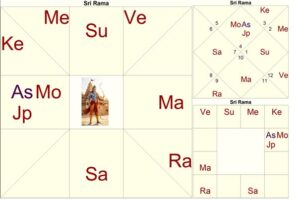
Śrī Rāma was born in Karka Lagna, with five Graha in their uccha positions. His birth chart is considered the ultimate divine avatar.
Sūrya is uccha in Meṣa raśi. Sūrya is in the 10th bhāva in digbala. Sūrya is also in Arudha Lagna. Sūrya is very strong in the chart.
With an exalted Sun in the 10th house of Karma, Rāma did not view life through personal desire or material security. Instead, he experienced his existence purely as an obligation to the collective universe. When forced into exile, his reality did not collapse into despair; he processed the event as a natural duty to uphold his father’s word.
Sūrya is in digbala in the 10th bhava, corresponding to high noon, the moment when the Sun is hottest, brightest and casts no shadow. Lord Rāma saw through illusions. He possessed a piercing sense of justice that could not be swayed by emotion or personal attachment. He radiated authority; even his enemies recognised his presence as blinding, much like looking directly at the midday sun.
He was a true king; an exalted 10th house Sun gave him heightened awareness of his subjects needs.
He was not a passive, meditative king. His soul’s destiny required physical movement, mastery of weapons and warfare. He conquered the forces of chaos, represented by the Rākṣasas.
The dispositor of Sūrya (lord of Mesha) is Maṅgala, who is also exalted. Who is helping Śrī Rāma? Jay Śrī Hanuman.
Srila Prabhupada
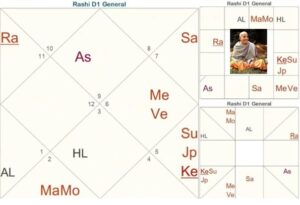
Sūrya is strong in Siṁha, its own raśi, in the 9th bhāva. Sūrya is not alone, but in conjunction with Guru and Ketu, forming Parampara yoga. Also, the Sun is positioned in the 9th bhāva of Dharma and Guru. The Sun – Jupiter connection creates a powerful light of truth. His life was also defined by the translation of Vedic literature (such as the Śrīmad Bhāgavatam and Bhagavad Gita). Ketu represents Mokṣa and deep renunciation. Ketu disconnects a person from material ambitions and leads one into the spiritual world. The Parampara combination shows his dedication to his spiritual master. He brought the ancient tradition exactly as it was.
His resources and good fortune are centres, books and devotees. He crossed oceans to the West to spread dharma. He founded ISKCON (International Society for Krishna Consciousness). Siṁha raśi gave him organisational power to build a global empire of temples, farm communities and schools. He spread the Hare Kṛṣṇa Mahāmantra from traditional Indian villages to the world.
Whitney Houston
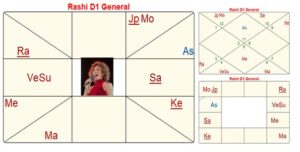
Sūrya is yuti Śukra in Karka raśi. Her life experience is deeply filtered through emotion, beauty, music, glamour, art and sensitivity. The dispositor Candra is joined by a strong Guru in his own sign of Mīna raśi, forming Gajakeshari yoga (in the 2nd house) which brings fame, respect, wealth, and her special persona in the music world. She had a voice pure as gold and wealth, which shaped her destiny. Śukra in the 6th bhāva is in MKS Maraṇa kāraka sthāna and, due to its position near Sūrya, is astāñgata, meaning it is scorched by the Sun’s intense heat. While her external world appeared as a glorious, shining Śukra, she was a pop icon with beautiful voice. But her internal experience of love, relationships, and self-worth was burnt out and sacrificed because of her public identity. She battled addiction and had health issues due to feeling emotionally exposed. Because the dispositor Candra was so powerful with Guru, her worldly destiny reached the highest heights of wealth and fame due to her remarkable singing. However, Sūrya astāñgata and the position of Śukra in a house of struggle, her personal experience of that world was one of pressure and sacrifice.
9th bhāva from Sūrya
The ninth from Sūrya shows how a person views the world and experiences God. It also shows how we think the world should function and what our guiding principle is. In many charts, you will see that a person undergoing very intensive spiritual learning has this bhāva connected to Guru. They see the world as Guru. If Maṅgala is connected, the person believes this world is ruled by violence. You think that without conflict or competition, you cannot achieve anything. If Budha is connected, there is duality, if there is more Kanya or more Mithuna connection, the world is seen as either pure or impure. Śani’s connection indicates that you perceive much suffering in the world, with sadness, dukha, being dominant. The world is seen as ignorant, everything is old and dirty, and people have come into this world to purify themselves. Candra shows that your ideals are connected to family, society and similar spheres. With Rāhu you believe this world is characterised by deception or illusion, a place of shocks.
This bhava also shows who protects, guides and teaches you, especially those who protect your dharma, destiny and resources. From these graha you receive power and support.
The Graha located in the 9th from Sūrya shows your ideal and your understanding of the universe and God. If we want our interaction with the world to be positive, to support the dharma of this world, and to achieve our goals we must worship this graha. In this bhava, our dharma in relation to the world is revealed.
Ilustrations
Śrī Śrī Ravishankar
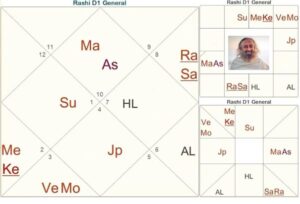
His Sūrya is also in Meṣa raśi, the purest uccha position. This gives him an incredibly luminous, and pioneering soul-vitality. The 9th bhava from Sūrya is Dhanu raśi, with no graha present. This bhāva shows your dharma based on the upadesha you have received. The world as Guru, a teacher. The lord of Dhanu Rashi is Guru who is exalted in the chart, this indicates that a person follows knowledge and wishes to teach the world traditional wisdom. For him, the world is vast and intended for higher spiritual learning. He does not view the world through the lens of borders, rigid dogmas or divisions.
The 9th house from Sūrya in Dhanu raśi demands harmony, righteousness, dharma and spiritual upliftment for all. His guiding principle is to elevate human consciousness, which is why global peace initiatives focus on resolving conflicts by reminding people of human values. An exalted Guru grants him protection over dharma, destiny and resources.
Abraham Lincoln
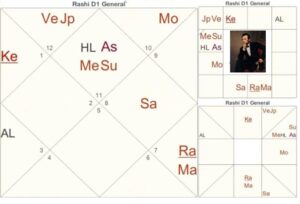
Sūrya is in Kumbha raśi. The 9th from Sūrya is Tūla, with Rāhu and Maṅgala.
He had to navigate conflicting political opinions. He was a capable fighter. Rāhu and Maṅgala in the 9th bhava from Sūrya, indicate that powerful people, lawyers and army supported him. He experienced the world as a great conflict.
He fought for human equality and unity (Tula rashi). His role was to fight against slavery. To him the world was fundamentally meant to operate on fairness and equal rights. This was the root of his absolute moral stance against slavery.
He was also standing behind the unity of the United States of America. During the darkest days of the American Civil War, he famously noted that both sides prayed to the same God.
Remedial measures
Śrī Rāma nāma
Worship Śrī Rāma by recitation and writing of श्रीराम śrīrāma. Buy special book for this purpose and make columns to write the Rāma nāma. Write and recite in every box with great love for the Lord Rāma. While writing each श्रीराम, mentally recite श्रीराम जय राम जय जय राम śrīrāma jaya rāma jaya jaya rāma each time. Keep this practice very sacred. Keep this exclusive book and pen just for this purpose and keep it in your Pūja room or Prayer Place. Do not worry about the count. Just write as long as your mind remains happily focused on writing the name with devotion. It is observed that when a one lakh writings are completed, great positivity enters one’s life and life begins to turn around. Once you complete a sizeable portion of writings you may offer this to Lord Rāma at his temple.
Sūrya Gāyatrī Vedic Mantra
One of the most important Vedic Mantras is from the Ṛg Veda. The Sūrya Vedic mantra is from RV 1.35.2, ṛṣi hiraṇyastūpa-āṅgirasa, devatā: savitṛ, chhandas: triṣṭubh. This mantra connects Sūrya to Lagna.
आ कृष्णेन रजसा वर्तमानो निवेशयन्नमृतं मर्त्यं च।
हिरण्ययेन सविता रथेना देवो याति भुवनानि पश्यन्॥
ā kṛṣṇena rajasā vartamāno niveśayannamṛtaṁ martyaṁ ca
hiraṇyayena savitā rathenā devo yāti bhuvanāni paśyan
Prasiddha Gāyatrī Mantra
The Gāyatrī mantra is fundamentally a prayer for clarity and wisdom. Just as the physical sun awakens the world and dispels fog and darkness, the worshipper asks the inner divine Sun to burn away mental lethargy, confusion, and ignorance and to grant awakening and brilliance to the intellect.
With this mantra we pray for mercy in guiding our intellect, for purity, and for the growth of both material and spiritual success in all good actions. Offering it daily in the morning to the rising Sun and performing japa is believed to bring long life and fame. Such a person will be principled (Dharma parayana) and possess high ideals.
तत्सवितुर्वरेण्यं भर्गो देवस्य धीमहि । धियो यो नः प्रचोदयात् ॥
Tat savitur vareṇyaṁ bhargo devasya dhīmahi | dhiyo yo naḥ pracodayāt || Ṛg Veda
Sūrya is the karaka for Lagna. Remedial measures aimed at Surya will also remedy Lagna, which is responsible for health, intelligence, reputation, spiritual awareness and pure righteousness (dharma).
Sources
- Course notes from Pandit Sanjay Rath, Parashara Jyotisha Course
- Course notes from Zoran Radosavljević, SIVA Slavic Institute of Vedic Astrology, Serbia
- Vedic Remedies in Astrology, author Sanjay Rath.
- Brush Up on the Vedic Astrology Basic, Volume 1, author Zoran Radosavljević
- Rg Veda, the most important of the four Vedas
- BPHS – The Bṛhat Parāśara Horā Śāstra, created by sage Parāśara
- The Rāmāyaṇa, ancient vedic epic by Vālmīki
- Pictures made with the help of Gemini
Eternally Grateful for the Guidance, Truth and Light of our Parampara, Śrī Guru Sanjay Rath, and Guruji Zoran Radosavljević.
ॐ गुरवे नमः