Written by Priyanka Gupta inspired by the teachings of Guruji Pandit Sanjay Rath
Om Gurave Namah
Parāśara says that the serpents created from Svarbhānu are similar in appearance. Ketu is more like a nāga (a higher-vibration snake being), while Rāhu is a sarpa (a lower-character snake).
Ketu is known as the South Lunar Node and is considered a powerful spiritual influence. Unlike physical planets, Ketu represents karmic experiences, detachment, and the journey toward enlightenment. It is often associated with ascetics, philosophers, mystics, and individuals who seek deeper truths beyond material life.
 Ketu signifies the assimilation of experiences gained through previous actions and lifetimes. It encourages people to learn from the past and break free from limitations that hinder personal growth. As a result, Ketu is linked with internal mental changes, spiritual authority, astrology, clairvoyance, and profound wisdom. Its influence often inspires a strong interest in spirituality, meditation, and philosophical thinking.
One of Ketu’s most important qualities is its ability to bring liberation. It symbolizes the ending of bondage, final emancipation, and freedom from attachments. Through periods of separation, breaks, and dissatisfaction, Ketu teaches valuable lessons that ultimately lead to self-realization and enlightening results. Although these experiences may be difficult, they help individuals develop strength and inner understanding.
Ketu is also associated with artistic taste and unconventional ways of living. People influenced by Ketu may possess unique talents and a desire to explore life beyond social norms. However, Ketu has a challenging side as well. It can create feelings of helplessness, trouble through enemies, cheating, bankruptcy, and sudden cataclysmic events. It may also be connected with negative habits such as smoking and other self-destructive behaviours.
In some cases, Ketu can bring careers that feel beneath a person’s abilities, creating dissatisfaction and a desire for change. Yet these challenges often become opportunities for growth and transformation. By pushing individuals beyond their comfort zones, Ketu helps them discover their true purpose and break through personal limitations.
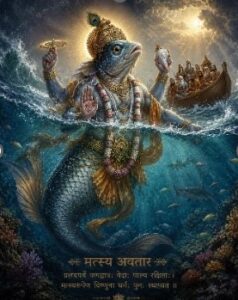 Ketu is associated with Śrī Matsya (the fish incarnation), a form of Viṣṇu, who is worshipped for liberation.
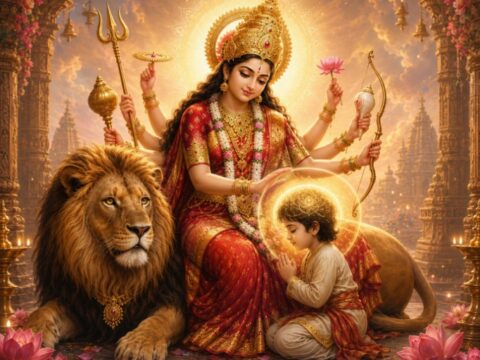
Ketu is like Mars in many ways, with heat and energy. Mars is the earth, and it was from the mud of the earth that the goddess Pārvatī created Gaṇeśa, the elephant-headed deity related to Ketu. The earth of Mars was manipulated into form and became Ketu. Ketu is ruled by Gaṇeśa when it is associated with the Sun.
Planets are strong or weak based on the sign and house in which they are placed. Specific signs exalt (uccha) a planet and allow it to give its full results. Other signs debilitate (nīca) a planet, giving it a hard time accomplishing its results. The mūlatrikoṇa sign allows the planet to perform its duties (dharma) to its fullest potential. When a planet is in its own sign, it gives good results, as it feels at home.
Ketu is exalted in Sagittarius and debilitated in Gemini. Mīna Rāśi is the mūlatrikoṇa of Ketu, and Ketu is the co-lord of Pisces. Ketu rules Scorpio; it is his own Rāśi. Ketu has only Rāśi dṛṣṭi; it has no graha dṛṣṭi.
In some cases, Ketu can bring careers that feel beneath a person’s abilities, creating dissatisfaction and a desire for change. Yet these challenges often become opportunities for growth and transformation. By pushing individuals beyond their comfort zones, Ketu helps them discover their true purpose and break through personal limitations.
Ketu is also associated with artistic taste and unconventional ways of living. People influenced by Ketu may possess unique talents and a desire to explore life beyond social norms.
Legs, hair, extrasensory function, mystical experience.
Pitta disorder, mental confusion, feelings of isolation, schizophrenia, accidents, epidemics, eruptive fever, viral and infectious diseases, catastrophes, parasites, viruses, TB, diagnostic confusion, wrong surgery, stuttering speech, psychic disturbance, and possession by spirits.
Negative Significations:
Ketu is considered malefic and has mostly been associated with negative things. Most people consider it a difficult planet, as it manifests as obstacles on the material plane. However, Lord Gaṇeśa mantras can help remedy those issues because Gaṇeśa is the presiding deity of Ketu. Ketu often brings a sense of complete detachment, losses, mindlessness, wandering, and confusion in one’s life.
Positive Significations:
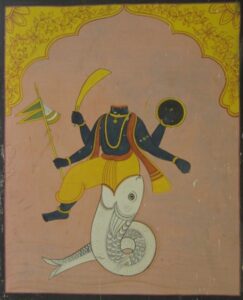
There is a much deeper side to Ketu, and it has been called the most spiritual of all planets. Ketu has been considered the planet of enlightenment and liberation. It is the one who has “lost his head (worldly senses = tattva [Ayyavazhi]),” being a personification of renunciation—a torso without a head who needs nothing. Ketu is the ascetic who wants to go beyond mundane life and achieve final liberation.
Friendly Planets:
Ketu is a friend of Jupiter (Bṛhaspati) and Saturn (Śani); neutral toward Venus (Śukra); and acrimonious with Mercury (Budha), the Moon (Candra), and Mars (Maṅgala).
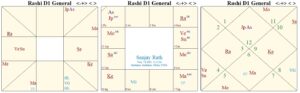
In this chart, Ketu is in digbala and exaltation. A person has vast knowledge of the Vedas and Vedāṅgas, including Jyotiṣa. This is the high-level blessing of Ananta. This is the chart of our Guruji, Pt. Sanjay Rath, author and Jyotiṣa Guru. At the same time, Guru is in digbala in its own sign, giving a broad mind and superior knowledge and intelligence as a blessing of the digbala Devatā, Lord Īśāna.
Sūrya and Ketu yuti is explained by the story in which Ketu, represented by Gaṇeśa, did not allow his father, Śiva, to enter the premises of his mother, Gaurī. Śiva then cut off his head. Therefore, this yuti can indicate much fighting and headless activities, mistakes, and troubles in fortune or finance, or good luck through foreigners or the spiritual path. Tradition calls these conjunctions Śivārpaṇamastu, offerings to Lord Śiva, and there are elaborate remedies for each.
Candra and Ketu: this combination gives a highly unhappy mind, full of anger, lack of self-worth and love, and prone to mistakes, headless behaviour, or self-destructive behaviour. If Ketu is well placed, marked renunciation will be present, as was seen in Śrī Caitanya’s horoscope.
Maṅgala and Ketu: this is known as a Piśāca-bādhaka combination, in which a person may experience episodes akin to obsession or possession, which may cause various psychological issues, disease, madness, or black magic if it influences the Lagna. Otherwise, this combination gives an unusual and eccentric personality who may hold power and wealth.
Budha and Ketu yoga: this combination fully destroys the rajas guṇa of Budha. The rajas guṇa of Budha is related to material and non-living creation and enjoyments, such as money, finance, profession, and so on.
Therefore, this combination will affect the professional and financial spheres. This combination is highly unfavourable in the 12th, 10th, and 8th houses, where it can also give an unstable and changeable mind and thinking. A person can take either a good or bad path depending on the strength and auspiciousness of Ketu.
Guru and Ketu: in tradition, this is known as Paramparā Yoga, or blessings and learning from tradition. However, this combination has quite a few setbacks in fortune and finance. If placed in a duḥsthāna and the Lagna is afflicted, it can create genetic and autistic diseases.
Śani and Ketu: this combination is known as Preta-bādhaka, or the curse of a departing soul. It creates troubles, and if Śani is stronger, the material path will be more pronounced, while if Ketu is stronger, the spiritual path will be present.
In conclusion, Ketu is a powerful and unique influence in Vedic astrology. It represents the journey from material attachment to spiritual understanding. By encouraging self-reflection and personal growth, Ketu helps individuals discover deeper truths about themselves and the world around them.