The Sāmba Purāṇa preserves one of the most important legends connected with the worship of Sūrya, the Sun God. It tells the story of Sāmba, the son of Śrī Kṛṣṇa, his suffering, his healing through devotion, and the revelation of the twelve divine forms of the Sun. They do differ from Parāśara list.
This legend is not only a story about disease and cure. It is a teaching about karma, tapas, divine grace, and the hidden power of Sūrya as the giver of life, health, light, and destiny.
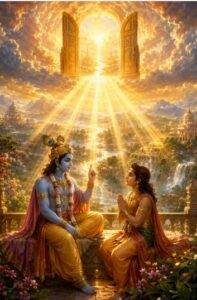 Sāmba was the son of Śrī Kṛṣṇa. In the Purāṇic tradition, he is remembered as a powerful and beautiful prince, but also as one who had to pass through deep suffering.
According to the legend, Sāmba became afflicted with a terrible skin disease, often described as leprosy. His beauty was destroyed, his body suffered, and his life was changed completely. This suffering became the turning point of his destiny.
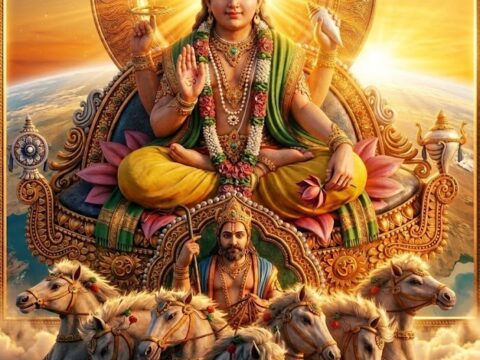
Sāmba was advised to worship Sūrya, the divine Sun, because Sūrya is the giver of health, vitality, sight, strength, and life-force. The Sun is not only a light in the sky. He is the visible form of divine power that sustains the world.
Following the instruction, Sāmba went to Mitravana, a sacred place on the bank of the Candrabhāgā river. There he performed severe tapas and worshipped Sūrya with full devotion. His prayer was not casual. It was intense, disciplined, and filled with surrender. Day after day, Sāmba worshipped the Sun. He turned his suffering into spiritual fire. At last, Sūrya was pleased. The Sun God appeared before Sāmba and blessed him. Through the grace of Sūrya, Sāmba was cured of his disease. His health was restored, and his life was renewed. But the blessing did not end with his personal healing. Sūrya instructed him to establish a sacred image and temple so that others too could worship the Sun and receive his grace.
Later, Sāmba found an image of Sūrya floating in the waters of the Candrabhāgā river. This was not an ordinary image. It was said to have been fashioned by Viśvakarman, the divine architect. The image had been prepared for Sāmba so that the worship of Sūrya could be established on earth.
Sāmba installed the image and built a temple for Sūrya at Mitravana. This place became connected with Sāmbapura, and the worship of Sūrya became deeply associated with Sāmba’s name.
Thus, the prince who had suffered from disease became the one who established a powerful current of solar worship for the world.
The deeper part of the legend reveals that Sūrya is not merely one form. The Sāmba Purāṇa presents Sūrya as the supreme solar power who manifests through twelve forms. These are the Dvādaśa Ādityas, the twelve solar deities born from Aditi.
They are:
Indra, Dhātṛ, Parjanya, Pūṣan, Tvaṣṭṛ, Aryaman, Bhaga, Vivasvat, Viṣṇu, Aṃśu, Varuṇa, and Mitra.
These twelve forms are not only names. Each represents a particular function of the Sun in creation.
Through them, Sūrya nourishes, protects, governs, heals, transforms, and sustains the universe.
स्थिता सा देवराजत्वे देवानामनुशासने ॥
sthitā sā devarājatve devānām anuśāsane ||
स्थिता प्रजापतित्वे सा विविधाः सृजते प्रजाः ॥
sthitā prajāpatitve sā vividhāḥ sṛjate prajāḥ ||
मेघेष्ववस्थिता सा तु वर्षते च गभस्तिभिः ॥
megheṣv avasthitā sā tu varṣate ca gabhastibhiḥ ||
अन्ने व्यवस्थिता सा तु प्रजाः पुष्णाति नित्यशः ॥
anne vyavasthitā sā tu prajāḥ puṣṇāti nityaśaḥ ||
स्थिता वनस्पतौ सा तु ओषधीषु च सर्वशः ॥
sthitā vanaspatau sā tu oṣadhīṣu ca sarvaśaḥ ||
वायोः सञ्चरणार्था सा देहेष्वेव समाश्रिता ॥
vāyoḥ sañcaraṇārthā sā deheṣv eva samāśritā ||
भूमौ व्यवस्थिता सा तु शरीरेषु च देहिनाम् ॥
bhūmau vyavasthitā sā tu śarīreṣu ca dehinām ||
अग्नौ व्यवस्थिता सा तु पचत्यन्नं शरीरिणाम् ॥
agnau vyavasthitā sā tu pacaty annaṃ śarīriṇām ||
प्रादुर्भवति सा नित्यं देवानामरिसूदनी ॥
prādurbhavati sā nityaṃ devānām ari-sūdanī ||
वायौ प्रतिष्ठिता सा तु प्रह्लादयति वै प्रजाः ॥
vāyau pratiṣṭhitā sā tu prahlādayati vai prajāḥ ||
सा जीवयति वै कृत्स्नं जगदप्सु प्रतिष्ठिता ॥
sā jīvayati vai kṛtsnaṃ jagad apsu pratiṣṭhitā ||
तस्माद्वै प्रोच्यते नाम्ना सागरो वरुणालयः ॥
tasmād vai procyate nāmnā sāgaro varuṇālayaḥ ||
लोकानां सा हितार्थाय स्थिता चन्द्रसरित्तटे ॥
lokānāṃ sā hitārthāya sthitā candra-sarit-taṭe ||
अनुगृह्णन् सदा भक्तान् वरैर्नानाविधैस्तु सः ॥
anugṛhṇan sadā bhaktān varair nānāvidhais tu saḥ ||
Pandit Sanjay Rath mentions: “In the Parāśarī/Jyotiṣa approach, the twelve Ādityas are primarily connected with time, the twelve months, the twelve rāśis, and the movement of Sūrya. A modern Jyotiṣa explanation based on the Śatapatha Brāhmaṇa passage says the twelve Ādityas are “the twelve months represented by the twelve signs,” and that they define the time-space principle of Jyotiṣa through the solar month and solar year (Samvatsara).”
In that Parāśarī / Viṣṇu Purāṇa monthly order, the Ādityas are:
| Month | Āditya |
|---|---|
| Chaitra | Dhātā |
| Vaiśākha | Aryaman |
| Jyeṣṭha | Mitra |
| Āṣāḍha | Varuṇa |
| Śrāvaṇa | Indra |
| Bhādrapada | Vivasvān |
| Āśvina | Pūṣan |
| Kārttika | Parjanya |
| Mārgaśīrṣa | Aṃśu |
| Pauṣa | Bhaga |
| Māgha | Tvaṣṭṛ |
| Phālguna | Viṣṇu |
In the Sāmba Purāṇa 8.5-8.7:
uttiṣṭhanti sadā hy ete māsair dvādaśabhiḥ kramāt |
viṣṇus tapati caitre tu vaiśākhe cāryamā tathā ||
vivasvān jyeṣṭhamāse tu āṣāḍhe cāṃśumān smṛtaḥ |
parjanyaḥ śrāvaṇe māsi varuṇaḥ proṣṭhasañjñake |
indro ’śvayuṅmāse tu dhātā tapati kārtike ||
mārgaśīrṣe tathā mitraḥ pūṣā pauṣe divākaraḥ |
māghe bhagas tu vijñeyas tvaṣṭā tapati phālgune ||
They always rise in sequence through the twelve months. Viṣṇu shines in Chaitra, and Aryamā in Vaiśākha.Vivasvān shines in the month of Jyeṣṭha, and Aṃśumān is remembered in Āṣāḍha. Parjanya shines in Śrāvaṇa, and Varuṇa in Proṣṭhapada. Indra shines in Aśvayuja, and Dhātā shines in Kārttika.
Mitra shines in Mārgaśīrṣa, and Pūṣā, the Sun, in Pauṣa. Bhaga is to be known in Māgha, and Tvaṣṭā shines in Phālguna.
So comparing the two we get the following picture:
| Month | Sāmba Purāṇa Āditya | Parāśara Āditya |
|---|---|---|
| Caitra / Chaitra | Viṣṇu | Dhātā |
| Vaiśākha | Aryamā | Aryaman |
| Jyeṣṭha | Vivasvān | Mitra |
| Āṣāḍha | Aṃśumān | Varuṇa |
| Śrāvaṇa | Parjanya | Indra |
| Proṣṭhapada | Varuṇa | Vivasvān |
| Āśvina / Aśvayuja | Indra | Pūṣan |
| Kārttika | Dhātā | Parjanya |
| Mārgaśīrṣa | Mitra | Aṃśu / Aṃśumān |
| Pauṣa | Pūṣā | Bhaga |
| Māgha | Bhaga | Tvaṣṭṛ |
| Phālguna | Tvaṣṭā | Viṣṇu |
We shall agree that there must be some explanation for the difference, and thus there is no clear answer as to why the list varies so much. In Jyotiṣa, we follow the list given by Parāśara. There is a vast field for research on this matter and our aim is to show differences shown in Purana and create an interest in further reseach.
Written by Dana Khanina, inspired by the teachings of Guruji Panit Sanjay Rath .
OM TAT SAT
Om Shanti, Shanti, Shanti