Written by ShivKaDaas
नारायणं नमस्कृत्य नरं चैव नरोत्तमम् । देवीं सरस्वतीं व्यासं ततो जयमुदीरयेत् ॥
Puruṣa
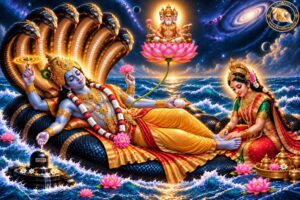
Śrīmad Bhāgavatam(Canto 1, Chapter 3)
जगृहे पौरुषं रूपं भगवान्महदादिभिः । सम्भूतं षोडशकलमादौ लोकसिसृक्षया ।।१
यस्याम्भसि शयानस्य योगनिद्रां वितन्वतः । नाभिह्रदाम्बुजादासीद्ब्रह्मा विश्वसृजां पतिः ।।२
यस्यावयवसंस्थानैः कल्पितो लोकविस्तरः । तद्वै भगवतो रूपं विशुद्धं सत्त्वमूर्जितम् ||३
एतन्नानावताराणां निधानं बीजमव्ययम् । यस्यांशांशेन सृज्यन्ते देवतिर्यङ्नरादयः ।। ५
In the beginning, desiring to create the universe, the Supreme Personality of Godhead (Bhagavan) assumed the cosmic form (Puruṣa-rupa), which was manifested out of the elemental principles starting from the Mahat-tattva (cosmic intelligence) and possessed sixteen constituent parts (the ten senses, the mind, and the five physical elements).
As He lay in Yoga-nidra upon the vast casual waters, a lotus sprouted from the lake-like depression of His navel. From that lotus arose Lord Brahmā, the master of all creators of the universe.
All the vast planetary systems throughout the universe are conceived to be situated within the limbs and arrangement of His cosmic body. That form of the Supreme Lord is purely spiritual (vishuddha-sattva), untainted by material nature, and full of supreme potency.
This [Puruṣaform] is the imperishable seed and repository of various incarnations. By a fraction of His fraction, gods, animals, humans, and other species are created.
Comment: Adi Puruṣa(Mahā-Viṣṇu) is the original source from whom all avatars emanate, rather than a transient incarnation born into the material world.
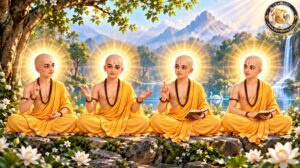
1. Four Kumaras (Sanaka, Sanatana, Sanandana, Sanat-kumara)
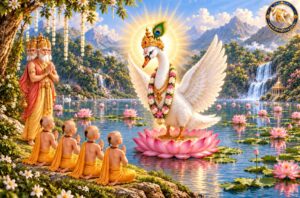
Śrīmad Bhāgavatam(Canto 1, Chapter 3)
स एव प्रथमं देवः कौमारं सर्गमाश्रितः । चचार दुश्चरं ब्रह्मा ब्रह्मचर्यमखण्डितम् ॥ ६ ॥
In the very beginning, that Supreme Deity accepted the form of the young Kumara brothers and practiced the extremely difficult, unbroken vow of lifelong celibacy.
Śrīmad-Bhāgavatam (Canto 3, Chapter 12)
सनकं च सनन्दं च सनातनमथात्मभूः । सनत्कुमारं च मुनीन्निष्क्रियानूर्ध्वरेतसः ॥ 4 ॥
तान्बभाषे स्वभूः पुत्रान्प्रजाः सृजत पुत्रकाः । तन्नैच्छन्मोक्षधर्माणो वासुदेवपरायणाः ॥ ५ ॥
Then the self-born one [Brahmā created] the sages Sanaka, Sanandana, Sanātana, and Sanatkumāra, who were free from worldly activity and lifelong celibates.
The self-born one [Brahmā] spoke to those sons: “O my dear sons, create progeny!” They did not desire that [order], being devoted to the path of liberation and completely intent upon Vāsudeva.
Śrī Guru
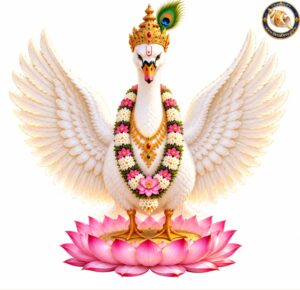
While the Kumāras possessed inherent spiritual knowledge from birth, their ultimate instruction in the highest truths of Ātma-vidyā (self-realization) and Bhāgavata Dharma came directly from Lord Śrī Viṣṇu appearing as the Haṁsa Avatāra (The Divine Swan).
Śrīmad-Bhāgavatam (Canto 11, Chapter 13)
श्रीभगवानुवाच
पुत्रा हिरण्यगर्भस्य मानसाः सनकादयः । पप्रच्छुः पितरं सूक्ष्मां योगस्यैकान्तिकीम्गतिम् ॥ १६ ॥
सनकादय ऊचुः
गुणेष्वाविशते चेतो गुणाश्चेतसि च प्रभो । कथमन्योन्यसन्त्यागो मुमुक्षोरतितितीर्षोः ॥ १७ ॥
श्रीभगवानुवाच
एवं पृष्टो महादेवः स्वयम्भूर्भूतभावनः । ध्यायमानः प्रश्नबीजं नाभ्यपद्यत कर्मधीः ॥ १८ ॥
स मामचिन्तयद्देवः प्रश्नपारतितीर्षया । तस्याहं हंसरूपेण सकाशमगमं तदा ॥ १९ ॥
दृष्ट्वा माम्त उपव्रज्य कृत्व पादाभिवन्दनम् । ब्रह्माणमग्रतः कृत्वा पप्रच्छुः को भवानिति ॥ २० ॥
The mind-born sons of Hiranyagarbha [Brahmā], Sanaka and the others, asked their father about the subtle, ultimate goal of yoga.
Sanaka and the others said:
“O Lord, the mind enters into the sense objects, and the sense objects enter into the mind. How is there mutual abandonment between the two for one desiring liberation and wishing to cross over [material existence]?”
The Supreme Lord said:
Thus questioned, the great self-born deity [Brahmā], the creator of living beings, although meditating, did not comprehend the root of the question, as his intelligence was directed toward creative work.
Desiring to reach the resolution of the question, that deity [Brahmā] meditated upon Me. Then, in the form of a Swan, I went into his presence.
Seeing Me, they approached, bowed down at My feet, and placing Brahmā at their head, asked: “Who are You?”
Cursed Jaya and Vijaya at Vaikuṇṭha
Śrīmad-Bhāgavatam (Canto 3, Chapter 15)
तस्मिन्नतीत्य मुनयः षडसज्जमानाः कक्षाः समानवयसावथ सप्तमायाम् ।
देवावचक्षत गृहीतगदौ परार्ध्य- केयूरकुण्डलकिरीटविटङ्कवेषौ ॥ २७ ॥
मत्तद्विरेफवनमालिकया निवीतौ विन्यस्तयासितचतुष्टयबाहुमध्ये |
वक्त्रं भ्रुवा कुटिलया स्फुटनिर्गमाभ्यां रक्तेक्षणेन च मनाग्रभसं दधानौ ॥ २८ ॥
द्वार्येतयोर्निविविशुर्मिषतोरपृष्ट्वा पूर्वा यथा पुरटवज्रकपाटिका याः ।
सर्वत्र तेऽविषमया मुनयः स्वदृष्ट्या ये सञ्चरन्त्यविहता विगताभिशङ्काः ॥ २९ ॥
तान्वीक्ष्य वातरशनांश्चतुरः कुमारान् वृद्धान्दशार्धवयसो विदितात्मतत्त्वान् ।
वेत्रेण चाखलयतामतदर्हणांस्तौ तेजो विहस्य भगवत्प्रतिकूलशीलौ ॥ ३० ॥
Having passed through six gates without attachment, the sages then at the seventh gate saw two deities holding maces, who were of equal age and adorned in beautiful attire with priceless armlets, earrings, and crowns.
[They were] encircled by garlands of forest flowers surrounded by intoxicated bees, placed between their four dark arms; they displayed a slight agitation on their faces with arched, noticeably bulging eyebrows and reddish eyes.
The sages entered through those doors made of gold and diamonds without asking, right while the two were looking on, just as [they had entered] the previous gates; for by their own vision, seeing no distinction anywhere, those sages wander unhindered and free from fear.
Seeing those four wind-clad [naked] Kumāras—who were ancient elders appearing five years of age and knew the truth of the Self—those two [doorkeepers], whose disposition was contrary to the Lord, slighted their spiritual radiance with a laugh and blocked with a staff those who did not deserve such treatment.
Kumāra said
तद्वाममुष्य परमस्य विकुण्ठभर्तुः कर्तुं प्रकृष्टमिह धीमहि मन्दधीभ्याम् ।
लोकानितो व्रजतमन्तरभावदृष्ट्या पापीयसस्त्रय इमे रिपवोऽस्य यत्र ॥ ३४ ॥
“Therefore, we consider that a heavy offense against this Supreme Lord of Vaikuṇṭha has been committed here by you two dull-witted ones. Because of your perception of duality, go from here to those worlds where these three most sinful enemies of a living entity [lust, anger, and greed] reside.”
Instructed Mahārāja Pṛthu on Liberation
Śrīmad-Bhāgavatam (Canto 4, Chapter 22)
तदहं कृतविश्रम्भः सुहृदो वस्तपस्विनाम् । सम्पृच्छे भव एतस्मिन्क्षेमः केनाञ्जसा भवेत् ॥ १५ ॥
मैत्रेय उवाच
पृथोस्तत्सूक्तमाकर्ण्य सारं सुष्ठु मितं मधु । स्मयमान इव प्रीत्या कुमारः प्रत्युवाच ह ॥ १७ ॥
अहिंसया पारमहंस्यचर्यया स्मृत्या मुकुन्दाचरिताछयसीधुना । यमैरकामैर्नियमैश्चाप्यनिन्दया निरीहया द्वन्द्वतितिक्षया च ॥ २४ ॥
Therefore, having placed full confidence in you who are the well-wishers of ascetics, I inquire: by what means can ultimate welfare easily be attained in this worldly existence?
Maitreya Uvāca
Having heard those well-spoken words of Pṛthu—which were essential, very well-measured, sweet, and profound—the Kumāra [Sanatkumāra], smiling as if with delight, replied.
Sanatkumar Uvāca
[Ultimate welfare is attained] through non-violence, by practicing the conduct of the Paramahaṁsas [highest renunciates], by constant remembrance derived from the ocean of nectar of Mukunda’s pastimes, through desireless self-restraints (yamas) and spiritual observances (niyamas), by refraining from blasphemy and fault-finding, by freedom from worldly strivings, and by the tolerant endurance of dualities [such as heat and cold, pleasure and pain].
Maa Mahālakṣmī as Brahmā-Vidya / Nivritti / Haṁsa-Vidyā / Brahmācharya
Mahabharata (Shanti Parva, Adhyaya 340, Verses 67–69)
सनः सनत्सुजातश्च सनकः ससनन्दनः । सनत्कुमारः कपिल सप्तमश्च सनातनः ॥ ७२ ॥
सप्तैते मानसाः प्रोक्ता ऋषयो ब्रह्मणः सुताः । स्वयमागतविज्ञाना निवृत्ति धर्ममास्थिताः ॥ ७३ ॥
एते योगविदो मुख्याः सांख्यज्ञान विशारदाः । आचार्या धर्मशास्त्रेषु मोक्षधर्मप्रवर्तकाः ॥ ७४ ॥
Sana, Sanatsujata, Sanaka, together with Sanandana, Sanatkumara, Kapila, and Sanatana as the seventh—these seven are declared to be the mind-born sages, the direct sons of Brahmā. Possessing spontaneously manifested divine wisdom, they are firmly established in Nivritti-dharma. They are the foremost knowers of Yoga, masters proficient in the knowledge of Sankhya, preceptors in the scriptures of righteousness, and the true propagators of Moksha-dharma.
Comment: Note that Śrī Nārada Muni is the Śiṣya of these 4 Sanatkumar as mentioned in Chāndogya Upaniṣad (7.1.1)
ॐ अधीहि भगव इति होपससाद सनत्कुमारं नारदस्त ँ होवाच यद्वेत्थ तेन नोपसीद ततस्त ऊर्ध्वं वक्ष्यामीति स होवाच ॥ १ ॥
(Ādi Śaṅkara’s commentary) Sanatkumar Said:
होवाच यदात्मविषये किश्चिद्वेत्थ तेन तत्प्रख्यापनेन मामुपसीदेदमहं जान इति, ततोऽहं भवतो विज्ञानात्ते तुभ्यमूर्ध्वं वक्ष्यामि, इत्युक्तवति स होवाच नारदः || १ |
[Sanatkumara] said: ‘Approach me by declaring whatever you know within your own understanding, saying “I know this.” Then, beyond what you have already mastered, I shall teach you what lies higher.’
When [Sanatkumara] had spoken thus, Sage Śrī Nārada spoke [as follows]…
2. Śrī Varāha
Śrīmad Bhāgavatam(Canto 1, Chapter 3)
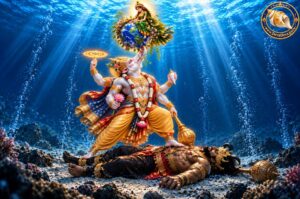
द्वितीयं तु भवायास्य रसातलगतां महीम् ।उद्धरिष्यन्नुपादत्त यज्ञेशः सौकरं वपुः ॥ ७ ॥
For the welfare of this universe, intending to lift up the Earth that had fallen into the lower realms (Rasātala), the Lord of Sacrifice assumed His second form—that of a boar (Varāha).
Śrīmad-Bhāgavatam (Canto 3, Chapter 13)
इत्यभिध्यायतो नासाविवरात्सहसानघ । वराहतोको निरगादङ्गुष्ठपरिमाणकः ॥ १८ ॥
तस्याभिपश्यतः खस्थः क्षणेन किल भारत । गजमात्रः प्रववृधे तदद्भुतमभून्महत् ॥ १९ ॥
दृष्टोऽङ्गुष्ठशिरोमात्रः क्षणाद्गण्डशिलासमः । अपि स्विद्भगवानेष यज्ञो मे खेदयन्मनः ॥ २२ ॥
उत्क्षिप्तवालः खचरः कठोरः सटा विधुन्वन्खररोमशत्वक् । खुराहताभ्रः सितदंष्ट ईक्षा ज्योतिर्बभासे भगवान्महीभ्रः ॥ २७ ॥
स्वदंष्ट्रयोद्धृत्य महीं निमग्नां स उत्थितः संरुरुचे रसायाः । तत्रापि दैत्यं गदयापतन्तं सुनाभसन्दीपिततीव्रमन्युः ॥ ३१ ॥
While [Brahmā] was thus meditating, O sinless one, suddenly a young boar child measuring the size of a thumb came forth from the cavity of his nostril.
While He [Brahmā] was looking on, O descendant of Bharata, [the boar] situated in the sky expanded in an instant to the size of an elephant; that became indeed a great wonder.
“First seen measuring only the size of a thumb-tip, in a moment [He has become] equal to a massive boulder. Is this Supreme Lord Yajña [Sacrifice personified], who is agitating my mind?”
With His tail raised up, moving in the sky, mighty, shaking His mane, possessing skin with hard bristly hair, striking the clouds with His hooves, with white tusks, and glowing with radiant eyes, the Lord shone like a mountain.
Having lifted up on His tusk the submerged earth, He who rose from Rasātala looked splendid. Even there, [seeing] the demon rushing at Him with a mace, His fierce anger was ignited like [His disc] Sunābha.
Nārasiṃha Purāṇa Chapter 39
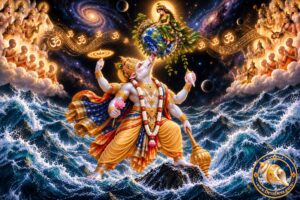
प्रविश्य च हिरण्याक्षं युद्धे जित्वा वृषाकपिः । दंष्ट्राग्रेण ततः पृथ्वीं समुद्धृत्य रसातलात् ॥ १६
Entering and conquering Hiranyaksha in battle, the Boar incarnation (Vrishakapi), with the tip of His tusks, then lifted the earth up from the subterranean region (Rasātala).
Maa Mahālakṣmī as Pṛthivī / Dharā / Vasundharā / Vārāhī
Varāha Purāṇa Chapter 1, Sloka 2
दष्टाग्रेणोदधृता गौरुदधिपरिवृता पर्वतैर्निम्नगाभिः साक पृत्पिण्डवत् प्राग्बृहदुरुवपुषाऽनन्तरूपेण येन।
सोऽयं कंसासुरारीर्मुरनरकदशास्यान्तकृत्सर्वसंस्थः कृष्णो विष्णुः सुरेशो नुदतु मम रिपूनादिदेवो वराहः॥२॥
May that Primeval Deity Lord Varāha—who in ancient times, assuming an immense and infinite form, lifted up on the tip of His tusk the Earth along with its oceans, mountains, and rivers as effortlessly as a lump of clay; who is Himself Lord Kṛṣṇa, Viṣṇu, the Supreme Lord of the gods, the enemy of Kaṁsa, the slayer of Mura, Narakāsura, and the ten-headed Rāvaṇa, and who resides within all beings—dispel and destroy all my enemies.
धरण्युवाच
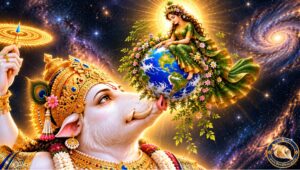
पुनर्वाराहरूपेण आगच्छन्तीं रसातलम्। उज्जहारैकदंष्ट्रेण भगवन् वै महार्णवात् ॥8॥
Dharani said:
O Bhagavan! Assuming the form of Varāha, You indeed rescued me with a single tusk from the great cosmic ocean when I was sinking down into Rasātala.
Viṣṇu Purāṇaa, Aṁśa (Book) 1, Adhyāya (Chapter) 4, Verse 12.
निरीक्ष्य तं तदा देवी पातालतलमागतम् । तुष्टाव प्रणता भूत्वा भक्तिनम्रा वसुन्धरा ॥ 1.4.11
नमस्ते पुण्डरीकाक्ष शङ्खचक्रगदाधर । मामुद्धरास्मादद्य त्वं त्वत्तोऽहं पूर्वमुत्थिता ॥ 1.4.12
Then, beholding Him descended into the depths of the netherworld (Pātāla), Goddess Vasundhara (Mother Earth), bowing down and humbled with deep devotion, offered hymns of praise [unto Him].
Salutations unto You, O Lotus-eyed Lord, Holder of the Conch, Discus, and Mace! Lift me up from this [abyss] today, O Lord; I arose from You in the beginning.
Comment: Note that Padma is not mentioned. He has been referred as holding only Conch, Discuss and Mace.
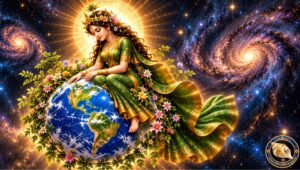
Viṣṇu Purāṇa Part 1 Chapter 4, Sloka 25-26
श्री पराशर उवाच
एवं संस्तूयमानस्तु पृथिव्या धरणीधरः । सामस्वरध्वनिः श्रीमाञ्जगर्ज परिघर्घरम् ॥ २५
ततः समुत्क्षिप्य धरां स्वदंष्ट्रया महावराहः स्फुटपद्मलोचनः । रसातलादुत्पलपत्रसन्निभः समुत्थिती नील इवाचलो महान् ॥ २६
Śrī Parasara said:
Thus being praised by the Earth Goddess, the glorious Supporter of the Earth (Lord Varāha)—whose roar resonated with the sacred chanting sound of the Sāmaveda—thundered with a deep, rumbling growl.
Then, having lifted up the Earth on His tusk from the netherworld (Rasātala), the Great Boar—having eyes like fully blooming lotuses and possessing a hue like a dark blue lotus petal—rose up like a massive dark mountain.
Comment: As we consider Śrī Parāśara as final authority, we take the word “Pṛthivī” as final consort of Śrī Varāha. Śrī Varāha is called Dharaṇīdharaḥ. He has also used the second name “धराम्” so we can also take the name of Devī as धरा (Dharā).
Markandeya Puran / Durga Sapshati Chapter 8 – Raktbija Vadh
यज्ञवाराहमतुलं रूपं या बिभ्रतो हरेः। शक्तिः साप्याययौ तत्र वाराहीं विभ्रती तनुम् ॥१९
That Śakti of Hari—who bears the incomparable form of the Sacrificial Boar—also arrived there, assuming the body of Vārāhī.
3. Śrī Nārada Muni
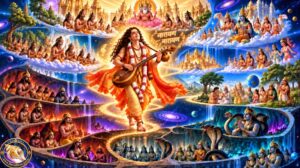
Śrīmad Bhāgavatam(Canto 1, Chapter 3)
तृतीयमृषिसर्गं च देवर्षित्वमुपेत्य सः । तन्त्रं सात्वतमाचष्ट नैष्कर्म्यं कर्मणां यतः ॥ ८ ॥
And in the third [creation/incarnation], assuming the status of a divine sage (Devarṣi) among the creation of sages, He promulgated the Sātvata-tantra, through which actions culminate in transcendence (nHis aiṣkarmyam).
Chāndogya Upaniṣad (7.1.1)
ॐ अधीहि भगव इति होपससाद सनत्कुमारं नारदस्त ँ होवाच यद्वेत्थ तेन नोपसीद ततस्त ऊर्ध्वं वक्ष्यामीति स होवाच ॥ १ ॥
(Ādi Śaṅkara’s commentary) Sanatkumar Said:
होवाच यदात्मविषये किश्चिद्वेत्थ तेन तत्प्रख्यापनेन मामुपसीदेदमहं जान इति, ततोऽहं भवतो विज्ञानात्ते तुभ्यमूर्ध्वं वक्ष्यामि, इत्युक्तवति स होवाच नारदः || १ |
[Sanatkumara] said: ‘Approach me by declaring whatever you know within your own understanding, saying “I know this.” Then, beyond what you have already mastered, I shall teach you what lies higher.’
When [Sanatkumara] had spoken thus, Sage Śrī Nārada spoke [as follows]:
Chāndogya Upaniṣad (7.1.2)
ऋग्वेदं भगवोऽध्येमि यजुर्वेद ँसामवेदमाथर्वणं चतुर्थमितिहासपुराणं पञ्चमं वेदानां वेदं पित्र्य ँ राशिं दैवं निधिं वाकोवाक्यमेकायनं देवविद्यां ब्रह्मविद्यां भूतविद्यां क्षत्र विद्यां नक्षत्रविद्या ँ सर्पदेवजनविद्यामेतद्भगवोऽध्येमि ॥ २ ॥
(Ādi Śaṅkara’s commentary) Muni Śrī Nārada Ji said
ऋग्वेदं भगवोऽध्येमि स्मरामि यद्वेत्थेति विज्ञानस्य पृष्टत्वात् । तथा यजुर्वेदं साम्रवेदमाथर्वणं चतुर्थं वेदं वेदशब्दस्य प्रकृतत्वादितिहासपुराणं पञ्चमं वेदं वेदानां भारतपश्चमानां वेदं व्याकरणमित्यर्थः । व्याकरणेन हि पदादिविभागश ऋग्वेदादयो ज्ञायन्ते; पित्र्यं श्राद्ध-कल्पम्; राशिं गणितम् ; दैवमुत्पातज्ञानम्; निधिं महाकालादिनिधिशास्त्रम्; वाकोवाच्यं तर्कशास्त्रम्; एकायनं नीतिशास्त्रम्; देवविद्यां निरुक्तम्; ब्रह्मण ऋग्यजुःसामाख्यस्य विद्यां ब्रह्मविद्यां शिक्षाकल्पच्छन्दश्चितय; भूतविद्यां भूततन्त्रम्; क्षत्रविद्यां धनुर्वेदम्; नक्षत्रविद्यां ज्यौतिषम्; सर्पदेवजनविद्यां सर्पविद्यां गारुडं देवजनविद्यां गन्धयुक्तिनृत्यगीतवाद्यशिल्पादिविज्ञानानि । एतत्सर्वं हे भागवोऽध्येमि ||२||
O Venerable Sir, I study the Rigveda; I recall [this] because I was asked to state what I know. Likewise, [I know] the Yajurveda, the Sāmaveda, and the Atharvana as the fourth Veda, since the word ‘Veda’ is the subject under discussion. [I know] the Itihasa and Purāṇaa as the fifth Veda.
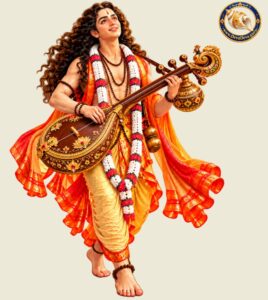
The Veda of the Vedas’ (Vedanam Vedam) means Grammar (Vyakarana); for it is through grammar that the Rigveda and other scriptures are understood in terms of their division into words and accents.
Paitryam (पित्र्यम्): The ritual manual for ancestral rites (Shraddha-kalpa).
Rashim (राशिम्): Mathematics / Arithmetic (Ganitam).
Daivam (दैवम्): The science of natural portents and omens (Utpata-jnanam).
Nidhim (निधिम्): The science of hidden treasures (Nidhi-shastra).
Vakovakyam (वाकोवाच्यम्): Logic and dialectics (Tarka-shastra).
Ekayanam (एकायनम्): Ethics and political science (Niti-shastra).
Devavidyam (देवविद्याम्): Etymology (Nirukta).
Brahmāvidyam (ब्रह्मविद्याम्): The knowledge of the sacred Vedic texts (Rig, Yajur, Sama)—namely Phonetics (Shiksha), Rituals (Kalpa), Prosody (Chhandas), and Altar Geometry (Chiti).
Bhutavidyam (भूतविद्याम्): The science of subtle entities and spirits (Bhuta-tantra).
Kshatravidyam (क्षत्रविद्याम्): Archery and military science (Dhanurveda).
Nakshatravidyam (नक्षत्रविद्याम्): Astronomy and astrology (Jyotisha).
Sarpadevajanavidyam (सर्पदेवजनविद्याम्):
Sarpa-vidya
Devajana-vidya
All this, O Venerable Sir, I study.Comment: Note that Śrī Nārada Muni is the Śiṣya of the 4 Sanatkumar as mentioned in Chāndogya Upaniṣad. As per Liṅga Purāṇa, He is also Śiṣya of Devī Rukmani, Devī Satyabhma, Devī Jambvati and Śrī Kṛṣṇa.
To know more about Devrshi Śrī Nārada, please check my article titled “Gurudev Śrī Nārada”.
Maa Mahālakṣmī as Mahati वीणा (Śrī Nārada Pancharatra / Bhakti)
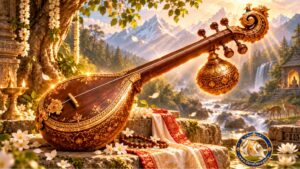
Srimad Bhagavat MahaPurāṇa Canto 1, Chapter 6, Verse 33
देवदत्तामिमां वीणां स्वरब्रह्मविभूषिताम् । मूर्च्छयित्वा हरिकथां गायमानश्चराम्यहम् ।।३३
I wander [across the worlds] singing the narrations of Śrī Hari, vibrating this veena given by the Lord, which is adorned with transcendental sound.
Comment: The critical word here is स्वरब्रह्मविभूषिताम् (svara-Brahmā-vibhūṣitām) — adorned with the Absolute Truth in the form of musical sound. The Mahatī veena teaches that spiritual perfection is not a silent, void state, but a vibrant, musical resonance of divine qualities (Hari-kathā). By tuning the mūrcchanās (musical scales) on Mahatī, Śrī Nārada demonstrates that the material elements (wood and string) can become completely spiritualized when engaged in divine glorification.
Scripture distinguishes between two forms of the Absolute Truth as sound:
Śabda-Brahmā: The intricate grammatical and metrical mantras of the Vedas, which require strict rules, purity, and intellect to master.
Svara-Brahmā (or Nāda-Brahmā): The pure musical vibration of divine love, which bypasses the intellect and directly purifies the soul.
The Veena, Mahatī, does not teach through grammatical lectures; it teaches by manifesting Svara-Brahmā. It demonstrates that salvation is most easily accessible through divine music and chanting (Kirtana), completely democratizing spiritual liberation for all beings, regardless of their Vedic qualifications.
Srimad Bhagavat MahaPurāṇa Canto 1, Chapter 6
एतदध्यातुरचित्तानां मात्रास्पर्शेच्छया मुहु: । भवसिन्धुप्लवो दृष्टो हरिचर्यानुवर्णनम् ।३५
Indeed, for those whose minds are repeatedly distressed by the constant desire for sensory gratification, the constant chanting and description of the activities of Śrī Hari is realized as the ultimate boat to cross the ocean of material existence.
Srimad Bhagavat MahaPurāṇa Canto 1, Chapter 6
अहो देवर्षिर्धन्योऽयं यत्कीर्तिं शार्ङ्गधन्वनः । गायन्माद्यन्निदं तन्त्र्या रमयत्यातुरं जगत् ।।३९
Oh, how glorious is Devarshi Śrī Nārada! Becoming absorbed in divine ecstasy while singing the glories of Lord Śrī Viṣṇu, he uplifts and gladdens the distressed world through the music of his stringed instrument (tantrī / veena).
Śrī Nārada Bhakti Sūtra (1.2 & 1.3)
सा त्वस्मिन् परमप्रेमरूपा ॥ २ ॥
अमृतस्वरूपा च ॥ ३ ॥
True devotion (Bhakti) is of the nature of supreme, unalloyed love for the Lord.
And it is of the nature of nectar/immortality.
4. Nara-Nārāyaṇa
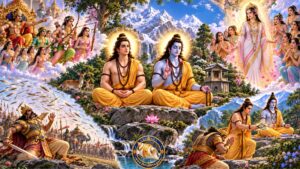
Śrīmad Bhāgavatam(Canto 1, Chapter 3)
तुर्ये धर्मकलासर्गे नरनारायणावृषी ।भूत्वाऽऽत्मोपशमोपेतमकरोद् दुश्चरं तपः ॥ ९ ॥
In the fourth incarnation, the Lord appeared as the twin sages Nara and Nārāyaṇa, born from the wife of Dharma. He underwent severe austerities to completely control the mind and senses (ātma-upaśama).
Śrīmad-Bhāgavatam (4.1.48 & 4.1.52):
तस्यां ससर्ज दुहितृः षोडशामललोचनाः । त्रयोदशादाद्धर्माय तथैकामग्नये विभुः ॥ ४८ ॥
मूर्ति: सर्वगुणोत्पत्तिनरनारायणावृषी ॥५२॥
In her [Prasūti], the powerful lord [Dakṣa] begot sixteen pure-eyed daughters. He gave thirteen [of them] to Dharma and likewise one to Agni.
Mūrti, the source of all good qualities, [bore] the two sages Nara and Nārāyaṇa.
They were born to Prajāpati Dharma and his wife Mūrti (the daughter of Dakṣa). Immediately after their birth, they departed to the Himālaya, specifically to Badarikāśrama, to perform eternal penance for the spiritual welfare of all living entities.
Major Event I: The Defeat of Kāmadeva and Creation of Urvaśī
Devī Bhāgavata Skandha 4, Chapter 5
ब्रह्मणो हृदयाज्जातः पुत्रो धर्म इति स्मृतः॥ ९
ब्राह्मणः सत्यसम्पन्नो वेदधर्मरतः सदा। दक्षस्य दुहितारो हि वृता दश महात्मना॥ १०
विवाहविधिना सम्यङ् मुनिना गृहधर्मिणा। तास्वजीजनयत्पुत्रान्धर्मः सत्यवतां वरः॥ ११
हरिं कृष्णं नरं चैव तथा नारायणं नृप। योगाभ्यासरतो नित्यं हरिः कृष्णो बभूव ह॥ १२
नरनारायणौ चैव चेरतुस्तप उत्तमम्। प्रालेयाद्रिं समागत्य तीर्थे बदरिकाश्रमे॥ १३
नरनारायणाभ्यां च शक्रः क्षोभं तदा ययौ॥ १६
The son born from the heart of Brahmā is known as Dharma.
Endowed with truth and always devoted to Vedic righteousness, ten daughters of Dakṣa were indeed accepted [in marriage] by that great soul.
Dharma, the foremost among the truthful, acting as a householder sage through proper marriage rites, begot sons in them.
O King, [these sons were] Hari, Kṛṣṇa, Nara, and Nārāyaṇa. Hari and Kṛṣṇa became constantly absorbed in the practice of yoga.
Whereas Nara and Nārāyaṇa, having arrived at the snowy mountain [the Himālaya] at the sacred pilgrimage place of Badarikāśrama, performed supreme austerities.
And then, Indra [Shakra] became agitated on account of Nara and Nārāyaṇa.
Devī Bhāgavata Skandha 4, Chapter 5
कर्तुं कामवसन्तौ तु समाहूयाब्रवीद्वाचः । मनोभव वसन्तेन रत्या युक्तो व्रजाधुना॥ ३५
अप्सरोभिः समायुक्तस्तरसा गन्धमादनम्। नरनारायणौ तत्र पुराणावृषिसत्तमौ॥ ३६
कुरुतस्तप एकान्ते स्थितौ बदरिकाश्रमे। गत्वा तत्र समीपे तु तयोर्मन्मथ मार्गणैः॥ ३७
चित्तं कामातुरं कार्यं कुरु कार्यं ममाधुना। मोहयित्वोच्चाटयित्वा विशिखैस्ताडयाशु च॥३८
Having summoned Kāmadeva and Vasanta to accomplish [his purpose], he [Indra] spoke these words: “O Kāmadeva, accompanied by Vasanta and Rati, go now,”
“swiftly to Gandhamādana [mountain], accompanied by the Apsaras. There, Nara and Nārāyaṇa, the two ancient, best among sages,”
“are performing penance in solitude, situated in Badarikāśrama. Having gone near the two of them, O Kāmadeva, with [your] arrows,”
“make [their] mind afflicted with lust. Accomplish my task now! Having deluded and agitated [them], strike [them] quickly with [your] arrows.”
साभिमानस्तु सञ्जातस्तदा नारायणो मुनिः। इन्द्रेण प्रेषिता नूनं तथा विध्नचिकीर्षया॥ ३३
वराक्यः का इमाः सर्वाः सृजाम्यद्य नवाः किल। एताभ्यो दिव्यरूपाश्च दर्शयामि तपोबलम्॥ ३४
इति सञ्चिन्त्य मनसा करेणोरु प्रताड्य वै । तरसोत्पादयामास नारीं सर्वाङ्गसुन्दरीम्॥ ३५
नारायणोरुसम्भूता ह्युर्वशीति ततः शुभा। ददृशुस्ता: स्थितास्तत्र विस्मयं परमं ययुः॥ ३६
ज्ञातौ युवां नरहरेः परमांशभूतौ देवौ मुनी शमदमादिनिधी सदैव।
सेवानिमित्तमिह नो गमनं न कामं कार्यं हरेः शतमखस्य विधातुमेव॥ ४१
दत्तावाभ्यां मघवतः प्रीणनायोरुसम्भवा। स्वस्त्यस्तु सर्वदेवेभ्यो यथेष्टं प्रव्रजन्तु च ॥ ४६
Then Sage Nārāyaṇa became filled with self-regard, thinking: “Surely these [women] have been sent by Indra with the desire to create an obstacle [to my penance].”
“Who are all these wretched women? Indeed, I shall create new ones today possessing forms even more divine than these, and I shall show the power of [my] penance.”
Having reflected thus in His mind, striking [His] thigh with [His] hand, He swiftly produced a woman who was transcendentally beautiful in every part of her body.
Born from the thigh of Nārāyaṇa, that auspicious woman was therefore indeed [named] Urvaśī. Seeing those [newly manifested women] standing there, those [nymphs of Indra] fell into supreme astonishment.
[The Apsaras said:] “You two are known [to us] as divine sages, supreme expansions of Narahari, who are forever treasures of tranquillity, self-control, and other virtues. Our coming here is for the purpose of service, not out of lust, solely to execute the task of Indra [Shatamakha].”
This [nymph] born from the thigh [Urvaśī] is given by the two of us for the satisfaction of Indra. May there be well-being unto all the demigods, and let them depart as they desire.
Major Event II: The Battle with Sahasrakavacha (The Demon with 1000 Armors)
Mahābhārata, Udyoga Parva Chapter 96
Lord ParsuRāma Said:
राजा दम्भोद्भवो नाम सार्वभौमः पुराभवत् । अखिलां बुभुजे सर्वा पृथिवीमिति नः श्रुतम् ॥ ५॥
स स्म नित्यं निशापाये प्रातरुत्थाय वीर्यवान् । ब्राह्मणान् क्षत्रियांश्चैव पृच्छन्नास्ते महारथः ॥ ६॥
अस्ति कश्चिद् विशिष्टो वा मद्विधो वा भवेद् युधि । शूद्रो वैश्यः क्षत्रियो वा ब्राह्मणो वापि शस्त्रभृत् ॥ ७ ॥
ब्राह्मणा ऊचुः
नरो नारायणश्चैव तापसाविति नः श्रुतम् । आयातौ मानुषे लोके ताभ्यां युध्यस्व पार्थिव ॥ १४ ॥
श्रूयेते तौ महात्मानौ नरनारायणावुभौ । तपो घोरमनिर्देश्यं तप्येते गन्धमादने ॥ १५ ॥
In ancient times, there was a sovereign emperor named King Dambhodbhava. Thus we have heard, he enjoyed the entire, whole earth.
Rising every morning at the end of the night, that powerful, great car-warrior would sit asking the Brāhmaṇa and Kṣatriya:
“Is there anyone superior to me, or even equal to me in battle—be it a Shudra, a Vaishya, a Kṣatriya, or a weapon-bearing Brahmin?”
The Brāhmaṇa said:
“Nara and Nārāyaṇa are two ascetics, so we have heard, who have descended into the mortal world. Fight with those two, O King!
Both those great souls, Nara and Nārāyaṇa, are heard to be performing severe, indescribable penance on Mount Gandhamadana.”
ततो नरस्त्विषीकाणां मुष्टिमादाय भारत ॥ २५ ॥ अब्रवीदेहि युद्धयख युद्धकामुक क्षत्रिय । २६.१/२
स दृष्ट्रा श्वेतमाकाशमिषीकाभिः समाचितम् ॥ ३२ ॥ पादयोर्न्यपतद् राजा स्वस्ति मेऽस्त्विति चाब्रवीत् ।
तमब्रवीन्नरो राजञ्शरण्यः शरणैषिणाम् ॥ ३३ ॥ ब्रह्मण्यो भव धर्मात्मा मा च स्मैवं पुनः कृथाः ।
Then, O descendant of Bharata, Nara indeed took a handful of reed-grass stalks and said: “Come! Fight, O Kṣatriya who is desirous of battle!”
Seeing the sky turned white, completely filled with blades of reed-grass,
the king fell at [their] feet and said, “May there be well-being for me!” Then Nara, who is the shelter for those seeking refuge, spoke to him, O King: “Be devoted to spiritual truth, become righteous in soul, and never act in this manner again!”
4. Eschatological Role: Reincarnation as Kṛṣṇa and Arjuna
Mahābhārata, Udyoga Parva Chapter 96
Śrī Parsurāma Said:
असंख्येया गुणाः पार्थे तद्विशिष्टो जनार्दनः । त्वमेव भूयो जानासि कुन्तीपुत्रं धनंजयम् ॥ ४८ ॥
नरनारायणौ यौ तौ तावेवार्जुनकेशव । विजानीहि महाराज प्रवीरौ पुरुषोत्तमौ ॥ ४९ ॥
Countless are the virtues in Pārtha [Arjuna], and Janārdana [Kṛṣṇa] is superior even to him. You yourself know Dhananjaya, the son of Kunti, full well.
Know this, O Great King: those two who were Nara and Nārāyaṇa are indeed those very two—Arjuna and Keśava. They are the two great heroes, the supreme among men.
As the eternal divine pair, Nara (the individual soul / Arjuna) and Nārāyaṇa (the Supreme Soul / Kṛṣṇa) taught that human effort aligned with Divine Will is capable of overcoming any cosmic burden (bhāra-haraṇa).
Maa Mahālakṣmī as Tapo-Śakti and Śama-Śakti
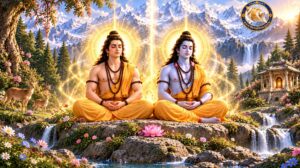
Viṣṇu Purāṇa (Book 1, Chapter 8, Verse 21)
अर्थो विष्णुरियं वाणी नीतिरेषा नयो हरिः । बोधो विष्णुरियं बुद्धिर्धर्मोऽसौ सत्क्रिया त्वियम् ॥ १८
Viṣṇu is the Meaning, and She [Lakṣmī] is Speech; She is Moral Policy, and Hari is Prudence. Viṣṇu is Perception, and She is Intellect; He is Dharma, and She is Virtuous Action.
Tapo-Śakti (the power of penance) and
Śama-Śakti (the power of tranquillity and sense-control)
Because Nara and Nārāyaṇa were lifelong celibates (Naiṣṭhika Brahmācārīs), their Śakti did not reside in an external consort during their ascetic stay at Badarikāśrama. Instead, their Śakti remained within them as Tapo-Balā (the power of penance) and Ātma-Māyā (internal divine potency).
When tested by Kāmadeva, Lord Nārāyaṇa displayed that all cosmic beauty and feminine potencies (Śakti) originate directly from within His own self (Ātmani).
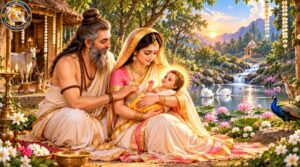
5. Śrī Kapila Muni
Śrīmad Bhāgavatam(Canto 1, Chapter 3)
पञ्चमः कपिलो नाम सिद्धेशः कालविप्लुतम् । प्रोवाचासुरये साङ्ख्यं तत्वग्रामविनिर्णयम् ॥ १० ॥
The fifth incarnation, named Kapila, the foremost of perfected beings, explained to the brāhmaṇa Āsuri the Sāṅkhya philosophy, which precisely determines the collection of elements, as it had been lost to time.
Muni Kardama married Devī Devahūti. The birth of their nine daughters, and subsequently the descent and birth of Lord Kapila as an incarnation of Śrī Viṣṇu right happened at that same hermitage on the shores of Bindu-sarovara.
Śrīmad-Bhāgavatam (Canto 3, Chapter 24):
Lord Brahmā speaking to Kardama Muni
वेदाहमाद्यं पुरुषमवतीर्णं स्वमायया । भूतानां शेवधि देहं बिभ्राणं कपिलं मुने ॥ १६॥
Lord Brahmā speaking to Devahūti)
एष मानवि ते गर्भं प्रविष्टः कैटभार्दनः । अविद्यासंशयग्रन्थि छित्त्वा गां विचरिष्यति ॥ १८ ॥
Lord Brahmā speaking to Devahūti and Kardama
अयं सिद्धगणाधीशः साङ्ख्याचार्यैः सुसम्मतः । लोके कपिल इत्याख्यां गन्ता ते कीर्तिवर्धनः ॥ १९॥
Lord Kapila speaking to His mother, Devahūti
एतन्मे जन्म लोकेऽस्मिन्मुमुक्षूणां दुराशयात् । प्रसङ्ख्यानाय तत्त्वानां सम्मतायात्मदर्शने ॥ ३६ ॥
एष आत्मपथोऽव्यक्तो नष्टः कालेन भूयसा । तं प्रवर्तयितुं देहमिमं विद्धि मया भृतम् ॥३७॥
Verse 16 (Lord Brahmā speaking to Kardama Muni)
“I know Him—the primeval Person, the treasure house of all living entities, who has descended by His own internal potency, bearing the form of Kapila, O sage.”
Verse 18 (Lord Brahmā speaking to Devahūti)
“O daughter of Manu [Devahūti], He, the slayer of Kaiṭabha, has entered your womb. Having severed the knot of ignorance and doubt, He will wander across the earth.”
Verse 19 (Lord Brahmā speaking to Devahūti and Kardama)
“He is the lord of all perfected beings (siddhas), fully approved by the masters of Sāṅkhya. In this world, He will become known by the name Kapila, enhancing your fame.”
Verse 36 (Lord Kapila speaking to His mother, Devahūti)
“This birth of Mine in this world is for the purpose of fully expounding the categories of truth, which are approved for self-realization, to aid those desirous of liberation.”
Verse 37 (Lord Kapila speaking to His mother, Devahūti)
“This path of self-realization, which is subtle and has been lost through the long passage of time—know that this body has been assumed by Me in order to re-establish it.”
Śrīmad-Bhāgavatam (Bhāgavata Purāṇa) Canto 3, Chapters 25 through 33: These nine chapters constitute the entire Kapila-Gītā. They cover the detailed breakdown of Sāṅkhya philosophy, the nature of the material elements, the entanglement of the soul, and the supremacy of unalloyed Bhakti-yoga.
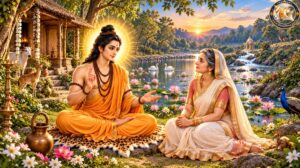
Śrīmad-Bhāgavatam (Canto 3, Chapter 25):
शौनक उवाच
कपिलस्तत्त्वसङ्ख्याता भगवानात्ममायया । जातः स्वयमजः साक्षादात्मप्रज्ञप्तये नृणाम् ॥ १ ॥
Śaunaka said:
“Kapila, the expounder of the categories of truth, the Supreme Lord who is unborn, appeared directly by His own internal potency for the purpose of self-realization for human beings.”
Śrīmad-Bhāgavatam (Canto 3, Chapter 33):
कपिल उवाच
मार्गेणानेन मातस्ते सुसेव्येनोदितेन मे । आस्थितेन परां काष्ठामचिरादवरोत्स्यसि ॥ १० ॥
Kapila said:
“O mother, by following this path declared by Me, which is most excellent and worthy of being practiced, you will very soon attain the supreme destination.”
Śrīmad-Bhāgavatam (Canto 3, Chapter 33):
कपिलो ऽपि महायोगी भगवान्पितुराश्रमात् । मातरं समनुज्ञाप्य प्रागुदीचीं दिशं ययौ ॥ ३३ ॥
The great yogi, the Supreme Lord Kapila, having also taken permission from his mother, departed from his father’s hermitage toward the northeastern direction.
Location where it was delivered:
Śrīmad-Bhāgavatam (Canto 3, Chapter 21, Verse 33):
मैत्रेय उवाच
एवं तमनुभाष्याथ भगवान्प्रत्यगक्षजः । जगाम बिन्दुसरसः सरस्वत्या परिश्रितात् ॥ ३३ ॥
Maitreya said:
“Having thus spoken to him, the Supreme Lord, whose vision is turned inward, departed from Lake Bindu-sarovara, which is encircled by the River Sarasvatī.”
Maa Mahālakṣmī as Sankhya-Prasuti / Sāṅkhya philosophy
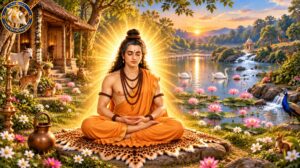
Because He accepted no consort, His Śakti manifested externally as the profound liberating knowledge (Jñāna-Śakti) of Sāṅkhya.
पञ्चमः कपिलो नाम सिद्धेशः कालविप्लुतम् । प्रोवाचासुरये साङ्ख्यं तत्वग्रामविनिर्णयम् ॥ १० ॥
The fifth incarnation, named Kapila, the foremost of perfected beings, explained to the brāhmaṇa Āsuri the Sāṅkhya philosophy, which precisely determines the collection of elements, as it had been lost to time.
Śrīmad-Bhāgavatam (Canto 3, Chapter 24):
Lord Brahmā speaking to Devahūti and Kardama
अयं सिद्धगणाधीशः साङ्ख्याचार्यैः सुसम्मतः । लोके कपिल इत्याख्यां गन्ता ते कीर्तिवर्धनः ॥ १९॥
The fifth, named Kapila, the perfected sage, taught Asuri the Sāṅkhya doctrine for determining the principles of reality, which had been obscured by the passage of time.
6. Śrī Dattātreya
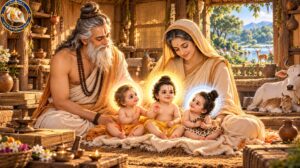
Śrīmad Bhāgavatam(Canto 1, Chapter 3)
षष्ठे अत्रेरपत्यत्वं वृतः प्राप्तोऽनसूयया । आन्वीक्षिकीमलर्काय प्रह्लादादिभ्य ऊचिवान् ॥ ११ ॥
The sixth [incarnation] was as the son of Atri, obtained [as a boon] through prayer by Anasūyā. He spoke on the science of transcendence (ānvīkṣikī) to Alarka, Prahlāda, and others
Markandeya Purāṇa Chapter 17
ब्रह्मरूपश्च शुक्लाभं पतमानं समन्ततः । सोमरूपं रजोपेतं दिशस्तं जगृहुर्दश ॥ ४ ॥
स सोमो मानसो जज्ञे तस्यामत्रेः प्रजापतेः । पुत्रः समस्तसत्त्वानामायुराधार एव च ॥ ५ ॥
तुष्टेन विष्णुना जज्ञे दत्तात्रेयो महात्मना । स्वशरीरात् समुत्पाद्य सत्त्वोद्रिक्तो द्विजोत्तमः ॥ ६ ॥
दत्तात्रेय इति ख्यातः सोऽनुत्र्यास्तन पपौ । विष्णुरेवावतीर्णोऽसौ द्वितीयोऽत्रेः सुतोऽभवत् ॥ ७ ॥
सप्ताहात् प्रच्युतो मातुरुदरात् कुपितो यतः । हैहयेन्द्रमुपावृत्तमपराध्यन्तमुद्धतम् ॥ ८ ॥
दृष्ट्वात्रौ कुपितः सद्यो दग्धुकामः स हैहयम् । गर्भवासमहायास-दुःखामर्षसमन्वितः
दुर्व्वासास्तमसोद्रिक्तो रुद्रांशः समजायत । इति पुत्रत्रयं तस्या जज्ञे ब्रह्मेशवैष्णवम् ॥१०॥
Having the form of Brahmān and a white luster, falling all around, possessing the form of Soma (the moon), endowed with rajas, the ten directions received him.
That Soma was born from the mind of that Prajapati Atri; [he is] the son of all beings and indeed the support of life.
By the pleased, high-souled Śrī Viṣṇu, Śrī Dattātreya was born, having manifested [Him] from His own body, predominant in sattva, O best of the twice-born.
Known as Śrī Dattātreya, He drank [milk] from the breast of Anasuya. Śrī Viṣṇu Himself having descended, He became the second son of Atri.
Having dropped from the mother’s womb after seven days, being angered… seeing the arrogant king of Haihaya approaching and committing an offense,
Endowed with indignation and distress over the great difficulty of dwelling in the womb, desiring to burn that Haihaya immediately,
Durvāsas, predominant in tamas, a portion of Rudra, was born. Thus, three sons of her were born, [embodying] Brahmā, Isha (Shiva), and Śrī Viṣṇu.
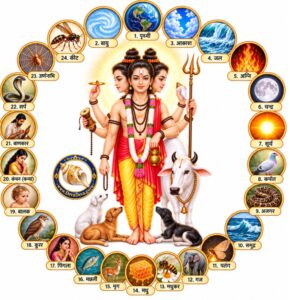
Śrīmad-Bhāgavatam (Canto 11, Chapter 7, Verses 33–35)
Lord Dattātreya to King Yadu
पृथिवी वायुराकाशमापो ऽग्निश्चन्द्रमा रविः । कपोतोऽजगर: सिन्धुः पतङ्गो मधुकृद्गजः ॥ ३३ ॥
मधुहा हरिणो मीनः पिङ्गला कुररोऽर्भकः । कुमारी शरकृत्सर्प ऊर्णनाभिः सुपेशकृत् ॥ ३४॥
एते मे गुरवो राजन्चतुर्विंशतिराश्रिताः । शिक्षा वृत्तिभिरेतेषामन्वशिक्षमिहात्मनः ॥ ३५ ॥
The earth, air, space, water, fire, moon, sun, pigeon, python, ocean, moth, honeybee, and elephant—
The honey-thief, deer, fish, Piṅgalā, the kurara bird, a child, a maiden, the arrow-maker, the serpent, the spider, and the wasp—
O King, these twenty-four have been accepted by me as my gurus. By observing their behaviours and occupations, I have learned lessons for the self right here.
The Avadhūta Gītā is a classical Advaita Vedānta text that articulates the highest realization of non-dual consciousness. It is directly attributed to Śrī Dattātreya, who spontaneously expressed these absolute truths from His state of eternal spiritual freedom. Rather than an explicit dialogue with a specific named disciple, it functions as a universal transmission of wisdom for sincere spiritual seekers. The text firmly establishes that the true Self is formless, infinite, and untouched by any illusion, bondage, or duality.
The Avadhūta Upaniṣad: This is a recognized canonical text belonging to the Sannyāsa Upaniṣads, traditionally associated with the Kṛṣṇa Yajurveda (and alternatively grouped with the Atharvaveda). It outlines the inner state and characteristics of an Avadhūta through a dialogue between Śrī Dattātreya and Sage Saṅkṛti.
Tripura Rahasya (Haritāyana Saṃhitā): A major philosophical text where Śrī Dattātreya details the supreme science of consciousness and self-realization to Śrī Paraśurāma.
Markandeya Purāṇa Chapter 17
मुनिपुत्रवृतो योगी दत्तात्रेयोऽप्यसङ्गिताम् । श्रंभीप्स्यमानः सरसि निममज्ज चिरं प्रभुः ॥ १७॥
तथापि तं महात्मानमतीव प्रियदर्शनम् । तत्यजुर्न कुमारास्ते सरसस्तीरमाश्रिताः ॥ १८ ॥
दिव्ये वर्षशते पूर्णे यदा ते न त्यजन्ति तम् । तत्मीत्या सरसस्तीरं सर्व्वे मुनिकुमारकाः ॥ १९ ॥
ततो दिव्याम्बरधरां चारुपीननितम्बिनीम् । नारीमादाय कल्याणीमुत्ततार जलान्मुनिः ||२०||
स्त्रीसन्निकर्पाद्यद्येतं परित्यक्ष्यन्ति मामिति । मुनिपुत्रास्ततोऽसङ्गी स्थास्यामीति विचिन्तयन् २१ ॥
Surrounded by the sons of sages, the yogi, Śrī Dattātreya, wishing to manifest non-attachment, plunged into the lake and [remained there] for a long time.
Nevertheless, those youths did not abandon that great soul, who was extremely charming in appearance, [and instead] remained taking shelter on the bank of the lake.
When a divine century of years had passed and still they did not leave Him, all the young sons of the sages stayed on the bank of the lake out of love for Him.
Then, bringing forth an auspicious woman wearing divine garments and having charming, full hips, the sage emerged from the water.
Thinking: “If the sons of the sages will abandon me due to [my] proximity to a woman, [then through this] I shall remain unattached,” [He acted thus].
Markandeya Purāṇa Chapter 18
गर्ग उवाच
इत्युक्तास्ते तदा जग्मुर्दत्तात्रेयाश्रमं सुराः । ददृशुश्च महात्मानं तं ते लक्ष्म्या समन्वितम् ||२२||
Thus addressed, those gods then went to the hermitage of Śrī Dattātreya, and they saw that great-souled one accompanied by Śrī Lakṣmī.
Maa Mahālakṣmī as Anagha Devī / Anvīkṣikī:
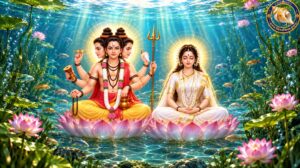
Śrī Datta Ashtakam (https://stotranidhi.com/hi/sri-datta-ashtakam-in-sanskrit/)
अवधूतं सदाध्यानम् औदुम्बरसुशोभितम् । अनघाप्रिय विभुं देवं दत्तमानन्दमाश्रये ॥ ३ ॥
I take refuge in Śrī Dattātreya—the Avadhūta, who is ever-absorbed in meditation, beautifully adorned by the Udumbara (fig) tree, dear to Anaghā, the all-pervading, divine Lord, and the embodiment of bliss.
श्री अनघादेवि अष्टोत्तरशतनाम स्तोत्रम् (https://stotranidhi.com/hi/sri-anagha-Devī-ashtottara-shatanama-stotram-in-sanskrit/)
अनघायै महादेव्यै महालक्ष्म्यै नमो नमः । अनघस्वामिपत्न्यै च योगेशायै नमो नमः ॥ १ ॥
Salutations and repeated obeisances to Goddess Anaghā, the great Goddess, and Mahālakṣmī! Salutations and repeated obeisances to the consort of Lord Anagha and the mistress of yoga!
Viṣṇu Purāṇa Part 1, Chapter 9
आन्वीक्षिकी त्रयीवार्त्ता दण्डनीतिस्त्वमेव च। सौम्यासौम्यैर्जगद्रूपैस्त्वयैतद्देवि पूरितम् ॥
You alone are Anvīkṣikī, the three Vedas, Vārttā, and Daṇḍanīti. O Goddess, this entire world, in its gentle and fierce forms, has been filled by You.
Comment: As per Viṣṇu Purāṇa, Maa Mahālakṣmī is Anvīkṣikī. Birth sloka of Śrī Dattātreya also mentions this name.
7. Śrī Yajña
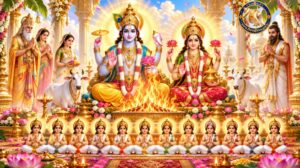
Śrīmad Bhāgavatam(Canto 1, Chapter 3)
ततः सप्तम आकूत्यां रुचेर्यज्ञोऽभ्यजायत । स यामाद्यैः सुरगणैरपात्स्वायम्भुवान्तरम् ॥ १२ ॥
Then, as the seventh [incarnation], Śrī Yajña was born to Ākūti through Ruchi. Along with the Yāmas and other groups of demigods, He protected the period of the Svāyambhuva Manvantara.
Śrīmad Bhāgavatam(Canto 4, Chapter 1)
मैत्रेय उवाच
मनोस्तु शतरूपायां तिस्रः कन्याश्च जज्ञिरे । आकूतिर्देवहूतिश्च प्रसूतिरिति विश्रुताः ॥ १ ॥
आकूतिं रुचये प्रादादपि भ्रातृमतीं नृपः । पुत्रिकाधर्ममाश्रित्य शतरूपानुमोदितः ॥ २॥
प्रजापतिः स भगवानुचिस्तस्यामजीजनत् । मिथुनं ब्रह्मवर्चस्वी परमेण समाधिना ॥ ३ ॥
यस्तयोः पुरुषः साक्षाद्विष्णुर्यज्ञस्वरूपधृक् । या स्त्री सा दक्षिणा भूतेरंशभूतानपायिनी ॥ ४ ॥
आनिन्ये स्वगृहं पुत्र्याः पुत्रं विततरोचिषम् । स्वायम्भुवो मुदा युक्तो रुचिर्जग्राह दक्षिणाम् ॥ ५ ॥
तां कामयानां भगवानुवाह यजुषां पतिः । तुष्टायां तोषमापन्नोऽजनयद्द्वादशात्मजान् ॥ ६ ॥
तोषः प्रतोषः सन्तोषो भद्रः शान्तिरिडस्पतिः । इध्मः कविर्विभुः स्वह्नः सुदेवो रोचनो द्विषट् ॥ ७॥
From Manu and Śatarūpā, three daughters were born: Ākūti, Devahūti, and Prasūti, as is well known.
King [Svāyambhuva Manu] gave Ākūti to Ruci, even though she had brothers, adopting the ritual principle of putrikā-dharma (designating her son to be his own heir), with the consent of Śatarūpā.
That worshipful Prajāpati Ruci, possessing divine spiritual aura, begot a twin pair in her [Ākūti] through supreme absorption/meditation.
Of those two, the male was directly Śrī Viṣṇu assuming the form of Śrī Yajña. The female was Śrī Dakṣiṇā, an expansion of the Goddess of Fortune (Śrī Lakṣmī), who is eternally inseparable [from Him].
Svāyambhuva [Manu], filled with joy, brought his daughter’s son—possessing vast effulgence—to his own home, while Ruci took Śrī Dakṣiṇā [to his own abode].
The Supreme Lord, the master of the Yajur-vedas [Lord Yajña], married Her [Śrī Dakṣiṇā] who desired Him. Reaching supreme joy in her who was delighted, He begot twelve sons.
(1) Toṣa, (2) Pratoṣa, (3) Santoṣa, (4) Bhadra, (5) Śānti, (6) Iḍaspati, (7) Idhma, (8) Kavi, (9) Vibhu, (10) Svahna, (11) Sudeva, and (12) Rocana—these are the twelve [sons].
Note: Scriptural commentators (such as Śrīdhara Svāmī and Viśvanātha Cakravartī Ṭhākura) emphasize that rules regarding consanguinity apply strictly to conditioned human beings (jīvas) governed by physical bodies and karmic laws. Divine incarnations are not bound by mortal genetics or social taboos, as their forms are transcendent (saccidānanda). To respect worldly protocol, the text notes in Verse 5 that Svāyambhuva Manu immediately adopted Śrī Yajña and brought Him to live in his palace as his grandson/son (putrikā-dharma), while Ruci kept Śrī Dakṣiṇā in his hermitage. Thus, they were raised separately in different households before their ultimate union.
Maa Mahālakṣmī as Bhagwati Dakṣiṇā
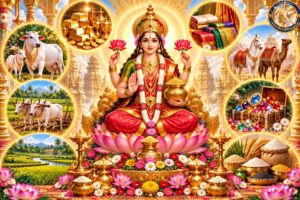
Devī Bhāgavata Purāṇa (Skandha 9, Chapter 45)
Śrī Nārāyaṇa to Śrī Nārada Muni
नालभंस्ते फलं तेषां विषण्णाः प्रययुर्विधिम्। विधिर्निवेदनं श्रुत्वा देवादीनां जगत्पतिम्॥ ३७
दध्यौ च सुचिरं भक्त्या प्रत्यादेशमवाप सः।नारायणश्च भगवान् महालक्ष्याशच देहत: ॥ ३८
विनिष्कृष्य मर्त्यलक्ष्मीं ब्रह्मणे दक्षिणां ददौ। ब्रह्मा ददौ तां यज्ञाय पूरणार्थं च कर्मणाम्॥ ३९
यज्ञः सम्पूज्य विधिवत्तां तुष्टाव तदा मुदा। तप्तकाञ्चनवर्णाभां चन्द्रकोटिसमप्रभाम्॥ ४०
अतीव कमनीयां च सुन्दरीं सुमनोहराम्। कमलास्यां कोमलाङ्गी कमलायतलोचनाम्॥ ४१
कमलासनपूज्यां च कमलाङ्गसमुद्भवाम्। वह्निशुद्धांशुकाधानां बिम्बोष्ठी सुदतीं सतीम्॥ ४२
बिभ्रतीं कबरीभारं मालतीमाल्यसंयुतम्।इंषद्धास्यप्रसन्नास्यां रत्नभूषणभूषिताम्॥ ४३
सुवेषाढ्यां च सुस्नातां मुनिमानसमोहिनीम्। . कस्तूरीबिन्दुभिः सार्धं सुगन्धिचन्दनेन्दुभिः ॥ ४४
सिन्दूरबिन्दुनाल्पेनाप्यलकाधःस्थलोज्ज्चलाम्। सुप्रशस्तनितम्बाढ्यां बृहच्छ्रोणिपयोधरा ॥ ४५
कामदेवाधाररूपां कामबाणप्रपीडिताम्। तां दृष्ट्वा रमणीयां च यज्ञो मूर्च्छामवाप ह॥ ४६
पत्नीं तामेव जग्राह विधिबोधितपूर्वकम्। दिव्यं वर्षशतं चैव तां गृहीत्वा तु निर्जने॥ ४७
यज्ञो रेमे मुदा युक्तो रामेशो रमया सह। गर्भं दधार सा देवी दिव्यं द्वादशवर्षकम्॥ ४८
ततः सुषाव पुत्रं च फलं वै सर्वकर्मणाम्। परिपूर्ण कर्मणि च तत्पुत्रः फलदायकः॥ ४९
यज्ञो दक्षिणया सार्धं पुत्रेण च फलेन च। कर्मिणां फलदाता चेत्येवं वेदविदो विदुः॥ ५०
Not obtaining the fruit of those [sacrifices], sorrowful, they went to Lord Brahmā (Vidhi). Hearing the petition of the gods and others, Lord Brahmā, the master of the universe, meditated [upon the Supreme Lord] with devotion for a very long time, and he received a divine instruction in response. Lord Nārāyaṇa, drawing out Martya-Lakṣmī (the Lakshmi of the mortal world / Dakṣiṇā) from the body of Mahā-Lakṣmī, gave her as Dakṣiṇā to Brahmā. Brahmā gave Her to Yajña for the completion/fulfilment of ritual actions.
Then Yajña, worshipping Her according to scriptural rules, praised Her with joy—Her whose lustre is like refined gold, whose brilliance is equal to ten million moons, who is extremely desirable, beautiful, exceedingly captivating to the mind, with a lotus-like face, delicate limbs, and eyes long like lotus petals, who is worshipful even to Brahmā (Kamalāsana), born from the body of Mahā-Lakṣmī (Kamalā), wearing garments purified by fire, having lips like the Bimba fruit, beautiful teeth, and a chaste nature,
carrying a heavy braid of hair adorned with garlands of Mālatī flowers, with a cheerful face displaying a gentle smile, and adorned with gem-studded ornaments, rich in fine attire, well-bathed, enchanting the minds of sages, [adorned] with dots of musk alongside moon-shaped marks of fragrant sandalwood, glowing below her forelocks with a small dot of vermilion (sindūra), possessing exceptionally broad hips, a prominent waist, and full breasts, being the very reservoir of Kāmadeva, yet tormented by the arrows of love—upon seeing that enchanting woman, Yajña indeed fainted [with desire].
He accepted Her as His wife, after being instructed by Brahmā (Vidhi). Taking Her to a secluded place for a hundred divine years.
Yajña enjoyed with joy, just as Śrī Viṣṇu (Rāmeśa) enjoys with Śrī Lakṣmī (Ramā). That Goddess held the foetus in her womb for twelve divine years.
Then she gave birth to a son who is indeed Phala (the Fruit/Result of all actions). Only when a ritual action is fully completed does Her son bestow the fruit.
Thus, Yajña, along with Dakṣiṇā and their son Phala, becomes the bestower of fruits upon the performers of actions (karmīs); so know the knowers of the Vedas.
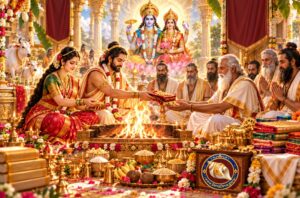
Devī Bhāgavata Purāṇa (Skandha 9, Chapter 45)
Śrī Nārāyaṇa to Śrī Nārada Muni
उभौ तौ नरके यातश्छिन्नरज्जौ यथा घटः।नार्पयेद्यजमानश्चेद्याचितश्चापि दक्षिणाम्॥ ६९
भवेद् ब्रह्मस्वापहारी कुम्भीपाकं व्रजेद् ध्रुवम्। वर्षलक्षं वसेत्तत्र यमदूतेन ताडितः॥ ६२
ततो भवेत्स चाण्डालो व्याधियुक्तो दरिद्रकः ।पातयेत्पुरुषान्सप्त पूर्वाश्च सप्त जन्मतः॥ ६३
If the Yajamāna (performer of the sacrifice) does not offer the Dakṣiṇā, even when requested, both of them [the priest who solicited it and the performer who withheld it] go to hell, just like a water pot [falling into a well] when its rope is severed.
He becomes a stealer of a Brāhmaṇa’s property and surely goes to the Kumbhīpāka hell. He resides there for one hundred thousand years, beaten by the messengers of Yama.
Thereafter, [upon rebirth], he becomes a Cāṇḍāla (outcaste), afflicted with diseases and extremely destitute. By his birth, he causes seven generations of his descendants and seven generations of his ancestors to fall [into degradation].
8. Śrī Rishabhadeva
Śrīmad Bhāgavatam(Canto 1, Chapter 3)
अष्टमे मेरुदेव्यां तु नाभेर्जात उरुक्रमः । दर्शयन् वर्त्म धीराणां सर्वाश्रमनमस्कृतम्॥ १३ ॥
In the eighth incarnation, the Lord of great strides (Urukrama) was born of Nābhi and Merudevī, showing the path of the self-controlled ones (dhīrāṇām), which is revered by all stages of life (sarvāśrama).
Śrī Ṛṣabhadeva is revered in Vedic literature as an aṁśāvatāra (partial incarnation) of Śrī Viṣṇu, manifesting to establish the path of perfection, renunciation, and Bhāgavata-dharma. His complete life, characteristics, and teachings are meticulously chronicled in the Fifth Canto of the Śrīmad-Bhāgavatam (Chapters 3 through 6). Śrī Ṛṣabhadeva was born to King Nābhi (the son of King Āgnīdhra) and his wife, Queen Merudevī.
Śrīmad-Bhāgavatam (Canto 5, Chapters 3)
श्रीशुक उवाच
नाभिरपत्यकामोऽप्रजया मेरुदेव्या भगवन्तं यज्ञपुरुषमवहितात्मायजत॥ १ ॥
Śrī Śukadeva said: Desiring offspring, King Nābhi, together with his childless wife Merudevī, worshipped the Supreme Lord, the Lord of sacrifice (Yajñapuruṣa), with a single-minded and attentive mind.
King Nābhi was childless. Desiring a qualified heir, he and the learned brāhmaṇas performed a grand Vedic sacrifice (yajña) dedicated to Śrī Viṣṇu. Pleased by the pure devotion of the king and the priests, Śrī Viṣṇu appeared before them in His resplendent four-armed form.
Śrīmad-Bhāgavatam (Canto 5, Chapters 3)
अथ ह तमाविष्कृतभुजयुगलद्वयं हिरण्मयं पुरुषविशेषं कपिशकौशेयाम्बरधरमुरसि विलसच्छ्रीवत्सललामं दरवरवनरुहवनमालाच्छूर्यमृतमणिगदादिभिरुपलक्षितं स्फुटकिरणप्रवरमुकुटकुण्डलकटककटिसूत्रहारकेयूरनूपुराद्यङ्गभूषणविभूषितमृत्विक्सदस्यगृहपतोऽध ना इवोत्तमधनमुपलभ्य सबहुमानमर्हणेनावनतशीर्षाण उपतस्थुः ॥ ३ ॥
Thereafter, the officiating priests, the members of the assembly, and the host [King Nābhi]—like destitute men who have obtained supreme wealth—approached and paid homage with great reverence, bowed heads, and worshipful offerings unto Him: the extraordinary Supreme Person, effulgent like gold, who manifested four arms [two pairs of arms], wore a yellow silk garment, was adorned on His chest with the gleaming mark of Śrīvatsa, was marked by the excellent conch shell, lotus flower, forest-flower garland, sword, Kaustubha gem, mace, and other emblems, and was richly decorated with bodily ornaments emitting brilliant rays, such as an exquisite crown, earrings, bracelets, waist-band, necklace, armlets, and anklets.
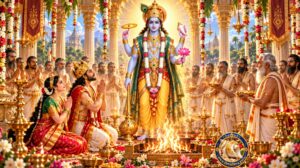
Śrīmad-Bhāgavatam (Canto 5, Chapters 3)
Priest Said:
किञ्चायं राजर्षिरपत्यकामः प्रजां भवादृशीमाशासान ईश्वरमाशिषां स्वर्गापवर्गयोरपि भवन्तमुपधावति प्रजायामर्थप्रत्ययो धनदमिवाधनः फलीकरणम् ॥ १३ ॥
Moreover, this saintly king, desiring offspring and hoping for a child like You, approaches You—who are the supreme ruler and bestower of all blessings, including heaven and liberation—for the sake of a son, just as a penniless man approaches a giver of vast wealth merely asking for husks of grain.
Śrīmad-Bhāgavatam (Canto 5, Chapters 3)
श्रीभगवानुवाच
अहो बताहमृषयो भवद्भिरवितथगीर्भिर्वरमसुलभमभियाचितो यदमुष्यात्मजो मया सदृशो भूयादिति ममाहमेवाभिरूपः कैवल्यादथापि ब्रह्मवादो न मृषा भवितुमर्हति ममैव हि मुखं यद्द्विजदेवकुलम् ॥ १७॥
तत आग्नीध्रीयेऽंशकलयावतरिष्याम्यात्मतुल्यमनुपलभमानः ॥ १८ ॥
The Supreme Lord said: “Alas, O sages! By you whose words are never false, I have been asked for a boon that is extremely difficult to obtain—namely, that the son of this king should be equal to Me. Since I am one without a second, I alone am equal to Myself; nevertheless, the statement of the Brāhmaṇas must not prove false, for the community of the Brāhmaṇas is indeed My own mouth.”
“Therefore, finding no one equal to Myself, I shall descend in the wife of Nābhi [the son of Āgnīdhra] by My own plenary expansion.”
Śrīmad-Bhāgavatam (Canto 5, Chapters 3)
श्रीशुक उवाच
इति निशामयन्त्या मेरुदेव्याः पतिमभिधायान्तर्दधे भगवान् ॥ १९ ॥
Śrī Śukadeva said: Having thus spoken to her husband while Merudevī was listening, the Supreme Lord disappeared.
Because the child was endowed with all super excellent qualities (a well-built body, immense prowess, and transcendental beauty), his father named him Ṛṣabha, meaning “the best” or “the supreme”.
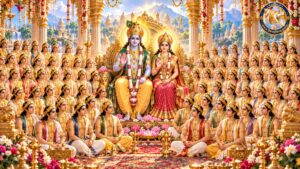
Śrīmad-Bhāgavatam (Canto 5, Chapters 4)
तस्य ह वा इत्थं वर्ष्मणा वरीयसा बृहच्छ्लोकेन चौजसा बलेन श्रिया यशसा वीर्यशौर्याभ्यां च पिता ऋषभ इतीदं नाम चकार ॥ २ ॥
विदितानुरागमापौरप्रकृति जनपदो राजा नाभिरात्मजं समयसेतुरक्षायामभिषिच्य ब्राह्मणेषूपनिधाय सह मेरुदेव्या विशालायां प्रसन्ननिपुणेन तपसा समाधियोगेन नरनारायणाख्यं भगवन्तं वासुदेवमुपासीनः कालेन तन्महिमानमवाप. ॥५॥
अथ ह भगवानृषभदेवः स्ववर्षं कर्मक्षेत्रमनुमन्यमानः प्रदर्शितगुरुकुलवासो लब्धवरैर्गुरुभिरनुज्ञातो गृहमेधिनां धर्माननुशिक्षमाणो जयन्त्यामिन्द्रदत्तायामुभयलक्षणं कर्म समाम्नायाम्नातमभियुञ्जन्नात्मजानामात्मसमानानां शतं जनयामास ॥ ८ ॥
येषां खलु महायोगी भरतो ज्येष्ठः श्रेष्ठगुण आसीद्येनेदं वर्षं भारतमिति व्यपदिशन्ति ॥ ९ ॥
भगवानृषभसंज्ञ आत्मतन्त्रः स्वयं नित्यनिवृत्तानर्थपरम्परः केवलानन्दानुभव ईश्वर एव विपरीतवत्कर्माण्यारभमाणः कालेनानुगतं धर्ममाचरणेनोपशिक्षयन्नतद्विदां सम उपशान्तो मैत्रः कारुणिको धर्मार्थयशः प्रजानन्दामृतावरोधेन गृहेषु लोकं नियमयत् ॥ १४ ॥
यद्यच्छीर्षण्याचरितं तत्तदनुवर्तते लोकः ॥ १५ ॥
His father named Him Ṛṣabha [“the best”], because He was thus distinguished by a most excellent body, great fame, vitality, strength, beauty, renown, prowess, and heroism.
Knowing the deep affection felt for his son by all the citizens, ministers, and subjects of the kingdom, King Nābhi installed his son upon the throne for the protection of the boundaries of social and moral order (Dharma). Entrusting Him to the guidance of the Brāhmaṇas, King Nābhi, together with Queen Merudevī, retired to Viśālā [Badarikāśrama]. There, worshipping the Supreme Lord Vāsudeva known as Nara-Nārāyaṇa through cheerful and expert austerities as well as meditative trance (samādhi-yoga), he in due course attained His divine state.
Thereafter, Śrī Ṛṣabhadeva, considering His kingdom to be the field of prescribed duties (karma-kṣetra), set an example by residing in the gurukula. Being permitted by His gurus, who were pleased with Him, He demonstrated the duties of householders. Executing the rituals prescribed by the Vedic scriptures—both Śrauta and Smārta—He begot in Śrī Jayantī, who was given to Him by Indra, one hundred sons who were equal to Himself in qualification.
Among those sons, the eldest was the great yogī Bharata, who was endowed with the most supreme qualities. It is because of him that people designate this land as Bhārata.
The Supreme Lord named Śrī Ṛṣabha, who is completely independent, eternally free from the succession of material illusions, and the embodiment of pure bliss—though the Supreme Controller Himself—undertook actions as if He were an ordinary person. Teaching through His own conduct the principles of Dharma that had been obscured by time to those who were ignorant of them, He—being equal-minded, peaceful, friendly, and compassionate—governed the people in household life without obstructing the pursuits of righteousness, wealth, fame, familial joy, and liberation.
Whatever is performed by a leading authority, that very thing the general populace follows.
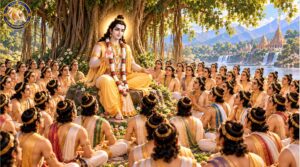
Śrīmad-Bhāgavatam (Canto 5, Chapters 6)
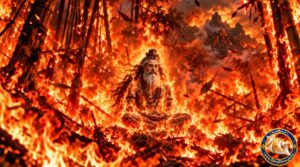
तस्य ह वा एवं मुक्तलिङ्गस्य भगवत ऋषभस्य योगमायावासनया देह इमां जगतीमभिमानाभासेन सङ्क्रममाणः कोङ्कवेङ्ककुटकान्दक्षिणकर्णाटकान्देशान्यदृच्छयोपगतः कुटकाचलोपवन आस्य कृताश्मकवल उन्माद इव मुक्तमूर्धजोऽसंवीत एव विचचार ॥ ७ ॥
अथ समीरवेगविधूतवेणुविकर्षणजातोग्रदावानलस्तद्वनमालेलिहानः सह तेन ददाह ॥ ८ ॥
Of that Supreme Lord Ṛṣabha, who was thus freed from subtle bodily identification, His body moved about in this world bearing merely a semblance of ego, propelled by the lingering impression of Yogamāyā. Arriving by chance in the southern Karnataka regions known as Koṅka, Veṅka, and Kuṭaka, He entered the forest adjacent to the Kuṭaka mountain. Placing a stone in His mouth, with dishevelled hair and completely unclad, He wandered about like a madman.
Thereafter, a fierce forest fire—generated by the mutual friction of bamboo stalks shaken by the force of the wind—licking up that entire forest, burned it down together with His body.
Maa Mahālakṣmī as Śrī Jayantī
अथ ह भगवानृषभदेवः स्ववर्षं कर्मक्षेत्रमनुमन्यमानः प्रदर्शितगुरुकुलवासो लब्धवरैर्गुरुभिरनुज्ञातो गृहमेधिनां धर्माननुशिक्षमाणो जयन्त्यामिन्द्रदत्तायामुभयलक्षणं कर्म समाम्नायाम्नातमभियुञ्जन्नात्मजानामात्मसमानानां शतं जनयामास ॥ ८ ॥
Thereafter, Śrī Ṛṣabhadeva, considering His realm to be the field of prescribed action (karma-kṣetra), set an example by residing in the gurukula. Being permitted by His spiritual masters from whom He had received blessings, and instructing the duties of householders [through His own conduct], He executed the dual-fold rituals [Śrauta and Smārta] thoroughly prescribed in the Vedic scriptures, and begot in Śrī Jayantī, who was given by Indra, one hundred sons who were equal to Himself in qualification.
9. Śrī Pṛthu
Śrīmad Bhāgavatam(Canto 1, Chapter 3)
ऋषिभिर्याचितो भेजे नवमं पार्थिवं वपुः । दुग्धेमामोषधीर्विप्रास्तेनायं स उशत्तमः ॥ १४ ॥
O brāhmaṇas, in the ninth incarnation, being prayed for by the sages, the Lord accepted the body of a king [Śrī Pṛthu]. He milked the earth for all herbs and yielding seeds; therefore, he was the most attractive.
In the Purāṇic timeline, King Pṛthu (Mahārāja Pṛthu) is celebrated as the ninth incarnation of Lord Śrī Viṣṇu. He is classified as a śaktyāveśa-avatāra—an empowered incarnation invested with the Lord’s divine ruling potency (pālana-śakti) to restore order, establish righteous governance, and nourish a starving world. His comprehensive biography, birth, governance, and teachings are extensively detailed in the Fourth Canto of the Śrīmad-Bhāgavatam (Chapters 15 through 23), as well as in the Viṣṇu Purāṇa and Vāyu Purāṇa.
King Veṇa was born to the virtuous King Aṅga and Queen Sunīthā, who was the first daughter of Mṛtyu (Death).
Inheriting a wicked disposition from his maternal lineage, Veṇa’s cruel behaviour heartbroken his father, causing Aṅga to abdicate and vanish into the forest.
Upon ascending the throne, Veṇa outlawed all sacred Vedic rituals and demanded that everyone worship him alone instead of the Supreme Lord.
Viṣṇu Purāṇa Chapter 1.13
श्रीपराशर उवाच
सुनीथा नाम या कन्या मृत्योः प्रथमतोऽभवत्। अङ्गस्य भार्या सा दत्ता तस्यां वेनो व्यजायत । ११
स मातामहदोषेण तेन मृत्योः सुतात्मजः । निसर्गादेष मैत्रेय दुष्ट एव व्यजायत । १२
अभिषिक्तो यदा राज्ये स वेनः परमर्षिभिः । घोषयामास स तदा पृथिव्यां पृथिवीपतिः ॥ १३
न यष्टव्यं न दातव्यं न होतव्यं कथञ्चन । भोक्ता यज्ञस्य कस्त्वन्यो ह्यहं यज्ञपतिः प्रभुः ॥ १४
ततस्तमृषयः पूर्वं सम्पूज्य पृथिवीपतिम् । ऊचुः सामकलं वाक्यं मैत्रेय समुपस्थिताः ॥ १५
Śrī Parāśara said: The daughter named Sunīthā, who was born first to Mṛtyu (Death), was given as wife to Aṅga; in her, Veṇa was born.
O Maitreya, on account of the fault of his maternal grandfather, that son of the daughter of Mṛtyu was born inherently wicked indeed.
When that Veṇa was consecrated to the kingship by the great sages, he, as ruler of the earth, then made a proclamation throughout the earth:
“No sacrifice shall be performed, no charity given, nor oblations offered in any manner whatsoever. Who else indeed is the enjoyer of sacrifice? For I am the lord of sacrifice and the master!”
Thereupon, O Maitreya, the sages, having approached and first respectfully honoured that king, spoke words that were gentle and conciliatory:
वेन उवाच
न दातव्यं न यष्टव्यं न होतव्यं च भो द्विजाः ॥ २३
Veṇa said: “Charity must not be given, sacrifices must not be performed, and oblations must not be offered, O twice-born!”
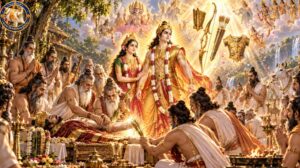
श्रीपराशर उवाच
ततस्ते मुनयः सर्वे कोपामर्षसमन्विताः । हन्यतां हन्यतां पाप इत्यूचुस्ते परस्परम् ॥ २७
इत्युक्त्वा मन्त्रपूतैस्तैः कुशैर्मुनिगणा नृपम् । निजघ्नुर्निहतं पूर्वं भगवन्निन्दनादिना ॥ २९
तस्यैव दक्षिणं हस्तं ममन्थुस्ते ततो द्विजाः ॥ ३८
मथ्यमाने च तत्राभूत्पृथुर्वैन्यः प्रतापवान् । दीप्यमानः स्ववपुषा साक्षादग्निरिव ज्वलन् ॥ ३९
Śrī Parāśara said: “Thereupon, all those sages, filled with anger and wrath, said to one another: ‘Let the sinful one be killed, let him be killed!'”
Having thus spoken, the groups of sages struck down the king with those blades of kuśa grass consecrated by mantras—he who was already slain previously by his blasphemy of the Supreme Lord and other transgressions.
Thereafter, those twice-born churned the right arm of that very king.
And as it was being churned, there appeared from it the majestic Pṛthu Vainya [son of Veṇa], radiant through his own body like a blazing fire in person.
हस्ते तु दक्षिणे चक्रं दृष्ट्वा तस्य पितामहः । विष्णोरंशं पृथुं मत्वा परितोषं परं ययौ ॥ ४५
Indeed, seeing the mark of the discus (cakra) in his right hand, the grandfather [Lord Brahmā], understanding Śrī Pṛthu to be an expansion (aṁśa) of Śrī Viṣṇu, attained supreme satisfaction.
सत्यवाग्दानशीलोऽयं सत्यसन्धो नरेश्वरः । ह्रीमान्मैत्रः क्षमाशीलो विक्रान्तो दुष्टशासनः ॥ ६१
धर्मज्ञश्च कृतज्ञश्च दयावान् प्रियभाषकः । मान्यान्मानयिता यज्वा ब्रह्मण्यः साधुसम्मतः ॥ ६२
समः शत्रौ च मित्रे च व्यवहारस्थितौ नृपः ॥ ६३
This king of men is truthful of speech, charitable by nature, true to his vows, modest, friendly, forgiving, valorous, and a chastiser of the wicked.
He is a knower of righteousness, grateful, compassionate, a speaker of pleasing words, an honourer of those worthy of respect, a performer of sacrifices, devoted to the Brāhmaṇas, and approved by the virtuous.
The king is impartial towards both enemy and friend in the administration of justice.
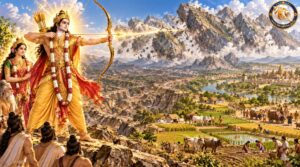
श्रीपराशर उवाच
तत उत्सारयामास शैलान् शतसहस्त्रशः । धनुष्कोट्या तदा वैन्यस्तेन शैला विवर्द्धिताः ॥ ८२
न हि पूर्वविसर्गे वै विषमे पृथिवीतले । प्रविभागः पुराणां वा ग्रामाणां वा पुराऽभवत् ॥ ८३
न सस्यानि न गोरक्ष्यं न कृषिर्न वणिक्पथः । वैन्यात्प्रभृति मैत्रेय सर्वस्यैतस्य सम्भवः ॥ ८४
Śrī Parāśara said
“Then Vainya [Śrī Pṛthu] displaced hundreds of thousands of mountains with the tip of his bow; thereby those mountains were piled up high.”
“For previously, in the earlier creation, on the uneven surface of the earth, there was no division into cities or villages.”
“There were no crops, no cattle-rearing, no agriculture, and no trade routes. Beginning from Vainya, O Maitreya, all of these came into existence.”
स कल्पयित्वा वत्सं तु मनुं स्वायम्भुवं प्रभुम् ।
स्वपाणौ पृथिवीनाथो दुदोह पृथिवीं पृथुः । सस्यजातानि सर्वाणि प्रजानां हितकाम्यया ॥ ८७
तेनान्नेन प्रजास्तात वर्तन्तेद्यापि नित्यशः ॥ ८८
प्राणप्रदाता स पृथुर्यस्माद्भूमेरभूत्पिता । ततस्तु पृथिवीसंज्ञामवापाखिलधारिणी ॥ ८९
Having made Lord Svāyambhuva Manu the calf, Śrī Pṛthu, the lord of the earth, milked all varieties of crops into His own hands from the earth, out of a desire for the welfare of the subjects.
By that food, O dear one, the subjects subsist even today and perpetually.
Because that Śrī Pṛthu, the giver of life, became the father of the earth, therefore the supporter of all attained the name Pṛthivī.
The Four Kumāras (Sanaka, Sanandana, Sanātana, Sanatkumāra): The foremost wandering sages of the universe visited Śrī Pṛthu’s capital. Śrī Pṛthu washed their feet and asked them the ultimate path to liberation for a householder. Sanatkumāra became His primary spiritual preceptor (SB 4.22), teaching Him the supreme science of unalloyed devotional service (bhakti-yoga) and detachment from the material body.
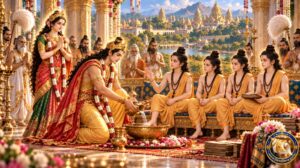
Śrīmad Bhāgavatam Canto 4 Chapter 22
तहर्शनोद्गतान्प्राणान्प्रत्यादित्सुरिवोत्थित: । ससदस्यानुगो वैन्य इन्द्रियेशो गुणानिव ॥ ३
गौरवाद्यन्त्रितः सभ्य: प्रश्रयानतकन्धरः । विधिवत्पूजयां चक्रे गृहीताध्यहणासनान् ॥ ४॥
तत्पादशौचसलिलैर्मारजितालकबन्धन: । तत्र शीलवतां वृत्तमाचरन्मानयन्निव ॥ ५॥
कच्चिन्न: कुशल नाथा इन्द्रियार्थार्थवेदिनाम् । व्यसनावाप एतस्मिन्पतितानां स्वकर्मभिः ॥ १३
तदहं कृतविश्रम्भः सुहृदो वस्तपस्विनाम् । सम्पृच्छे भव एतस्समिन्क्षेम: केनाझसा भवेत् ॥ १५॥
शास्त्रेष्वियानेव सुनिश्चितो नृणां क्षेमस्य सयग्विमृशेषु हेतु: । असड्ड आत्मव्यतिरिक्त आत्मनि हढा रति्ब्रह्माणि निर्गुणे च या ॥ २१॥
सा श्रद्धया भगवद्धर्मचर्यया जिज्ञासयाध्यात्मिकयोगनिष्ठया । योगेश्वरोपासनया च नित्य पुण्यश्रवःकथया पुण्यया च ॥ २२॥
कृच्छ्रो महानिह भवार्णवमप्लवेशां षड्वर्गनक्रमसुखेन तितीर्षन्ति । तत्त्वं हरेर्भगवतो भजनीयमङ्ग्रि कृत्वोडुपं व्यसनमुत्तर दुस्तरार्णम् ॥४०॥
King Said
Seeing them, Vainya [King Pṛthu], accompanied by the members of the assembly and His followers, stood up as if desiring to regain His life-airs that had departed upon beholding them—just as the chief life-air [or soul] rises along with the senses and their functions.
Restrained by deep reverence, polite, and with His neck bent low in humility, He properly worshipped them according to prescribed Vedic rules after they had accepted the elevated seats and worship offered to them.
Sprinkling the locks of hair on His head with the water used to wash their feet, He conducted himself there according to the conduct of virtuous persons, as if demonstrating how to show proper honour.
O masters! Is there any true welfare for us who have fallen into this reservoir of afflictions on account of our own past deeds, and who mistake the gratification of sense objects for the ultimate purpose of life?”
Therefore, placing full trust in you who are the true well-wishers of ascetics, I inquire: by what means can ultimate welfare be easily and directly attained in this material existence?”
Sanat Kumar Said:
Upon deep and proper deliberation of the scriptures, this alone is conclusively determined to be the cause of ultimate welfare for human beings: detachment from that which is distinct from the Self [the physical body and material objects], and firm, loving attachment directed toward the Supreme Self, the transcendent Brahmān beyond material attributes
That devotion is awakened through faith, by the practice of sacred duties dedicated to the Supreme Lord (bhagavad-dharma), by spiritual inquiry, by steadfast commitment to self-realization, by constant worship of the Supreme Lord of yoga, and by regularly hearing the sacred narratives of Him whose fame is holy and purifying.
Great indeed is the hardship in this world for those lordless ones who, lacking a boat, desire to cross with immense pain this ocean of material existence infested with crocodiles in the form of the six senses [the five senses and the mind]. Therefore, making a sturdy raft of the worshipful lotus feet of the Supreme Lord Śrī Hari, do you cross over this ocean of afflictions which is otherwise impossible to cross!
Śrīmad Bhāgavatam Canto 4 Chapter 23
एवं स वीरप्रवर: संयोज्यात्मानमात्मनि । ब्रह्मभूतो ह॒ढे काले तत्याज स्व॑ कलेवरम् ॥ १३॥
Thus that chief among heroes [King Śrī Pṛthu], having completely fixed his self within the Supreme Self and attained the state of spiritual realization (Brahmā-bhūta), gave up his own physical body at the appointed time.
Maa Mahālakṣmī as Maa Arci
Śrīmad Bhāgavatam Canto 4 Chapter 15
अथ तसय पुनर्विप्रैरपुत्रस्य महीपते: । बाहुभ्यां मथ्यमानाभ्यां मिथुनं समपद्यत ॥ १
तद्दृष्ठा मिथुनं जातमृषयो ब्रह्मवादिनः । ऊचु: परमसन्तुष्टा विदित्वा भगवत्कलाम् ॥ २॥
अयं तु प्रथमो राज्ञां पुमान्प्रथयिता यश: । पृथुर्नाम महाराजो भविष्यति पृथुश्रवा: ॥ ४॥
इयं च सुदती देवी गुणभूषणभूषणा । अर्चि्नाम वरारोहा पृथुमेवावरुन्धती ॥ ५॥
एष साक्षाद्धरेरंशो जातो लोकरिरक्षया । इयं च तत्परा हि श्रीरनुजज्ञेऽनपायिनी ॥ ६ ॥
Thereafter, when the two arms of that sonless king [Veṇa] were churned again by the brāhmaṇas, a couple [a male and female pair] was produced.
Seeing that couple born, the sages who were knowers of Brahmān, understanding [them to be] an expansion/potency of the Supreme Lord (bhagavat-kalā), became supreme satisfied and spoke:
“This male, indeed the first among kings, will spread fame; named Pṛthu, he will be a great king of widespread renown (pṛthuśravāḥ).”
“And this divine lady of beautiful teeth, whose virtues adorn even Her ornaments, named Arci, possessing a splendid form, chooses Śrī Pṛthu alone [as Her husband].”
This [male] is directly an expansion (aṁśa) of Śrī Hari, born out of a desire to protect the world; and this [female], completely devoted to Him, is indeed Goddess Śrī (Lakṣmī), who was born following Him as His inseparable companion.
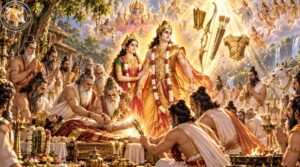
Throughout Lord Pṛthu’s reign—from levelling the earth and milking her for crops to conducting the 100 Aśvamedha Yajñas (horse sacrifices)—Queen Arci stood by His side. According to Vedic ritualistic injunctions, a king cannot perform major Vedic sacrifices (yajñas) without his lawfully wedded wife. Śrī Arci fulfilled every ritualistic requirement, ensuring the spiritual perfection of Śrī Pṛthu’s reign.
Śrīmad Bhāgavatam Canto 4 Chapter 22
एवमध्यात्मयोगेन कर्माण्यनुसमाचरन् । पुत्रानुत्पादयामास पञ्चार्चिष्यात्मसम्मतान्॥ ५३॥
Thus properly executing His duties by means of spiritual self-realization (adhyātma-yoga), He begot in Śrī Arci five sons who were equal to Himself in qualification.
Śrīmad Bhāgavatam Canto 4 Chapter 23
अर्चिर्नाम महाराज्ञी तत्पत्न्यनुगता वनम् । सुकुमार्यतदर्हा च यत्पद्भ्यां स्पर्शनं भुवः ॥ १९॥
अतीव भर्तुर्व्रतधर्मनिष्ठया शुश्रूषया चार्षदेहयात्रया । नाविन्दतार्तिं परिकर्शितापि सा प्रेयस्करस्पर्शनमाननिर्वृतिः ॥ २० ॥
देहं विपन्नाखिलचेतनादिकं पत्युः पृथिव्या दयितस्य चात्मनः। आलक्ष्य किञ्चिच्च विलप्य सा सती चितामथारोपयदद्रिसानुनि॥२१॥
विधाय कृत्यं ह्रदिनीजलाप्लुता दत्त्वोदकं भर्तुरुदारकर्मणः । नत्वा दिविस्थांस्त्रिदशांस्त्रिः परीत्य विवेश वह्नि ध्यायती भर्तृपादौ ॥२२॥
His wife, the great queen named Śrī Arci, followed Him to the forest; She was extremely delicate and unsuited even to touch the earth with Her two feet.
Through Her intense steadfastness in Her vows and duties toward Her husband, through Her faithful service, and by maintaining Her body in the manner of an ascetic sage, She experienced no distress—even though severely emaciated—because She derived supreme bliss from the touch, respect, and affection of Her beloved husband.
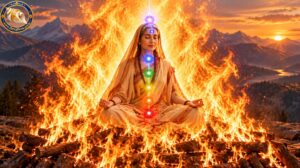
Perceiving the body of Her husband—the beloved lord of the earth and Her own soul—to be completely bereft of all consciousness and life-symptoms, that chaste lady, after lamenting briefly, placed His body upon the funeral pyre constructed on the mountain ridge.
Having performed the necessary duties, bathed in the waters of the river, and offered water oblations to Her husband of noble deeds, She bowed down to the demigods abiding in heaven, circumambulated the fire three times, and entered the fire while meditating upon the two feet of Her husband.
10. Śrī Matsya
Śrīmad Bhāgavatam(Canto 1, Chapter 3)
रूपं स जगृहे मात्स्यं चाक्षुषोदधिसम्प्लवे । नाव्यारोप्य महीमय्यामपाद्वैवस्वतं मनुम् ॥ १५ ॥
Assuming the form of an aquatic creature during the dissolution (samplava) of the Cākṣuṣa Manvantara, He protected Manu and the learned sages by placing them upon a boat, saved the earth.
Śrīmad-Bhāgavatam Canto 8, Chapter 24
आसीदतीतकल्पान्ते ब्राह्मो नैमित्तिको लयः । समुद्रोपप्लुतास्तत्र लोका भूरादयो नृप ॥ ७॥
कालेनागतनिद्रस्य धातुः शिशविषोर्बली । मुखतो निःसृतान्वेदान्हयग्रीवोऽन्तिकेऽहरत् ॥८ ॥
ज्ञात्वा तद्दानवेन्द्रस्य हयग्रीवस्य चेष्टितम् । दधार शफरीरूपं भगवान्हरिरीश्वरः ॥ ९ ॥
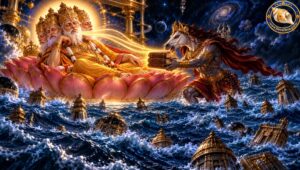
O King, at the end of the past kalpa there was a periodical dissolution (naimittika pralaya) caused by Brahmā. At that time, the worlds including Bhūrloka were submerged in the ocean.
When the powerful Brahmā (Dhātā), feeling sleepy under the influence of time and desiring to sleep, [lay down], the strong demon Hayagrīva stole the Vedas that had emanated from His mouth nearby.
Knowing that act of Hayagrīva, the chief of the Dānavas, the Supreme Lord Śrī Hari, the Controller, assumed the form of a tiny fish (śapharī).
Śrīmad-Bhāgavatam Canto 8, Chapter 24
एकदा कृतमालायां कुर्वतो जलतर्पणम् । तस्याञ्जल्युदके काचिच्छफर्येकाभ्यपद्यत ॥ १२ ॥
तमाह सातिकरुणं महाकारुणिकं नृपम् । यादोभ्यो ज्ञातिघातिभ्यो दीनां मां दीनवत्सल । कथं विसृजसे राजन्भीतामस्मिन्सरिज्जले ॥ १४॥
तस्या दीनतरं वाक्यमाश्रुत्य स महीपतिः । कलशाप्सु निधायैनां दयालुर्निन्य आश्रमम् ॥ १६ ॥
सा तु तत्रैकरात्रेण वर्धमाना कमण्डलौ । अलब्ध्वात्मावकाशं वा इदमाह महीपतिम् ॥ १७ ॥
नाहं कमण्डलावस्मिन्कृच्छ्रं वस्तुमिहोत्सहे । कल्पयौकः सुविपुलं यत्राहं निवसे सुखम् ॥ १८ ॥
स एनां तत आदाय न्यधादौदञ्चनोदके । तत्र क्षिप्ता मुहूर्तेन हस्तत्रयमवर्धत ॥ १९ ॥
तत आदाय सा राज्ञा क्षिप्ता राजन्सरोवरे । तदावृत्यात्मना सोऽयं महामीनोऽन्ववर्धत ॥ २१ ॥
इत्युक्तः सोऽनयन्मत्स्यं तत्र तत्राविदासिनि । जलाशयेऽसम्मितं तं समुद्रे प्राक्षिपज्झषम् ॥ २३ ॥
नूनं त्वं भगवान्साक्षाद्धरिर्नारायणोऽव्ययः । अनुग्रहाय भूतानां धत्से रूपं जलौकसाम् ॥ २७॥
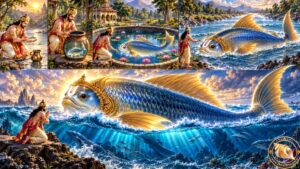
Once, while he [King Satyavrata] was offering water oblations in the Kṛtamālā River, a certain tiny fish came into the water of his cupped hands.
She [the fish] said very piteously to that most merciful king: “O protector of the distressed, O King! How can you throw me, a helpless one terrified of my own kin-killing aquatic creatures, into this river water?”
Hearing her most piteous words, that merciful ruler of the earth placed her in the water of his pot and brought her to his hermitage.
Growing within that water pot (kamaṇḍalu) in a single night and finding no space for herself, she spoke these words to the ruler of the earth:
“I cannot bear to live with difficulty in this water pot. Arrange a very spacious abode where I may live comfortably.”
Taking her from there, he placed her in the water of a large vessel. Placed there, within a moment (muhūrta), she grew to three cubits [in length].
Then, O King, taken from there by the king, she was thrown into a lake. Covering that lake with her own body, that huge fish continued to grow.
Thus spoken to, he led the fish to various inexhaustible reservoirs of water; but being uncontained in any reservoir, he threw that large fish into the ocean.
“Surely You are the Supreme Lord Himself, Śrī Hari, Nārāyaṇa, the Imperishable. For the grace of living beings, You assume the form of an aquatic creature.”
Maa Mahālakṣmī as Nauka (नाव)
Śrīmad-Bhāgavatam Canto 8, Chapter 24
Śrī Matsya Said:
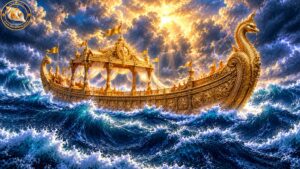
त्रिलोक्यां लीयमानायां संवर्ताम्भसि वै तदा । उपस्थास्यति नौः काचिद्विशाला त्वां मयेरिता ॥ ३३ ॥
Then, when the three worlds are dissolving in the waters of the deluge (saṁvarta-ambhas), a vast boat sent by Me shall present itself before you.”
त्वं तावदोषधीः सर्वा बीजान्युच्चावचानि च । सप्तर्षिभिः परिवृतः सर्वसत्त्वोपबृंहितः ॥ ३४ ॥
आरुह्य बृहतीं नावं विचरिष्यस्यविक्लवः । एकार्णवे निरालोके ऋषीणामेव वर्चसा ॥ ३५ ॥
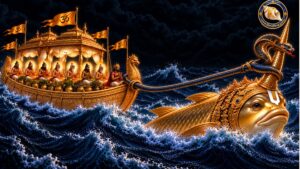
दोधूयमानां तां नावं समीरेण बलीयसा । उपस्थितस्य मे शृङ्गे निबध्नीहि महाहिना ॥ ३६ ॥
अहं त्वामृषिभिः सार्धं सहनावमुदन्वति । विकर्षन्विचरिष्यामि यावद्ब्राह्मी निशा प्रभो ॥ ३७ ॥
मदीयं महिमानं च परं ब्रह्मेति शब्दितम् । वेत्स्यस्यनुगृहीतं मे सम्प्रश्नैर्विवृतं हृदि ॥ ३८ ॥
“Gathering all herbs, seeds of various kinds [both high and low], surrounded by the Seven Sages (Saptarṣis), and all essential principles of existence (sarva-sattva),”
“Boarding that large boat, you shall wander undisturbed upon the single pitch-dark ocean, illuminated solely by the effulgence of the sages.”
“As that boat is tossed about by powerful winds, tie it to the horn of Me, who am present there, using the great serpent [Śrī Vāsuki].”
“Towing you, together with the sages and the boat upon the ocean, I shall move about as long as the night of Brahmā (brāhmī niśā) lasts, O Lord [King].”
“And by My grace, through your detailed inquiries, you shall understand in your heart My divine glory, which is designated as the Supreme Brahmān (Para-Brahmān), fully revealed.”
Śrīmad-Bhāgavatam Canto 8, Chapter 24
सोऽनुध्यातस्ततो राज्ञा प्रादुरासीन्महार्णवे I एकशृङ्गधरो मत्स्यो हैमो नियुतयोजनः ॥ ४४ ॥
Then, being meditated upon by the king, He [Lord Matsya] appeared in the vast ocean—a golden fish bearing a single horn, measuring a hundred thousand yojanas [in size].
Śrīmad-Bhāgavatam Canto 8, Chapter 24
अश्रौषीदृषिभिः साकमात्मतत्त्वमसंशयम् । नाव्यासीनो भगवता प्रोक्तं ब्रह्म सनातनम् ॥ ५६ ॥
अतीतप्रलयापाय उत्थिताय स वेधसे । हत्वासुरं हयग्रीवं वेदान्प्रत्याहरद्धरिः ॥५७॥
स तु सत्यव्रतो राजा ज्ञानविज्ञानसंयुतः । विष्णोः प्रसादात्कल्पेऽस्मिन्नासीद्वैवस्वतो मनुः ॥ ५८ ॥
“Seated in the boat, he [Satyavrata], together with the sages, heard without any doubt the science of the Self (ātma-tattva) and the eternal Supreme Truth (Brahmān) spoken by the Lord.”
At the conclusion of the past deluge, Śrī Hari killed the demon Hayagrīva and restored the Vedas to the creator Brahmā (Vedhas) as He awoke.
That King Satyavrata, endowed with spiritual knowledge (jñāna) and realization (vijñāna), became Vaivasvata Manu in this present kalpa by the grace of Śrī Viṣṇu.
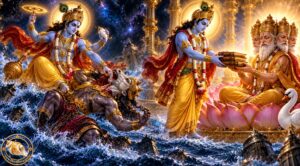
11. Śrī Kūrma (Tortoise Incarnation)
Śrīmad Bhāgavatam(Canto 1, Chapter 3)
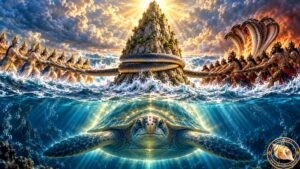
सुरासुराणामुदधिं मथ्नतां मन्दराचलम् । दध्रे कमठरूपेण पृष्ठ एकादशे विभुः ॥ १६ ॥
In the eleventh incarnation, the all-pervading Lord took the form of a tortoise and supported the Mandara Mountain on His back while the demigods and demons were churning the ocean.

Viṣṇu Purāṇa Part 1, Chapter 9
क्षीरोदमध्ये भगवान्कूर्मरूपी स्वयं हरिः । मन्थनाद्रेरधिष्ठानं भ्रमतोऽभून्महामुने ॥ ८८
O great sage, in the middle of the ocean of milk, the Supreme Lord Śrī Hari Himself, in the form of a tortoise, became the foundation for the revolving churning-mountain.
Viṣṇu Purāṇa Part 1, Chapter 9
रूपेणान्येन देवानां मध्ये चक्रगदाधरः । चकर्ष नागराजानं दैत्यमध्येऽपरेण च ॥ ८९
उपर्याक्रान्तवाञ्च्छैलं बृहद्रूपेण केशवः । तथापरेण मैत्रेय यन्न दृष्टं सुरासुरैः ॥ ९०
In another form among the gods, the wielder of the discus and mace pulled the king of serpents, and in another [form] among the Daityas.
In a gigantic form, Śrī Keśava pressed upon the mountain from above; and likewise in another [form], O Maitreya, which was not seen by the gods and demons.
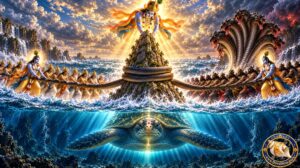
Śrīmad Bhāgavatam Canto 8, Chapter 7
विलोक्य विघ्नेशविधि तदेश्वरो दुरन्तवीर्योऽवितथाभिसन्धिः । कृत्वा वपुः कच्छपमद्भुतं महत् प्रविश्य तोयं गिरिमुज्जहार ॥८॥
तथासुरानाविशदासुरेण रूपेण तेषां बलवीर्यमीरयन् उद्दीपयन्देवगणांश्च विष्णुदैवेन नागेन्द्रमबोधरूपः ॥ ११ ॥
मथ्यमानात्तथा सिन्धोर्देवासुरवरूथपैः यदा सुधा न जायेत निर्ममन्थाजितः स्वयम् ॥ १६॥
मेघश्यामः कनकपरिधिः कर्णविद्योतविद्युन् मूर्ध्नि भ्राजद्विलुलितकचः स्त्रग्धरो रक्तनेत्रः । जैत्रैर्दोभिर्जगदभयदैर्दन्दशूकं गृहीत्वा
मध्नन्मथ्ना प्रतिगिरिरिवाशोभताथो धृताद्रिः ॥ १७ ॥
Seeing the obstacle [the sinking of the mountain], the Supreme Lord of insurmountable prowess, whose resolve is unfailing, assumed a wonderful and gigantic body of a tortoise, entered the water, and lifted up the mountain.
Likewise, Lord Śrī Viṣṇu entered into the Asuras with a demoniac disposition, stimulating their strength and vigor, into the hosts of demigods with a divine disposition, inspiring them, and into the king of serpents [Śrī Vāsuki] in a pain-alleviating, insensible form.
Then, when nectar did not appear from the ocean being churned by the leaders of the armies of the Devas and Asuras, the unconquered Lord Himself churned [the ocean].
Dark as a rain-cloud, dressed in yellow-golden garments, with ear-ornaments glittering like lightning, with hair shining and dishevelled on His head, wearing a garland, reddish-eyed, holding the serpent with His victorious arms that grant fearlessness to the universe, He, supporting the mountain, churned [the ocean] with the churning rod and shone like another mountain.
Comment: Notice Śrī Hari’s support in all 4 directions (kendras).
Maa Mahālakṣmī as Śrī Devī
Below is the list of gifts Maa Śrī Devī bestowed upon the world. As Lord Śrī Viṣṇu churned the cosmic ocean, She offered these treasures from its depths. Once Her task was complete, She finally emerged from the waters Herself.
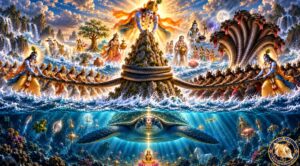
Viṣṇu Purāṇa Part 1, Chapter 9
मध्यमाने ततस्तस्मिन्क्षीराब्धौ देवदानवैः । हविर्धामाऽभवत्पूर्वं सुरभिः सुरपूजिता ॥ ९२
जग्मुर्मुदं ततो देवा दानवाश्च महामुने । व्याक्षिप्तचेतसश्चैव बभूवुः स्तिमितेक्षणाः ॥ ९३
किमेतदिति सिद्धानां दिवि चिन्तयतां ततः । बभूव वारुणी देवी मदाघूर्णितलोचना॥ ९४
कृतावर्तात्ततस्तस्मात्क्षीरोदाद्वासयञ्जगत्। गन्धेन पारिजातोऽभूद्देवस्त्रीनन्दनस्तरुः ॥ ९५
रूपौदार्यगुणोपेतस्तथा चाप्सरसां गणः । क्षीरोदधेः समुत्पन्नो मैत्रेय परमाद्भुतः ॥ ९६
ततः शीतांशुरभवज्जगृहे तं महेश्वरः । जगृहुश्च विषं नागाः क्षीरोदाब्धिसमुत्थितम् ॥ ९७
ततो धन्वन्तरिर्देवः श्वेताम्बरधरस्स्वयम्। बिभ्रत्कमण्डलुं पूर्णममृतस्य समुत्थितः ॥ ९८
ततः स्वस्थमनस्कास्ते सर्वे दैतेयदानवाः बभूवुर्मुदिताः सर्वे मैत्रेय मुनिभिः सह ॥ ९९
Then, while that ocean of milk was being churned by the Devas and Dānavas, first there appeared Surabhi, the source of sacrificial offerings (havis), worshipped by the gods.
O great sage, then the Devas and Dānavas attained joy; and with agitated minds, their eyes became motionless and fixed.
Then, while the perfected beings (siddhas) in heaven were contemplating, “What is this?”, Goddess Vāruṇī manifested, her eyes rolling from intoxication.
Then, from that ocean of milk whirled into whirlpools, there arose the Pārijāta tree—which delights the wives of the gods—perfuming the entire universe with its fragrance.
Likewise, O Maitreya, a most wonderful host of Apsarases, endowed with beauty, elegance, and sublime qualities, emerged from the ocean of milk.
Thereafter, the cool-rayed Moon (Śītāṁśu) appeared, whom Maheśvara [Lord Śiva] accepted; and the serpents took the poison that arose from the ocean of milk.
Then the divine Dhanvantari Himself arose, clad in white garments, bearing a pot filled with nectar (amṛta).
Thereupon, O Maitreya, all those Daityas and Dānavas attained tranquil minds, and all of them, along with the sages, became filled with joy.
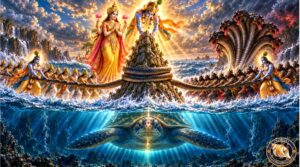
Viṣṇu Purāṇa Part 1, Chapter 9
ततः स्फुरत्कान्तिमती विकासिकमले स्थिता । श्रीर्देवी पयसस्तस्मादुद्भूता धृतपङ्कजा ॥ १००
भृगोः ख्यात्यां समुत्पन्ना श्रीः पूर्वमुदधेः पुनः । देवदानवयत्नेन प्रसूताऽमृतमन्थने ॥ १४१
एवं यदा जगत्स्वामी देवदेवो जनार्दनः । अवतारं करोत्येषा तदा श्रीस्तत्सहायिनी ॥ १४२
पुनश्च पद्मादुत्पन्ना आदित्योऽभूद्यदा हरिः । यदा तु भार्गवो रामस्तदाभूद्धरणी त्वियम् ॥ १४३
राघवत्वेऽभवत्सीता रुक्मिणी कृष्णजन्मनि । अन्येषु चावतारेषु विष्णोरेषानपायिनी ॥ १४४
देवत्वे देवदेहेयं मनुष्यत्वे च मानुषी । विष्णोर्देहानुरूपां वै करोत्येषात्मनस्तनुम् ॥ १४५
Then, possessing radiant brilliance, seated upon a fully blossomed lotus and holding a lotus in her hand, Goddess Śrī emerged from those waters.
Śrī was previously born unto Bhṛgu through Khyāti; she was produced again from the ocean by the effort of the Devas and Dānavas during the churning for nectar.
Thus, whenever Janārdana, the Lord of the universe and God of gods, takes an incarnation, She, Śrī, becomes His companion.
When Śrī Hari became Āditya [Śrīmad Bhāgavatam], She was born again from a lotus [as Śrī Padmā]; and when He was Bhārgava Rāma [Paraśurāma], She became the Earth (Dharaṇī).
In His state as Rāghava [Śrī Rāma], she became Sītā, and Śrī Rukmiṇī in His birth as Śrī Kṛṣṇa; and in all other incarnations of Śrī Viṣṇu, She is His inseparable companion.
When He assumes a divine form, She assumes a divine body; when He assumes human form, She becomes human. Indeed, She transforms Her own body in accordance with the form assumed by Śrī Viṣṇu.
Comment: Please note that Dhanwantari was not the last one to come out in Samudra Manthan. Maa Śrī Devī was the last one to come out. She was giving all the jewels to the world. Once She completed Her task, She came back to Śrī Viṣṇu.
Śrīmad Bhāgavatam Canto 8, Chapter 8
ततश्चाविरभूत्साक्षाच्छ्री रमा भगवत्परा । रज्जयन्ती दिश: कान्त्या विद्युत्सौदामनी यथा ॥
तस्यांसदेश उशतीं नवकञ्जमालां माह्यन्मधुव्रतवरूथगिरोपधघुष्टाम् । तस्थौ निधाय निकटे तदुरः स्वधाम सव्रीडहासविकसन्नयनेन याता ॥ २४॥
Thereafter, directly manifested Goddess Śrī (Ramā), who is completely devoted to the Supreme Lord, illuminating all directions with Her radiance like a flash of lightning.
Having approached Him with eyes blossoming with a shy smile, She placed upon His shoulder a beautiful garland of fresh lotuses, filled with the buzzing of intoxicated swarms of bees, and stood beside His chest, which is Her own eternal abode.
12. Śrī Dhanvantari
Śrīmad Bhāgavatam(Canto 1, Chapter 3)
धान्वन्तरं द्वादशमं त्रयोदशममेव च । अपाययत्सुरानन्यान्मोहिन्या मोहयन् स्त्रिया |
The twelfth [incarnation] was Śrī Dhanvantari; and indeed the thirteenth, bewildering the others [Asuras] by means of an enchanting female form [Mohinī], made the Devas drink [the nectar].
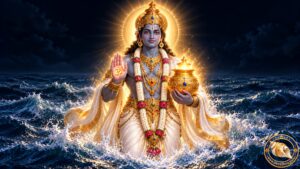
Viṣṇu Purāṇa Part 1, Chapter 9
ततो धन्वन्तरिर्देवः श्वेताम्बरधरस्स्वयम्। बिभ्रत्कमण्डलुं पूर्णममृतस्य समुत्थितः ॥ ९८
Thereafter, the divine Lord Śrī Dhanvantari Himself arose, clad in white garments, bearing a pot completely filled with nectar.
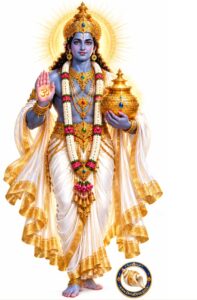
Śrīmad-Bhāgavatam (8.8)
अथोदधेर्मथ्यमानात्काश्यपैरमृतार्थिभिः । उदतिष्ठन्महाराज पुरुषः परमाद्भुतः ॥ ३१॥
दीर्घपीवरदोर्दण्डः कम्बुग्रीवोऽरुणेक्षणः । श्यामलस्तरुणः स्रग्वी सर्वाभरणभूषितः ॥ ३२ ॥
पीतवासा महोरस्कः सुमृष्टमणिकुण्डलः । स्निग्धकुञ्चितकेशान्तसुभगः सिंहविक्रमः । अमृतापूर्णकलसं बिभ्रद्वलयभूषितः ॥ ३३ ॥
स वै भगवतः साक्षाद्विष्णोरंशांशसम्भवः । धन्वन्तरिरिति ख्यात आयुर्वेददृगिज्यभाक् ॥ ३४॥
तमालोक्यासुराः सर्वे कलसं चामृताभृतम् । लिप्सन्तः सर्ववस्तूनि कलसं तरसाहरन् ॥ ३५॥
Then, O King, as the ocean was being churned for nectar by the descendants of Kaśyapa, there arose a supremely wonderful male person.
He had long and stout arms, a conch-like neck, reddish eyes, a dark complexion, was youthful, wore a garland, and was adorned with all ornaments.
Clad in yellow garments, broad-chested, wearing brightly polished gem-studded earrings, charming with the ends of his smooth, curly hair, possessing the prowess of a lion, adorned with armlets, and carrying a pot completely filled with nectar.
He indeed is a direct manifestation born as a partial expansion of a partial expansion of the Supreme Lord Śrī Viṣṇu, celebrated as Śrī Dhanvantari, the seer of Āyurveda, and the enjoyer of sacrificial oblations.
Seeing Him and the pot filled with nectar, all the Asuras, desiring to possess all precious objects, forcefully snatched the pot away.
Maa Laxmi as Amrita
Viṣṇu Purāṇa Part 1, Chapter 9
देवत्वे देवदेहेयं मनुष्यत्वे च मानुषी । विष्णोर्देहानुरूपां वै करोत्येषात्मनस्तनुम् ॥ १४५
When He assumes a divine form, She assumes a divine body; when He assumes human form, She becomes human. Indeed, She transforms Her own body in accordance with the form assumed by Śrī Viṣṇu.
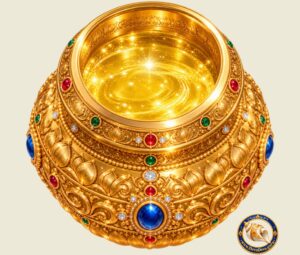
The Amṛta Pot: Dhanvantari emerged holding the Amṛta-Kalaśa (pot of nectar/immortality). In Ayurvedic and Tantric texts, the Amṛta (divine nectar) inside Śrī Dhanvantari’s jar is considered the manifest, liquid Śakti of Goddess Śrī Lakṣmī Herself—granting vitality (Ojas) and life to all beings
Lord Dhanvantari = The container/holder and the physician (Nāyaka / Puruṣa).
The Amṛta (Rasa) = The liquid potency itself (Rasa-rūpiṇī Śrī Lakṣmī).
Without the liquid Rasa (Śrī Lakṣmī), the Kalaśa (vessel) has no restorative function.
13. Śrī Mohinī
Śrīmad Bhāgavatam(Canto 1, Chapter 3)
धान्वन्तरं द्वादशमं त्रयोदशममेव च । अपाययत्सुरानन्यान्मोहिन्या मोहयन् स्त्रिया |
The twelfth [incarnation] was Śrī Dhanvantari; and indeed the thirteenth, bewildering the others [Asuras] by means of an enchanting female form [Śrī Mohinī], made the Devas drink [the nectar].
Śrīmad-Bhāgavatam (canto 8 chapter 8)
नीयमानेऽसुरैस्तस्मिन्कलसेऽमृतभाजने । विषण्णमनसो देवा हरिं शरणमाययुः ॥ ३६॥
इति तद्दैन्यमालोक्य भगवान्भृत्यकामकृत् । मा खिद्यत मिथोऽर्थं वः साधयिष्ये स्वमायया ॥ ३७ ॥
एतस्मिन्नन्तरे विष्णुः सर्वोपायविदीश्वरः । योषिद्रूपमनिर्देश्यं दधारपरमाद्भुतम् ॥४१॥
प्रेक्षणीयोत्पलश्यामं सर्वावयवसुन्दरम् । समानकर्णाभरणं सुकपोलोन्नसाननम् ॥४२॥
नवयौवननिर्वृत्तस्तनभारकृशोदरम् । मुखामोदानुरक्तालिझङ्कारोद्विग्नलोचनम् ॥४३॥
बिभ्रत्सुकेशभारेण मालामुत्फुल्लमल्लिकाम् । सुग्रीवकण्ठाभरणं सुभुजाङ्गदभूषितम् ॥४४॥
विरजाम्बरसंवीतनितम्बद्वीपशोभया ।काञ्च्या प्रविलसद्वल्गुचलच्चरणनूपुरम् ॥ ४५ ॥
सव्रीडस्मितविक्षिप्तभ्रूविलासावलोकनैः । दैत्ययूथपचेतःसु काममुद्दीपयन्मुहुः ॥ ४६॥
While that pot containing the nectar was being carried away by the demons, the gods, with depressed minds, took refuge in Śrī Hari.
Thus observing their distress, the Supreme Lord, who fulfils the desires of His servants, said: “Do not grieve; I shall accomplish your purpose by My illusory power (Māyā).”
In the meantime, Lord Śrī Viṣṇu, who knows all means and is the Supreme Controller, assumed an indescribable and supremely wonderful female form.
[She was] beautiful to look at, dark-complexioned like a blue lotus, completely beautiful in every part of the body, adorned with matching ear-ornaments, with beautiful cheeks and a high-nosed face.
[She had] full breasts on account of fresh youth, a slender waist, and eyes restless due to the humming of bees attracted by the fragrance of Her face.
Carrying a garland of fully blossomed jasmine flowers on Her abundant hair, [She was] decorated with an elegant neck, a necklace, and armlets on Her beautiful arms.
Splendid with the island-like hips covered in spotless cloth, and with a girdle, She shone with charming, moving ankle-bells on Her feet.
Repeatedly kindling passion in the hearts of the demon leaders through Her bashful smiles and side-glances thrown with playful movement of Her eyebrows.
Śrīmad-Bhāgavatam (canto 8 chapter 9)
वयं कश्यपदायादा भ्रातरः कृतपौरुषाः । विभजस्व यथान्यायं नैव भेदो यथा भवेत् ॥ ७ ॥
श्रीभगवानुवाच
कथं कश्यपदायादाः पुंश्चल्यां मयि सङ्गताः । विश्वासं पण्डितो जातु कामिनीषु न याति हि ॥ ९॥
श्रीशुक उवाच
इति ते क्ष्वेलितैस्तस्या आश्वस्तमनसोऽसुराः । जहसुर्भावगम्भीरं ददुश्चामृतभाजनम् ॥११॥
दैत्यान्गृहीतकलसो वञ्चयन्नुपसञ्चरैः । दूरस्थान्पाययामास जरामृत्युहरां सुधाम् ॥ २१ ॥
देवलिङ्गप्रतिच्छन्नः स्वर्भानुर्देवसंसदि । प्रविष्टः सोममपिबच्चन्द्रार्काभ्यां च सूचितः ॥ २४॥
चक्रेण क्षुरधारेण जहार पिबतः शिरः । हरिस्तस्य कबन्धस्तु सुधयाप्लावितोऽपतत् ॥ २५ ॥
शिरस्त्वमरतां नीतमजो ग्रहमचीक़िपत् । यस्तु पर्वणि चन्द्रार्कावभिधावति वैरधी: ॥ २६॥
[The demons said:] “We are the descendants of Kaśyapa, brothers who have put forth our exertion. Divide [the nectar] equitably so that there may be no division [conflict/unfairness] among us.”
The Supreme Lord [in the form of Śrī Mohinī] said: “How is it that you, descendants of Kaśyapa, have formed an association with a unchaste women (puṁścalyām) like me? A wise person never places trust in women.”
Śukadeva Gosvāmī said: Thus comforted by Her playful words, the minds of the demons were reassured. They laughed with profound affection and handed over the vessel of nectar.
Deceiving the demons while holding the pot, and moving about with deceptive tricks, Hari made the gods, who were seated at a distance, drink the nectar that destroys old age and death.
Disguised by the form of a god, Swarbhānu (Rahu) entered the assembly of the gods. He drank the nectar (Soma) and was pointed out by the Sun and the Moon.
Śrī Hari instantly severed Rahu’s head by hurling His razor-sharp Chakra. Once his head was severed from his body, the body could not remain alive, as it had not come into contact with the nectar of immortality.
His head was brought to a state of immortality, and the unborn Lord (Brahmā) made him a planet (graha). Even today, out of enmity, he attacks the Sun and the Moon during the पर्वणि (parva / eclipse periods).
Comment: Note that Ketu doesn’t have a body. Only Rahu was born and not Ketu.
Maa Mahālakṣmī as Moha Shakti
Though it is not mentioned anywhere but clearly Maa Mahālakṣmī appeared as Moha Shakti.
14. Śrī Narasimha
Śrīmad Bhāgavatam(Canto 1, Chapter 3)
चतुर्दशं नारसिंहं बिभ्रद्दैत्येन्द्रमूर्जितम् । ददार करजैर्वक्षस्येरकां कटकृद्यथा ।।१८
“The fourteenth was Śrī Nārasiṃha, who assumed the form and tore apart the mighty king of the Daityas with His claws, ripping open his chest as a reed is split by a cutting tool.”
Śrīmad Bhāgavatam Canto 7 Chapter 8
सत्यं विधातुं निजभृत्यभाषितं व्याप्तिं च भूतेष्वखिलेषु चात्मनः।अदृश्यतात्यद्भुतरूपमुद्वहन् स्तम्भे सभायां न मृगं न मानुषम् ॥ १७॥
स सत्त्वमेनं परितो विपश्यन् स्तम्भस्य मध्यादनुनिर्जिहानम् । नायं मृगो नापि नरो विचित्रमहो किमेतन्नृमृगेन्द्ररूपम् ॥१८॥
मीमांसमानस्य समुत्थितोऽग्रतो । नृसिंहरूपस्तदलं भयानकम् ॥१९॥
प्रतप्तचामीकरचण्डलोचनं स्फुरत्सटाकेशरजृम्भिताननम् । करालदंष्ट्रं करवालचञ्चल क्षुरान्तजिह्वं भ्रुकुटीमुखोल्बणम् ॥२०॥
स्तब्धोर्ध्वकर्णं गिरिकन्दराद्भुत- व्यात्तास्यनासं हनुभेदभीषणम् । दिविस्पृशत्कायमदीर्घपीवरग्रीवोरुवक्षःस्थलमल्पमध्यमम् ॥ २१॥
चन्द्रांशुगौरैश्छुरितं तनूरुहैविष्वग्भुजानीकशतं नखायुधम् । दुरासदं सर्वनिजेतरायुधप्रवेकविद्रावितदैत्यदानवम् ॥ २२॥
To fulfil the words of His own devotee and to manifest His omnipresence within all beings, He assumed a most wondrous form in the pillar of the assembly hall—neither beast nor human.
While Hiraṇyakaśipu looked all around to find the source of the sound, that wonderful form of the Lord emerged from the middle of the pillar. It could not be ascertained to be either a beast or a human being. In utter amazement, Hiraṇyakaśipu wondered, “What is this wondrous creature—this form of a man-lion?”
While he was thus contemplating, the extraordinarily terrifying form of Lord Śrī Nṛsiṁhadeva stood right in front of him.
The Lord’s form was fiercely striking with eyes like molten gold, a face made expansive and dreadful by a shining, bristling mane, formidable fangs, and a razor-sharp tongue that flickered like a sword. His expression was made severe by furrowed brows.
His ears were stiff, erect, and pointed upward, and His gaping mouth and nostrils resembled the caves of a mountain. His split jaws made His appearance terrifying, His body touched the sky, and He possessed a short, thick neck, broad thighs, a broad chest, and a slender waist.
His entire body was covered with hair as white as the rays of the moon. Hundreds of arms reached out in all directions, and His claws served as His weapons. He was formidably difficult to approach, and by using both His own weapons and various others, He scattered and routed the armies of the Daityas and Dānavas.
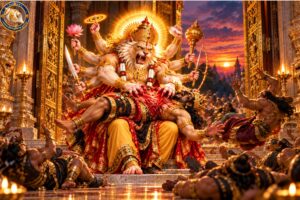
Śrīmad Bhāgavatam Canto 7 Chapter 8
विष्वक्स्फुरन्तं ग्रहणातुरं हरिर्व्यालो यथाखुं कुलिशाक्षतत्वचम् । द्वार्यरुमापत्य ददार लीलया नखैर्यथाहिं गरुडो महाविषम् ॥२९॥
संरम्भदुष्प्रेक्ष्यकराललोचनो व्यात्ताननान्तं विलिहन्स्वजिह्वया । असृग्लवाक्तारुणकेशराननो यथान्त्रमाली द्विपहत्यया हरिः ॥३०॥
नखाङ्कु रोत्पाटितहृत्सरोरुहं विसृज्य तस्यानुचरानुदायुधान् । अहन्समस्तान्नखशस्त्रपाणिभिर्दोर्दण्डयूथोऽनुपथान्सहस्रशः ॥ ३१॥
Śrī Hari playfully tore apart with nails, having placed upon the thigh at the doorway the one whose skin was unpierced by the thunderbolt, who was struggling everywhere and distressed by capture, just as a snake a mouse, and just as Garuda a highly poisonous snake.
With fearful eyes difficult to look at due to anger, licking the edges of the wide-open mouth with His own tongue, having a face and mane reddened, smeared with drops of blood, wearing a garland of intestines just as a lion by the killing of an elephant.
Having cast aside him whose heart-lotus was uprooted by nail-tips, [the Lord] possessing a multitude of rod-like arms killed in thousands all his followers who came with raised weapons, using hands with nails as weapons.
Liṅga Purāṇa (Pūrva-bhāga, Chapter 96)
रुद्रसाधारणं चैव चिह्नितं विकृताकृति । ततः संहाररूपेण सुव्यक्तः परमेश्वरः ।। ६५
पश्यतां सर्वदेवानां जयशब्दादिमङ्गलैः । सहस्त्रबाहुर्जटिलश्चन्द्रार्धकृतशेखरः ।। ६६
स मृगार्धशरीरेण पक्षाभ्यां चञ्चुना द्विजाः । अतितीक्ष्णमहादंष्ट्रो वज्रतुल्यनखायुधः ॥ ६७
कण्ठे कालो महाबाहुश्चतुष्पाद्वह्निसम्भवः । युगान्तोद्यतजीमूतभीमगम्भीरनिःस्वनः ॥ ६८
समं कुपितवृत्ताग्निव्यावृत्तनयनत्रयः । स्पष्टदंष्ट्रोऽधरोष्ठश्च हुङ्कारेण युतो हरः ॥ ६९
At that time a form with a fierce shape and with the special marks of Rudra appeared. Thereafter, that Supreme Lord manifested (appeared) in the form of great cataclysm. Hey Dvijo! In front of all the gods, filled with blessings like Jai Shabdha etc., Shiva became the one with thousand arms, matted hair, wearing half moon on his head, half body of an animal, two wings and a beak. His teeth were huge and very sharp. He was adorned with a weapon shaped like a thunderbolt.
His throat was dark-hued. He possessed four arms and four legs and appeared to have emerged from fire. He was emitting a terrifying and deep roar, like the clouds that appear at the end of an epoch. His three eyes had dilated with rage, resembling massive orbs of fire. His teeth, lower lip, and upper lip were clearly visible. He was roaring fiercely.
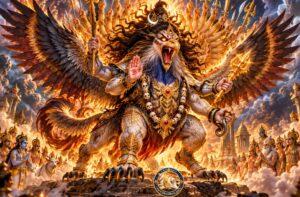
हरिस्तद्दर्शनादेव विनष्टबलविक्रमः । बिभ्रदौर्म्यं सहस्त्रांशोरधः खद्योतविभ्रमम् ॥ ७०
अथ विभ्रम्य पक्षाभ्यां नाभिपादेऽभ्युदारयन् । पादावाबध्य पुच्छेन बाहुभ्यां बाहुमण्डलम् ॥ ७१
भिदन्नुरसि बाहुभ्यां निजग्राह हरो हरिम् । ततो जगाम गगनं देवैः सह महर्षिभिः ॥ ७२
सहसैव भयाद्विष्णुं विहगश्च यथोरगम् । उत्क्षिप्योत्क्षिप्य सङ्ग्रह्य निपात्य च निपात्य च ॥ ७३
उड्डीयोड्डीय भगवान् पक्षाघातविमोहितम्। हरिं हरं तं वृषभं विश्वेशानं तमीश्वरम् ॥ ७४
अनुयान्ति सुराः सर्वे नमोवाक्येन तुष्टुवुः । नीयमानः परवशो दीनवक्त्रः कृताञ्जलिः ॥ ७५
तुष्टाव परमेशानं हरिस्तं ललिताक्षरैः ।
Upon seeing him, Śrī Viṣṇu’s strength and valor vanished; He appeared like a mere firefly in the presence of the sun. Thereafter, Sharabha—manifesting the form of Hara—gripped Him with His wings, tore into His navel and legs, bound His feet with His tail, locked His arms around Śrī Viṣṇu’s arms, struck His chest, and held Him fast in his embrace. Thereupon, just as Śrī Garuḍa pounces upon a serpent, the Lord [Sharabha] repeatedly tossed Śrī Viṣṇu—who had been rendered unconscious and terrified by the blows of His wings—up into the air and let Him fall; then, taking hold of Him, He ascended into the heavens accompanied by the gods and great sages.
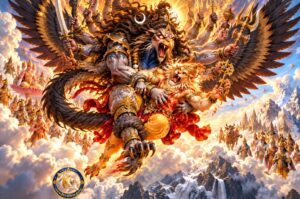
Maa Laxmi as Śrī / Nārasiṁhī
Śrīmad Bhāgavatam Canto 7 Chapter 9
साक्षात्श्रीः प्रेषिता देवैर्दृष्ट्वा तं महदद्भुतम् । अदृष्टाश्रुतपूर्वत्वात्सा नोपेयाय शङ्किता ॥ २॥
Even Goddess Śrī Herself, sent by the demigods, upon seeing Him who was a great marvel, did not approach Him, being apprehensive because of His form having never been seen or heard of before.
Markandeya Puran / Durga Sapshati Chapter 8 – Raktbija Vadh
नारसिंही न॒सिंहस्य बिभ्रती सदृशं वपुः । प्राप्ता तत्र॒ सटाक्षेपकषिप्तनक्षत्रसंहतिः ॥२०
Śrī Nārasiṁhī arrived there, bearing a form resembling that of Śrī Nṛsiṁha, scattering the clusters of stars by the shaking of Her mane.
Mārkaṇḍeya Purāṇa / Durgā Saptaśatī Chapter 11
नृसिंहरूपेणोग्रेण हन्तुं दैत्यान् कृतोद्यमे। त्रैलोक्यत्राणसहिते नारायणि नमोऽस्तु ते ॥ १८ ॥
O You who made effort to slay the demons by assuming the fierce form of Śrī Nṛsiṁha, O You who are intent upon the protection of the three worlds, O Nārāyaṇī, salutations unto You!
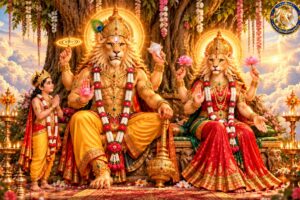
15. Śrī Vāmana
Śrīmad Bhāgavatam(Canto 1, Chapter 3)
पञ्चदशं वामनकं कृत्वागादध्वरं बलेः ।पदत्रयं याचमानः प्रत्यादित्सुस्त्रिविष्टपम्॥ १९ ॥
Having assumed the fifteenth incarnation as a Śrī Vāmana, He went to the sacrifice of Bali, begging for three steps of land, desiring to recover the heavenly realms.
Śrīmad Bhāgavatam Canto 8 Chapter 16
When asked by Aditi about vrata, Śrī Kashyap tells about Payovrat vidhi:
फाल्गुनस्यामले पक्षे द्वादशाहं पयोव्रतम् । अर्चयेदरविन्दाक्षं भक्त्या परमयान्वितः ॥ २५॥
In the bright fortnight of the month of Phālguna, for twelve days, one endowed with supreme devotion should observe the Payovrata (milk vow) and worship the lotus-eyed Lord.
Śrīmad Bhāgavatam Canto 8 Chapter 17
चिन्तयन्त्येकया बुद्ध्या महापुरुषमीश्वरम् । प्रगृह्येन्द्रियदुष्टाश्वान्मनसा बुद्धिसारथिः ॥ २ ॥
चैकाया बुद्ध्या भगवत्यखिलात्मनि । वासुदेवे समाधाय चचार ह पयोव्रतम् ॥ ३॥
तस्याः प्रादुरभूत्तात भगवानादिपुरुषः । पीतवासाश्चतुर्बाहुः शङ्खचक्रगदाधरः ॥ ४ ॥
Contemplating with a single-minded intellect upon the Supreme Person, the Lord, restraining the wicked horses of the senses by means of the mind, with the intellect as her charioteer,
Fixing her mind with that one-pointed intellect upon the Supreme Lord Vāsudeva, the Soul of all beings, she observed the Payovrata (milk-vow).
O dear one, before her appeared the Supreme Lord, the Original Person, clad in yellow garments, four-armed, and holding the conch, discus, and mace.
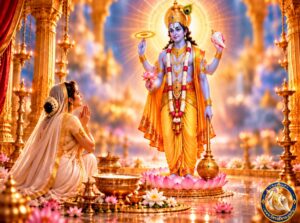
Vāmana Purāṇa Chapter 28
लोमहर्षण उवाच
एवं स्तुतोऽथ भगवान् वासुदेव उवाच ताम् । अदृश्यः सर्वभूतानां तस्याः संदर्शने स्थितः ॥ १
श्रीभगवानुवाच
कृतः प्रसादो हि मया तव देवि यथेप्सितम् । स्वांशेन चैव ते गर्भे सम्भविष्यामि कश्यपात् ॥ १०
तव गर्भे समुद्भूतस्ततस्ते ये त्वरातयः । तानहं च हनिष्यामि निवृत्ता भव नन्दिनि ॥ ११
लोमहर्षण उवाच
ततो मासेऽथ दशमे काले प्रसव आगते । अजायत स गोविन्दो भगवान् वामनाकृतिः ॥ १३
Lomaharṣaṇa said:
Thus praised, the Supreme Lord Vāsudeva then spoke to her. Unseen by all living beings, He stood directly within her vision.
The Supreme Lord said:
O Goddess, grace has indeed been granted by Me unto you as desired. By My own partial manifestation, I shall be born in your womb through Kaśyapa. Having manifested in your womb, I shall slay those who are your enemies. Be relieved of your worry, O joyful one!
Lomaharṣaṇa said
Then in the tenth month, when the time for delivery arrived, that Supreme Lord Govinda was born in the form of a dwarf (Śrī Vāmana) .
Śrīmad Bhāgavatam Canto 8 Chapter 18
श्रोणायां श्रवणद्वादश्यां मुहूर्तेऽभिजिति प्रभुः । सर्वे नक्षत्रताराद्याश्चक्रुस्तज्जन्म दक्षिणम् ॥५॥
On the twelfth lunar day (Śravaṇa-dvādaśī), under the Śravaṇā constellation, during the Abhijit muhūrta, the Lord appeared. All the constellations, stars, and planets rendered His birth auspicious.
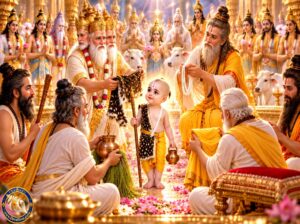
Vāmana Purāṇa Chapter 30
ततः कृष्णाजिनं ब्रह्मा हृषीकेशाय दत्तवान् । यज्ञोपवीतं भगवान् ददौ तस्य बृहस्पतिः ॥ ३६
आषाढमददाद् दण्डं मरीचिर्ब्रह्मणः सुतः।कमण्डलुं वसिष्ठश्च कौशं चीरमथाङ्गिराः। आसनं चैव पुलहः पुलस्त्यः पीतवाससी ॥ ३७
उपतस्थुश्च तं वेदाः प्रणवस्वरभूषणाः । शास्त्राण्यशेषाणि तथा सांख्ययोगोक्तयश्च याः ॥ ३८
स वामनो जटी दण्डी छत्री धृतकमण्डलुः । सर्वदेवमयो देवो बलेरध्वरमभ्यगात् ॥ ३९
Then Brahmā gave a black antelope skin to Hṛṣīkeśa, and the revered Bṛhaspati gave Him the sacred thread.
Marīci, the son of Brahmā, gave [Him] a staff of Palāśa wood; Vasiṣṭha gave a water-pot; Aṅgiras gave a garment made of Kuśa grass; Pulaha gave a seat; and Pulastya gave two yellow garments.
The Vedas, adorned with the sound of Oṁ (Praṇava), waited upon Him, as did all the scriptures without exception, along with the teachings of Sāṁkhya and Yoga.
He, as Śrī Vāmana, with matted hair, carrying a staff, holding an umbrella, and bearing a water-pot, the God who is composed of all the gods, went to the sacrifice of Bali.
Vāmana Purāṇa Chapter 31
सर्वे च सकला पृथ्वी भवतो वा यदीप्सितम् । तद् ददामि वृणुष्वेष्टं ममार्थाः सन्ति ते प्रियाः ॥ ४२
इत्युक्तो दैत्यपतिना प्रीतिगर्भान्वितं वचः । प्राह सस्मितगम्भीरं भगवान् वामनाकृतिः ॥ ४३
पाणौ तु पतिते तोये वामनोऽभूदवामनः । सर्वदेवमयं रूपं दर्शयामास तत्क्षणात् ॥ ४८
चन्द्रसूर्यौ तु नयने द्यौः शिरश्चरणौ क्षितिः । पादाङ्गुल्यः पिशाचास्तु हस्ताङ्गुल्यश्च गुह्यकाः ॥ ४९
“The entire earth or whatever else is desired by You, all of that I shall give. Choose what you desire; my wealth is at Your pleasure.”
Having been thus addressed by the king of the Daityas (Bali) with words filled with affection, the Supreme Lord in the form of a dwarf spoke with a gentle, solemn smile.
As soon as the water [for the solemn vow] fell upon His hand, the dwarf ceased to be a dwarf, and instantly revealed His cosmic form embodying all the deities.
The moon and the sun were His eyes, the sky was His head, and the earth was His feet; the Piśācas were His toes, and the Guhyakas (Yakṣas) were His fingers.
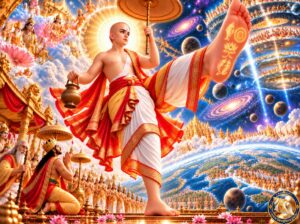
Śrīmad Bhāgavatam Canto 8 Chapter 21
पदानि त्रीणि दत्तानि भूमेर्मह्यं त्वयासुर । द्वाभ्यां क्रान्ता मही सर्वा तृतीयमुपकल्पय ॥ २९ ॥
पदैकेन मयाक्रान्तो भूर्लोकः खं दिशस्तनोः । स्वर्लोकस्ते द्वितीयेन पश्यतस्ते स्वमात्मना ॥ ३१ ॥
प्रतिश्रुतमदातुस्ते निरये वास इष्यते । विशत्वं निरयं तस्माद्गुरुणा चानुमोदितः ॥ ३२॥
O Asura, three steps of land were promised to Me by you. With two steps, the entire earth has been covered; now prepare the third step.
With one step, Bhūrloka (the earth), the sky, the directions, and space were covered by My body. With the second step, your Svarloka (heavenly realm) was covered, even as you yourself were watching.
Residence in hell is prescribed for one who does not give what he has promised. Therefore, enter hell, having been approved by your guru.
Śrīmad Bhāgavatam Canto 8 Chapter 22
श्रीबलिरुवाच
यद्युत्तमश्लोक भवान्ममेरितं वचो व्यलीकं सुरवर्य मन्यते । करोम्यृतं तन्न भवेत्प्रलम्भनं पदं तृतीयं कुरु शीर्षण मे निजम् ॥ २ ॥
श्रीभगवानुवाच
एष मे प्रापितः स्थानं दुष्प्रापममरैरपि । सावर्णेरन्तरस्यायं भवितेन्द्रो मदाश्रयः ॥ ३१ ॥
तावत्सुतलमध्यास्तां विश्वकर्मविनिर्मितम् यदाधयो व्याधयश्च क्लमस्तन्द्रा पराभवः । नोपसर्गा निवसतां सम्भवन्ति ममेक्षया ॥३२॥
Śrī Bali said:
O Lord celebrated in noble verses, O best of the gods, if You consider the statement made by me to be deceitful, I shall make it truthful so that there is no deception. Place Your third step upon my head.
The Supreme Lord said:
He has been brought by Me to a realm that is difficult to attain even by the immortals. In the era of Sāvarṇi (Manu), taking shelter in Me, he shall become Indra.
Until then, let him reside in Sutala, which was constructed by Viśvakarmā, where mental anxieties, physical diseases, fatigue, lethargy, defeat, and afflictions do not happen to the inhabitants, by My grace.
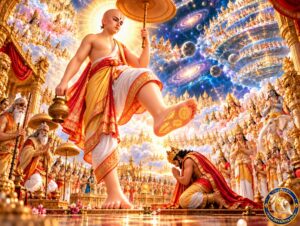
Vāmana Purāṇa Chapter 31
जित्वा लोकत्रयं तांश्च हत्वा चासुरपुंगवान् । पुरंदराय त्रैलोक्यं ददौ विष्णुरुरुक्रमः ॥ ६५
Having conquered the three worlds and slain those prominent Asuras, Lord Śrī Viṣṇu of mighty strides handed over the three worlds to Purandara (Indra).
Maa Mahālakṣmī as Padmā
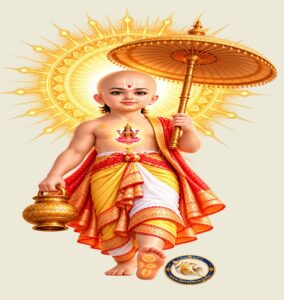
Viṣṇu Puran Part 1 Chapter 9
पुनश्च पद्मादुत्पन्ना आदित्योऽभूद्यदा हरिः । यदा तु भार्गवो रामस्तदाभूद्धरणी त्वियम् ॥ १४३
When Śrī Hari was born as the son of Aditi [Śrīmad Bhāgavatam], She [Śrī Lakṣmī] was born from a lotus [as Śrī Padmā]. And when He incarnated as Śrī Paraśurāma, she became Śrī Dharaṇī [the personified Earth].
Mahānārāyaṇa Upaniṣad (Nārāyaṇa Sūktam) 13.1-2 (https://sanskritdocuments.org/doc_vishhnu/Nārāyaṇa-sukta.html)
अनन्त अव्ययं कविं समुद्रेन्तं विश्वशम्भुवम् । पद्मकोशप्रतीकाशं हृदयं च अपि अधोमुखम् ॥
अधो निष्ठ्या वितस्त्यान्ते नाभ्याम् उपरि तिष्ठति । ज्वालामालाकुलं भाती विश्वस्यायतनं महत् ॥
The infinite, the imperishable, the omniscient seer, situated within the ocean, the benefactor of the universe. The heart resembles a lotus bud and also faces downwards.
It is situated at the distance of a hand-span below the collarbone and above the navel. It shines surrounded by a garland of flames, the great abode of the universe.
In this subtle form, She is represented either as residing within the lotus He holds, or remaining unmanifested in His heart (Śrīvatsa), maintaining Her eternal presence with Him while allowing Śrī Vāmana avatar to fulfil His vow of celibacy to defeat King Mahabali.