Written by ShivKaDaas
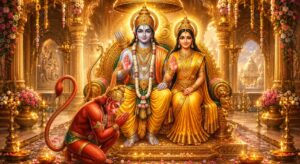
अयोनिजा-प्रादुर्भावः The Auspicious Manifestation Of Maa Sītā
Vālmīki Rāmāyaṇa Bālakāṇḍa 66.13–14
King Janaka narrates Maa Sītā birth to Viśvāmitra and Śrī Rāma:
अथ मे कृषतः क्षेत्रं लाङ्गलादुत्थिता ततः।
क्षेत्रं शोधयता लब्धा नाम्ना सीतेति विश्रुता॥13॥
Atha me kṛṣataḥ kṣetraṃ lāṅgalād utthitā tataḥ |
Kṣetraṃ śodhayatā labdhā nāmnā Sīteti viśrutā || 13 ||
While I was ploughing the sacrificial field, a girl arose from the furrow made by the plough. As she was obtained while ploughing the field, she became known by the name Sītā.
भूतलादुत्थिता सा तु व्यवर्धत ममात्मजा।
वीर्यशुल्केति मे कन्या स्थापितेयमयोनिजा॥14॥
Bhūtalād utthitā sā tu vyavardhata mamātmajā |
Vīryaśulketi me kanyā sthāpiteyam ayonijā || 14 ||
She arose from the earth, yet I raised her as my own daughter. Being ayonijā, I resolved that only a hero of great valour would win her hand.
Vālmīki Rāmāyaṇa Ayodhyākāṇḍa 118
Maa Sītā herself narrates her birth
तस्य लाङ्गलहस्तस्य कृषतः क्षेत्रमण्डलम् ।
अहं किलोत्थिता भित्त्वा जगतीं नृपतेः सुता ॥28
Tasya lāṅgalahastasya kṛṣataḥ kṣetramaṇḍalam |
Ahaṃ kilotthitā bhittvā jagatīṃ nṛpateḥ sutā || 28 ||
As he held the plow in his hand and was tilling the circular sacrificial field, I emerged by breaking open the earth, becoming the king’s daughter.”
स मां दृष्ट्वा नरपतिर्मुष्टिविक्षेपतत्परः ।
पांसुकुण्ठितसर्वाङ्गीं विस्मितो जनकोऽभवत् ॥29
Sa māṃ dṛṣṭvā narapatir muṣṭivikṣepatatparaḥ |
Pāṃsukuṇṭhitasarvāṅgīṃ vismito Janako’bhavat || 29 ||
King Janaka, who was then engaged in scattering fistfuls of seed, saw me with my entire body covered in soil/dust, and was filled with astonishment.
अयोनिजां हि मां ज्ञात्वा नाध्यगच्छत स चिन्तयन् ।
सदृशं चाभिरूपं च महीपालः पतिं मम ॥37
Ayonijāṃ hi māṃ jñātvā nādhyagacchat sa cintayan |
Sadṛśaṃ cābhirūpaṃ ca mahīpālaḥ patiṃ mama || 37 ||
Knowing me to be Ayonija, the king reflected deeply and could not easily find a matching and worthy husband for me.
Sītopaniṣad (सीतोपनिषत्, Verse 6)
प्रथमा शब्दब्रह्ममयी स्वाध्यायकाले प्रसन्ना उद्भावनकरी सात्मिका ।
द्वितीया भूतले हलाग्रे समुत्पन्ना ।
तृतीया ईकाररूपिणी अव्यक्तस्वरूपा भवतीति — सीता इत्युदाहरन्ति शौनकीये ॥
Prathamā śabdabrahmamayī svādhyāyakāle prasannā udbhāvanakarī sātmikā |
Dvitīyā bhūtale halāgre samutpannā |
Tṛtīyā īkārarūpiṇī avyaktasvarūpā bhavatīti — Sītā ity udāharanti Śaunakīye ||
First, She manifests as Śabda-Brahman (the cosmic divine sound of the Vedas), becoming pleased during sacred scriptural study, revealing wisdom as the very soul of divine knowledge.
Second, She is manifested upon the earth at the tip of the plow [as the earthly Goddess Sītā].
Third, She exists in her unmanifest, supreme subtle form represented by the sacred syllable Ī.
Thus is She described as Sītā in the Śaunaka tradition.
Srimad Bhagavata Purana (9.13.18)
ततः सीरध्वजो जज्ञे यज्ञार्थ कर्षतो महीम् ।
सीता सीराग्रतो जाता तस्मात् सीरध्वज: स्मृत: ।।१८
Tataḥ Sīradhvajo jajñe yajñārthaṃ karṣato mahīm |
Sītā sīrāgrato jātā tasmāt Sīradhvajaḥ smṛtaḥ || 18 |
From Hrasvaromā was born a son named Śīradhvaja [Janaka]. When he was plowing the earth for a Yajna, a daughter named Sītā appeared from the front tip of his plowshare. Because of this event, he became celebrated as Śīradhvaja
Padma Purana (Uttara Khanda, Chapter 254, Verses 100–103)
(संस्कृत source )
अथ लोकेश्वरी लक्ष्मीर्जनकस्य निवेशने ।
शुभक्षेत्रे हलोद्धाते सुनासीरे शुभेक्षणे ॥ १०० ॥
बालार्ककोटिसंकाशा रक्तोत्पलकराम्बुजा ।
सर्वलक्षणसंपन्ना सर्वाभरणभूषिता ॥ १०१ ॥
धृत्वा वक्षसि चार्वङ्गी मालामम्लानपङ्कजाम् ।
सीतामुखे समुत्पन्ना बालभावेन सुंदरी ॥ १०२ ॥
तां दृष्ट्वा जनको राजा कन्यां वेदमयीं शुभाम् ।
उद्धृत्यापत्यभावेन पुपोष मिथिलापतिः ॥ १०३ ॥
Atha lokeśvarī Lakṣmīr Janakasya niveśane |
Śubhakṣetre haloddhāte sunāsīre śubhekṣaṇe || 100 ||
Bālārkakoṭisaṃkāśā raktotpalakarāmbujā |
Sarvalakṣaṇasaṃpannā sarvābharaṇabhūṣitā || 101 ||
Dhṛtvā vakṣasi cārvaṅgī mālām amlānapaṅkajām |
Sītāmukhe samutpannā bālabhāvena sundarī || 102 ||
Tāṃ dṛṣṭvā Janako rājā kanyāṃ vedamayīṃ śubhām |
Uddhṛtyāpatyabhāvena pupoṣa Mithilāpatiḥ || 103 ||
Then, Goddess Lakshmi—the Sovereign Queen of all the worlds—manifested in the sacred realm of King Janaka, in an auspicious field upturned by the plow, at an auspicious point of the plowshare during a holy moment.
She was resplendent like ten million rising suns, holding a red lotus in her lotus hand, endowed with every auspicious divine characteristic, and beautifully adorned with all ornaments.
Wearing a garland of unfading lotuses upon her chest, that beautiful child of exquisite limbs emerged at the tip of the furrow (sītā) in the form of a magnificent infant girl.
Beholding that auspicious infant girl—who was the embodiment of the sacred Vedas—King Janaka, the Lord of Mithila, lifted her up from the earth and lovingly nurtured her as his own daughter.
Vishnu Purana (विष्णु पुराण – 4.4.93)
सीतामयोनिजां जनकराजतनयां वीर्यशुल्कां लेभे ॥१२॥
Sītām ayonijāṃ Janakarājatanayāṃ vīryaśulkāṃ lebhe || 12 ||
He won (obtained in marriage) Sītā, the अयोनिजा (miraculously born) daughter of King Janaka, whose hand in marriage was to be won by valor.
Adbhuta Ramayana (अद्भुत रामायण – 8.38)
स्वर्णलाङ्गलमादाय यज्ञभूमिं चखान सः ।
स्वर्णलाङ्गलसीतान्तः कन्यैका प्रोत्थिताभवत् ॥
Svarṇalāṅgalam ādāya yajñabhūmiṃ cakhāna saḥ |
Svarṇalāṅgalasītāntaḥ kanyaikā protthitābhavat ||
Taking a golden plow, King Janaka tilled the sacrificial ground. From within the furrow line created by that golden plow, a divine infant girl arose and appeared.
These were the slokas related the birth of Maa Sītā. Now lets try to search the Vedic Meanings of each of these words:
Manusmṛti Chapter 3.70
अध्यापनं ब्रह्मयज्ञः पितृयज्ञस्तु तर्पणम् ।
होमो दैवो बलिर्भौतो नृयज्ञोऽतिथिपूजनम् ॥
Adhyāpanaṃ brahmayajñaḥ pitṛyajñas tu tarpaṇam |
Homo daivo balir bhauto nṛyajño’tithipūjanam ||
This is one of the most important Dharmaśāstra definitions because it explicitly recognizes service to human beings (nṛ-yajña/manuṣya-yajña) as a form of yajña.
Bhagavad Gita 3.10 – Yajna as the Creation and Sustenance of Praja (People)
सहयज्ञाः प्रजाः सृष्ट्वा पुरोवाच प्रजापतिः।
अनेन प्रसविष्यध्वमेष वोऽस्त्विष्टकामधुक्॥
Sahayajñāḥ prajāḥ sṛṣṭvā purovāca Prajāpatiḥ |
Anena prasaviṣyadhvam eṣa vo’stv iṣṭakāmadhuk ||
In the beginning, Prajapati (the Creator) created humanity (Praja) along with the spirit of selfless service (Yajna), and said: ‘By this Yajna, shall you flourish; let this be the fulfiller of all your desires.
Bhagavad Gītā 3.11
देवान्भावयतानेन ते देवा भावयन्तु वः ।
परस्परं भावयन्तः श्रेयः परमवाप्स्यथ ॥
Devān bhāvayatānena te devā bhāvayantu vaḥ |
Parasparaṃ bhāvayantaḥ śreyaḥ param avāpsyatha ||
Nourish the devas through yajña, and may the devas nourish you. Thus, by mutually supporting one another, you shall attain the highest good.
Mahabharata, Shanti Parva 65.23 – By Vedvyas Ji
प्रजानां पालनं धर्मो राज्ञां राजीवलोचन ।
धर्मः प्रमाणं लोकस्य नित्यं धर्मानुवर्तनम् ॥
Prajānāṃ pālanaṃ dharmo rājñāṃ rājīvalocana |
Dharmaḥ pramāṇaṃ lokasya nityaṃ dharmānuvartanam ||
O lotus-eyed one (Rājīvalocana), the duty of kings is the protection/serving of their subjects. Dharma is the standard for the world, and it should always be followed.
Mahabharata, Shanti Parva 75.25 – By Vedvyas Ji
दानमध्ययनं यज्ञः प्रजानां परिपालनम्
धर्ममेतदधर्म वा जन्मनैवाभ्यजायथाः ॥
Dānam adhyayanaṃ yajñaḥ prajānāṃ paripālanam |
Dharmam etad adharmo vā janmanaivābhyajāyathāḥ ||
Charity, the study of scriptures, performance of sacred rituals (Yajna), and the righteous protection and care of the subjects —these are (the duties constituting) dharma. You have been born for this very dharma.
From all Vedic sources together, यज्ञ (yajña) may denote:
- Sacrifice / Fire sacrifice (Homa)
- Worship of God
- Sacred ritual
- Offering (Havis)
- Charity / Selfless giving
- Duty performed for God
- Sustaining Ṛta (cosmic order)
- Highest righteous action (in Brāhmaṇa literature)
- Selfless Karma (Bhagavad Gītā)
- Knowledge (Jñāna-yajña)
- Austerity (Tapo-yajña)
- Yoga (Yoga-yajña)
- Study (Svādhyāya-yajña)
- Hospitality (Nṛ-yajña within the Pañca-Mahā-Yajñas)
- Care for living beings (Bhūta-yajña)
- Devotional chanting (Saṅkīrtana-yajña in the Bhāgavata Purāṇa)
Bhagavad Gita 13.1
इदं शरीरं कौन्तेय क्षेत्रमित्यभिधीयते।
एतद्यो वेत्ति तं प्राहुः क्षेत्रज्ञ इति तद्विदः॥
Idaṃ śarīraṃ Kaunteya kṣetram ity abhidhīyate |
Etad yo vetti taṃ prāhuḥ kṣetrajña iti tadvidaḥ ||
O Arjuna, this body is referred to as the Kshetra (the Field). One who knows this body is called the Kshetrajna (Knower of the Field) by those learned in truth.
Note: Ṛgveda (4.57+) also mentions क्षेत्र (kṣetra) as fertile land. So we can say that क्षेत्र (kṣetra) is related to fertility.
yajña (यज्ञ): The duty of governance and kingly service (Rajadharma) is viewed as a Praja-Yajna—where serving, feeding, and safeguarding the subjects (Praja) is considered superior to or equivalent to performing formal ritual sacrifices.
kṣetra (क्षेत्र): Kshetra literally denotes the body (शरीर).
Lets focus on the words used in various slokas related to the birth of Maa Sītā:
घट = pot/vessel or a golden box => This refers to the womb of the mother which is deep pink , red or dark maroon in colour.
यज्ञभूमौ / यज्ञार्थं क्षेत्र / क्षेत्र = This refers to शरीर (body) of the mother
भूतलात् / भूतले = From below the Bhumi / On the surface of the earth. Mercury rules Prithvi tattva. Mercury also rules skin. So here Bhutala means below the skin of the mother.
हलाग्रे / सीरमुख / शीराग्रतः = tip/furrow of the Plow/Plowshare (shown in the image as देसी हल). Here we see two pictures below. One is of the Plow (see the tip of it in the picture which is called Sīta) and another one is the set of instruments that are used in modern days for C-section delivery.
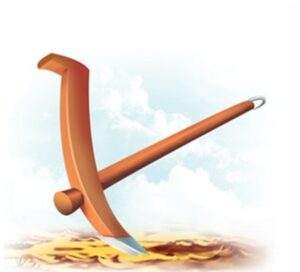
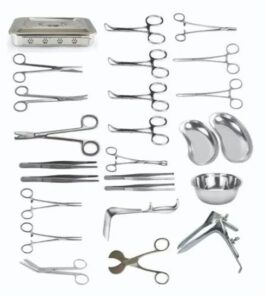
If we observe both instruments are almost same. These instruments are used to mark lines (स्वर्णलाङ्गलसीतान्तः => the furrow line created by that golden plow) on the lower abdomen (due to which blood comes out and represented as golden line here) of the mother (यज्ञभूमौ / यज्ञार्थं क्षेत्र) so that doctor can see the womb of the mother (घट). Note that due to the fertility of the mother (giving birth to babies), she has been referred as क्षेत्र . Now visualize the scene when it is done, we will observe that a baby is kept inside the golden pot (womb of the mother with blood vessels in the womb which is like pot buried under the ground) that is kept below the earth mother (skin of the mother). When King Janak opened the buried pot (घट), he saw Maa Sītā. As per Sītā Maa description of her birth (नरपतिर्मुष्टिविक्षेपतत्परः Engaged in scattering/throwing handfuls [of soil/seeds]), King Janak was serving to his people and most probably King Janak was providing medical help to the people because seed (as pills/medicine) is used in the sloka).
Now notice that the words used for Maa Sītā is अयोनिजा.
अयोनिजा (ayonijāṃ) = NOT born from female private organ (birth canal) = Not a normal delivery = Indicates caesarean birth
योनिजा (yonijāṃ) = Born from female private organ (birth canal) = Indicates normal delivery
It is not mentioned anywhere in Vedic literature that she was not born from the womb of the mother. Text only says अयोनिजा.
Vālmīki Rāmāyaṇa Ayodhyākāṇḍa 2.118
तस्य लाङ्गलहस्तस्य कर्षतः क्षेत्रमण्डलम् ।
अहं किलोत्थिताभित्त्वाजगतींनृपतेः सुता ॥28
Tasya lāṅgalahastasya kṛṣataḥ kṣetramaṇḍalam |
Ahaṃ kilotthitābhittvājagatīṃ nṛpateḥ sutā || 28 ||
Here breaking(भित्त्वा) the earth(जगतीं) simply means that a cut was made on the lower belly of the mother and she appeared.
स मां दृष्ट्वा नरपतिर्मुष्टिविक्षेपतत्परः ।
पांसुकुण्ठितसर्वाङ्गीं जनको विस्मितोऽभवत् ॥29
Sa māṃ dṛṣṭvā narapatir muṣṭivikṣepatatparaḥ |
Pāṃsukuṇṭhitasarvāṅgīṃ vismito Janako’bhavat || 29 ||
Here पांसुकुण्ठितसर्वाङ्गीं (पांसु-कुण्ठित-सर्वाङ्गीम्) indicates that she was completely covered with the amniotic fluid in the womb which is symbolized here by the word पांसु soil.
धृत्वा वक्षसि चार्वङ्गी मालामम्लानपङ्कजाम् ।
सीतामुखे समुत्पन्ना बालभावेन सुंदरी ॥ १०२ ॥
Dhṛtvā vakṣasi cārvaṅgī mālām amlānapaṅkajām |
Sītāmukhe samutpannā bālabhāvena sundarī || 102 ||
This indicates the coils and blood vessels we see around a newborn baby which are part of the umbilical cord, which connects the baby to the placenta, giving it a coiled, red lotus garland like appearance on the chest.
Clearly Maa Sītā was the first Caesarean delivery on the planet. It was probably done on dying or dead mother to try to save the baby and hence She was adopted by King Janak.
As per Google, first recorded case of C-Section happened in the 1500s. But clearly as per Maharshi Vālmīki Rāmāyaṇa, it happened at least around 869,000+ years ago in Treta Yuga and probably Maa Sītā was first such child. She is अयोनिजा. If mother nature takes birth on this planet, she will surely not violate the rules of nature. The same meaning may reasonably be inferred from the various synonymous terms found in Vedic and Purāṇic literature, such as Kumbhayoni (कुम्भयोनि), Kumbhasambhava (कुम्भसम्भव), Kumbhaja (कुम्भज) etc.
Now if we search the Vedic history, there are many births which are titled similarly for example:
- Sage Agastya & Sage Vasistha (Ṛgveda 7.33.13)
- 100 Kaurava brothers (शतं कुम्भान् घृतपूर्णान् शीघ्रमानय भारत। Ādi Parva -Sambhava Parva-Chapter 115)
- Guru Dronacharya (Ādi Parva → Sambhava Parva → Section CXXXI)
- Panchali & Dhrishtadyumna (Indicates twins) – Mahābhārata, Ādi Parva → Chaitraratha Parva → Section CLXIX
- King Prithu and Archi (Śrīmad Bhāgavata Purāṇa)
🙏 होइहि सोइ जो राम रचि राखा। को करि तर्क बढ़ावै साखा॥ 🙏
🙏 श्रीरामार्पणमस्तु 🙏