Om Gurave Namah
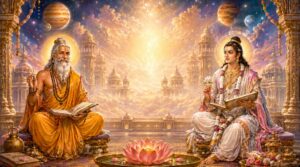 Among the Navagrahas, two Grahas are assigned the status of Brāhmaṇas: Guru and Śukra. Both are teachers, counsellors, bearers of knowledge, and natural benefics. Yet they represent two very different traditions of wisdom.
Guru, or Bṛhaspati, is the Deva Guru, the teacher of the Devas. His knowledge is directed toward Dharma, truth, sacred law, right judgement, and the preservation of divine order. Śukra is the Daitya Guru or Asura Guru, the teacher of those who stand outside the order of the Devas. His wisdom is concerned with survival, relationships, fertility, negotiation, material life, restoration, and the practical knowledge including different branches of science required to function in the world.
Bṛhaspati, the son of the great Ṛṣi Aṅgiras, possessed profound knowledge of the Vedas, Yajña, Dharma, and sacred law. Recognising his wisdom and purity of judgement, Indra and the Devas accepted him as their teacher and counsellor. Thus, Bṛhaspati became Deva Guru or Sura Guru, the teacher of the Suras. He guided them in matters of Dharma, worship, governance, and the preservation of cosmic order. The Śrīmad Bhāgavata Purāṇa Canto 6, chapter 7, describes Bṛhaspati as the spiritual master of Indra and the Devas.
पौरोहित्येन याज्यार्थे काव्यं तूशनसं परे ॥ ६ ॥
ब्राह्मणौ तावुभौ नित्यमन्योन्यस्पर्धिनौ भृशम् ।
तत्र देवा निजघ्नुर्यान्दानवान्युधि सङ्गतान् ।
तान्पुनर्जीवयामास काव्यो विद्याबलाश्रयात् ॥ ७ ॥
असुरास्तु निजघ्नुर्यान्सुरान्समरमूर्धनि ।
न तान्सञ्जीवयामास बृहस्पतिरुदारधीः ॥ ८ ॥
न हि वेद स तां विद्यां यां काव्यो वेद वीर्यवान् ।
सञ्जीवनीं ततो देवा विषादमगमन्परम् ॥ ९ ॥
ते तु देवा भयोद्विग्नाः काव्यादुशनसस्तदा ।
ऊचुः कचमुपागम्य ज्येष्ठं पुत्रं बृहस्पतेः ॥ १० ॥
paurohityena yājyārthe kāvyaṃ tūśanasaṃ pare || 6 ||
brāhmaṇau tāv ubhau nityam anyonyaspardhinau bhṛśam |
tatra devā nijaghnur yān dānavān yudhi saṅgatān |
tān punar jīvayām āsa kāvyo vidyābalāśrayāt || 7 ||
asurās tu nijaghnur yān surān samaramūrdhani |
na tān sañjīvayām āsa bṛhaspatir udāradhīḥ || 8 ||
na hi veda sa tāṃ vidyāṃ yāṃ kāvyo veda vīryavān |
sañjīvanīṃ tato devā viṣādam agaman param || 9 ||
te tu devā bhayodvignāḥ kāvyād uśanasas tadā |
ūcuḥ kacam upāgamya jyeṣṭhaṃ putraṃ bṛhaspateḥ || 10 ||
while the others chose Kāvya Uśanas. Those two Brāhmaṇas were constantly
engaged in intense rivalry.
When the Devas killed the Dānavas assembled in battle, Kāvya restored
them to life through the power of his knowledge.
But when the Asuras killed the Suras on the battlefield, the wise
Bṛhaspati could not restore them to life.
He did not possess the powerful Sañjīvanī Vidyā known to Kāvya. Therefore,
the Devas fell into profound despair.
Distressed by fear of Kāvya Uśanas, the Devas approached Kaca, the eldest
son of Bṛhaspati, and spoke to him.
Śukra, the son of the great Ṛṣi Bhṛgu, was also a brilliant Brāhmaṇa and master of sacred knowledge. However, he chose to protect and instruct the Daityas and Asuras, who repeatedly struggled against the Devas. Because the Asuras were frequently defeated and killed in battle, Śukra sought a power that would preserve them. Through knowledge and severe tapas, he became the possessor of the Mṛtasañjīvanī Vidyā, by which the dead could be restored to life.
Whenever the Asuras fell in battle, Śukra revived them. He also taught them political wisdom, discipline, diplomacy, ritual knowledge, and the means of surviving adversity. For this reason, they accepted him as Asura Guru, also called Daitya Guru or Śukrācārya. The Mahābhārata Ādi Parva, Sambhava Parva, Chapter 71, verses 6–10 presents Śukra as the preceptor of the Asuras and as the possessor of the Sañjīvanī knowledge, because of which the Devas sent Bṛhaspati’s son Kaca to study under him.
Their teachings reflect their different natures. Guru teaches the path of Dharma, faith, wisdom, and divine order. It’s the spiritual Guru, Sanyasa Guru.
Śukra teaches survival, restoration, relationships, strategy, and the continuation and not only, even the whole embodied life. All kind of sansaric knowledge is with Śukra. All the knowledge in this manifested world.
Parāśara: Guru and Śukra are the two Brahmins
Parāśara directly classifies Guru and Śukra as belonging to the Vipra or Brāhmaṇa varṇa:
शशिसोम्यौ वैश्यवर्णौ शनिः शूद्रो द्विजोत्तम ॥ २१ ॥
śaśisomyau vaiśyavarṇau śaniḥ śūdro dvijottama || 21 ||
Kṣatriyas; the Moon and Mercury are Vaiśyas; and Saturn is a Śūdra.”
Varṇa here is not a social birth of a person. In Jyotiṣa, the varṇa of a Graha describes its natural function, mode of intelligence, behaviour, and way of influencing society.
କର୍ମର ଛାଡ଼ା ଆନ ନାହିଁ କିଛି ॥
karmara chāḍā āna nāhiṃ kichhi ||
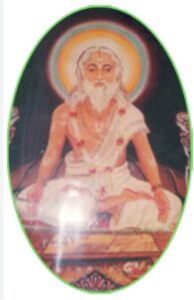 His grandfather performed the work of a Karaṇa (Kāyastha, Kṣatriya), but completed his life as a Cāmū, according to his occupation, with the title Mahāntī. His father belonged to the Śūdra caste, or was a Khuṇṭiā. However, he himself was a Brāhmaṇa, as he performed the work of a Brāhmaṇa.
The Brāhmaṇa function includes:
- teaching and transmitting knowledge;
- interpreting laws and principles;
- counselling rulers;
- performing sacred or specialised duties;
- preserving a lineage of knowledge;
- distinguishing what should and should not be done.
Both Guru and Śukra perform these functions. They do not ordinarily govern through physical power like the Sun or Mars. Their power lies in knowledge, counsel, mantra, judgement, and the ability to influence those who rule.
बुधो राजकुमारश्च सचिवौ गुरुभार्गवौ ॥ १४ ॥
budho rājakumāraś ca sacivau gurubhārgavau || 14 ||
Mercury is the prince; and Guru and Bhārgava—Śukra—are the two ministers.”
This shows an essential feature of the two Brāhmaṇas: they stand beside power and advise it. Who is Sūrya without a Guru? It is the Guru who advises Sūrya and gives him power. He is the priest who performs the coronation and places the crown upon Sūrya’s head.
Parāśara describes the gifts of the Grahas:
ऋषिभिः प्राक्तनैः प्रोक्तश्छायासूनुश्च दुःखदः ॥ १३ ॥
ṛṣibhiḥ prāktanair proktaś chāyāsūnuś ca duḥkhadaḥ || 13 ||
vitality, while the son of Chāyā has been declared by the ancient Ṛṣis
to give sorrow.”
Śukra is described as vīryapradāyaka, the giver of vīrya. This word can mean vitality, vigour, potency, courage, reproductive power, creative energy, and the capacity to bring something into manifestation.
Although both Grahas belong to the same varṇa, they do not possess the same Guṇa.
Parāśara states:
सूर्यपुत्रधरापुत्रौ तमःप्रकृतिकौ द्विज ॥ २२ ॥
sūryaputradharāputrau tamaḥprakṛtikau dvija || 22 ||
Śukra are of Rajas; the son of the Sun and the son of the Earth are of
a Tāmasika nature.”
So, you can see: Guru is a sāttvika Graha, and Śukra is a rājasika Graha. Now the question arises in your mind: how, then, can Śukra be a Guru?
The answer is clear: why not, if Parāśara himself states it? A Guru can be different—even tāmasika. Rāvaṇa was a great Brāhmaṇa; however, he misused his knowledge. Maybe he could have taken a different path.
Jātaka Pārijāta repeats the classification of Guru and Śukra as the two Brahmins and simultaneously differentiates their Guṇas:
इन्दुः शूद्रकुलाधिपः शशिसुतो मन्दोऽवराणां पतिः ।
आदित्यामरमन्त्रिशीतकिरणाः सत्त्वप्रधानग्रहाः
शुक्रज्ञौ सरजोगुणौ शनिधरापुत्रौ तमःस्वामिनौ ॥ २.२६ ॥
induḥ śūdrakulādhipaḥ śaśisuto mando ’varāṇāṃ patiḥ |
ādityāmaramantriśītakiraṇāḥ sattvapradhānagrahāḥ
śukrajñau sarajoguṇau śanidharāputrau tamaḥsvāminau || 2.26 ||
the lord of the Vaiśyas; Mercury is the lord of the Śūdras; and Saturn is
the lord of the lower classes. The Sun, the minister of the Devas, and the
Moon are predominantly Sāttvika; Śukra and Mercury are Rājasa; while Saturn
and Mars are lords of Tamas.”
The expression amaramantrī, “minister of the immortals,” refers to Guru. He advises the Devas because his knowledge maintains the celestial order.
Śukra, in contrast, is the counsellor of the Daityas. Yet the tradition does not deny him Brāhmaṇa status. Knowledge does not become false merely because it serves beings struggling in the material world.
Jaimini says: “Pañcame Sūrye Gītājñaḥ.” That is the essence of Kṛṣṇa and the Bhagavad Gītā. The connection between the mantra bhāva and Sūrya as its lord, blessing the bhāva, is very clear. Soul knowledge is hidden there. It points to Sūrya as the Graha of spiritual jnana and self-realisation. Jyotiṣī is like a blazing Sun—full of knowledge.
The 5th bhāva represents the Vedāṅgas, so Sūrya, the lord of the 5th, exalted, is like the exaltation of the realisation of knowledge. Lagna is the head. It is like perfection in knowledge. Sūrya brings light to the bhāva in which he is placed or upon which he casts dṛṣṭi. Though Ke is the most spiritual among the Grahas, Sun is no less spiritual. It is the light of knowledge.
Each Graha pulls the Lagna itowards its own direction. Therefore, the Grahas that share ideas close to those of Sūrya, according to this principle, are his neighbours in directions—Guru and Śukra. As Parāśara states, they are the two ministers of the king. They are strong during the daytime, when Sūrya is powerful.
The Graha whose ideas are farthest from those of Sūrya is Śani. It is not an intellectual Graha. Speaking of Śani and knowledge, we may say that Śani represents emptiness in the head. When we speak of spiritual direction, Śani may be atheistic and will believe more in money than in God. Other Grahas on his side will also support it. In this way, we may understand how the Grahas attain their roles and impact the Lagna with it’s principals and ideas.
Parāśara also presents the differentdescription of the two Brahmana Grahas.
For Guru:
कफप्रकृतिको धीमान् सर्वशास्त्रविशारदः ॥ २७ ॥
kaphaprakṛtiko dhīmān sarvaśāstraviśāradaḥ || 27 ||
is intelligent, and is proficient in all Śāstras.”
For Śukra:
काव्यकर्ता कफाधिक्योऽनिलात्मा वक्रमूर्धजः ॥ २८ ॥
kāvyakartā kaphādhikyo ’nilātmā vakramūrdhajaḥ || 28 ||
has beautiful eyes, composes poetry, has an abundance of Kapha, a Vāta
nature, and curling hair.”
Guru is described as sarvaśāstraviśārada, proficient in all the Śāstras.
Śukra is kāvyakartā, a creator of poetry. His knowledge takes beautiful form.
Because both Grahas are Brahmins, their conjunction can produce scholarship, learning, interpretation, teaching, debate, and refined judgement. Sārāvalī gives the following result:
जीवसितयोर्नृयोगे विशिष्टदारो भवेन्मतिमान् ॥ १५.२० ॥
jīvasitayor nṛyoge viśiṣṭadāro bhaven matimān || 15.20 ||
follows an eminent or distinguished path of Dharma, possesses sound
judgement, is intelligent, and has a distinguished spouse.”
However, a conjunction alone does not guarantee all these results. The rāśi, bhāva, dignity, combustion, planetary war, aspects, Argala, lordships, Navāṃśa, and all other influences must all be considered.
We should also never forget that Śukra was the cause of the breaking of the tapas of many Ṛṣis and of their downfall. Thus, Guru seeks knowledge, while Śukra seeks saṃsāra and marriage. These are the opposite sides of the two Brāhmaṇas.
When the two Brāhmaṇas are balanced, knowledge becomes compassionate, beauty becomes meaningful, prosperity becomes responsible, and human relationships become vehicles for spiritual growth rather than obstacles to it.
Written by Dana Khanina, inspired by the teachings of Guruji Panit Sanjay Rath and the Gurus of Parampara.
OM TAT SAT
Om Shanti, Shanti, Shanti