ॐ गुरवे नमः
This article is inspired by Bṛhat Nakshatra by Pandit Sanjay Rath. All knowledge belongs to the Guru; any errors or omissions in interpretation are entirely mine.
 In the architectural framework of the Vedic Pañcāṅga, the Tithi (lunar day) represents the Jala Tattva, the primordial water element of the soul. Within the Jagannath Hora tradition, this element serves as the primary arbiter of human relationships and the “desire” (Kāma) that drives the lunar mind. As detailed in the Brhat Nakshatra, the essence of the Tithi is linked to the Moon god Candra hiding within the plants—a metaphor for the way desire is embedded within the physical experience.
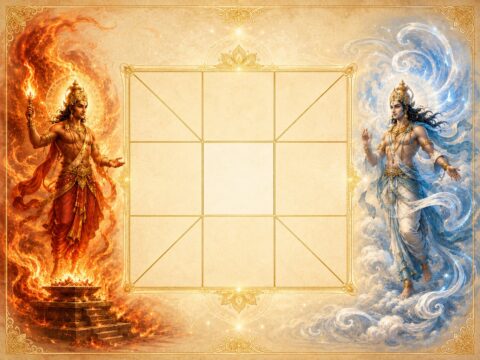
The psychological experience of the Tithi is distinct from other Pañcāṅga components through its elemental hierarchy. While the Vāra (weekday) provides the Agni (vitality) and the Nakṣatra provides the Vāyu (direction of life force), the Tithi is the fluid vessel of interaction. There is a critical tension between these elements: as noted in the source context, Agni and Jala are “hated enemies.” Fire can evaporate (dry up) the water, and water can extinguish the fire. When these elements clash at the moment of birth, it creates a “Pañcāṅga Flaw”—a spiritual disharmony where the individual’s emotional capacity is either scorched by excess vitality or drowned by unfulfilled desire. Understanding these elemental foundations is the prerequisite to diagnosing the “destiny of water” that governs human suffering.
Elemental harmony within a birth moment or Muhurta is the baseline for material and spiritual stability. According to Chapter III of the Brhat Nakshatra, the triangulation of the Vāra (Agni) and the Tithi (Jala) determines if the energy of the moment is sustained or consumed. A “gaṇḍānta” effect—a spiritual knot or void—occurs when these incompatible elements collide, leading to a state where there is “no bridge” for the soul’s desires to manifest.
Technical Classification and Lords of Tithis
| Functional Group | Tattva | Tithi Numbers | Sanskrit Tithi Details | Graha Lords | Functional Essence |
| Nanda | Agni | 1, 6, 11 | prathamī, ṣaṣṭhī, ekādaśī | Maṅgala, Sūrya | Prosperity/Joy |
| Bhadra | Pṛthvī | 2, 7, 12 | dvitīyā, saptamī, dvādaśī | Budha, Lagna | Wisdom/Success |
| Jaya | Ākāśa | 3, 8, 13 | tṛtīyā, aṣṭamī, trayodaśī | Guru, Ketu | Victory/Growth |
| Rikta | Jala | 4, 9, 14 | caturthī, navamī, caturdaśī | Śukra, Candra | Depletion/Void |
| Pūrṇa | Vāyu | 5, 10, 15 | pañcamī, daśamī, pūrṇimā/amāvāsyā | Śani, Rāhu | Fullness/Completion |
The Logic of Vāra-Tithi Compatibility
The spatial-temporal junction of birth is evaluated by how the Vāra lord interacts with the Tithi group.
- Auspicious: Agni Vāra (Sunday/Tuesday) + Pṛthvī Tithi (Bhadra). The Earth element stabilizes the Fire, allowing for constructive use of energy.
- Middling: Agni Vāra + Jala Tithi (Rikta). The “hated enemy” relationship results in evaporation or extinguishing of intent; results are inconsistent.
- Malefic: Agni Vāra + Agni Tithi (Nanda). The volatility of excess fire creates an “elemental combustion” that consumes the Jala Tattva of the native, manifesting as high-intensity suffering or sudden depletion.
The concept of Puṣkara indicates a “force multiplier” in the natal chart or electional moment. These Yogas represent spatial-temporal junctions where karma is not merely delivered but amplified.
- Dvi-Puṣkara Puṇya: Triggered when a Mars-ruled Nakṣatra (Mṛgaśirā, Citrā, Dhaniṣṭhā) aligns with an Agni Weekday (Sun/Tue) and a Nanda Tithi. This doubles the fruit of positive actions.
- Tri-Puṣkara Yoga: Triggered by Sūrya or Guru ruled Nakṣatras and Weekdays conjoined with Nanda or Jaya tithis, tripling the result.
The “Pañcaka” Risk: Dangerous Multipliers
When these alignments involve inimical days like Saturday or specific Tithis like Bhadra or Pūrṇa, they transform into the Tri-Puṣkara Doṣa. Based on the Pañcaka rules, these become “Dangerous Multipliers” that expand negative events—such as financial loss, reappearing diseases, or death—five-fold. A single tragedy under this influence is rarely an isolated event; it creates a cascade of loss that “threatens bankruptcy” or total familial depletion.
The technical precision of these axioms is validated by the empirical records of the tradition.
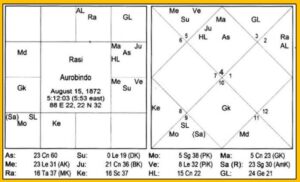
- Śrī Aurobindo Ghosh: Born on a Tuesday Ekādaśī. Crucially, Tuesday is ruled by Mars, the lord of the Nanda Tithi itself. This allowed Aurobindo to utilize the “combustion” to transform his initial militancy into an exalted spiritual realization through a strengthened Jupiter.
- The Divine Struggle (Śrī Kṛṣṇa): Born on Kṛṣṇa Aṣṭamī—the Janma Tithi of Saturn—necessitating a life defined by constant combat with demonic entities and the assumption of the world’s heaviest karmic burdens.
Vedic remedies in the Rath tradition are designed as a “Cosmic Panacea” to purify the Jala Tattva. By fasting on the Janma Tithi and propitiating the specific Devatā, the native realigns their emotional vessel and pacifies the planetary blemish.
The 15 Tithis and Their Corresponding Devatās:
- Pratipadā: Agni
- Dvitīyā: Aśvinī Kumāra
- Tṛtīyā: Gaurī
- Caturthī: Gaṇeśa
- Pañcamī: Sarpa (Nāga)
- Ṣaṣṭhī: Kumāra (Kārttikeya)
- Saptamī: Sūrya
- Aṣṭamī: Śiva
- Navamī: Durgā
- Daśamī: Yama
- Ekādaśī: Viśvedevā
- Dvādaśī: Viṣṇu
- Trayodaśī: Kāmadeva
- Caturdaśī: Śiva
- Pūrṇimā/Amāvāsyā: Candra / Kālikā or Pitṛs
Fasting on the Janma Tithi specifically purifies the water element of the soul, preventing the “drying up” of one’s life-path by the fire of past-life karma. Through this sophisticated triangulation of lunar days, planetary births, and elemental compatibility, the astrologer ceases to be a mere predictor of doom and becomes a spiritual guide capable of navigating the complex destiny of the soul.
ॐ शांति शांति शांति